
Families
 Crassulaceae
Some of these families are particularly noteworthy, whether for their abundance and diversity, the degree of endemism among their various species, or the economic importance they have had in the historical development of the islands. These include the following:
Asteraceae: This is one of the largest and most important families in the archipelago. It includes well-known plants such as daisies or wild marguerites, chrysanthemums, verodes, thistles, globeflowers, May flowers, etc.
Boraginaceae: This family is well known for its tajinastes; the most famous of these, both within and outside the Canary Islands, is the spectacular red tajinaste of Mount Teide.
Crassulaceae: Well represented by the genus Aeonium, to which the bejeques, veroles and pasteles de risco belong, and which is still in the midst of its evolutionary process.
Euphorbiaceae: This family includes plants that are very characteristic of the Canary Islands’ flora, such as the cardón cactus and the numerous species of tabaiba.
Lauraceae: Although it comprises very few species, it is of great importance because these are the trees that make up the laurel forest, a type of woodland that has disappeared from most parts of the world.
Pinaceae: The family of the Canary Island pine, a tree closely linked to the Canary Islands’ economy in centuries past, whose wood is extremely hard-wearing, and which is the only species capable of surviving and regrowing after fires.
 Malvaceae
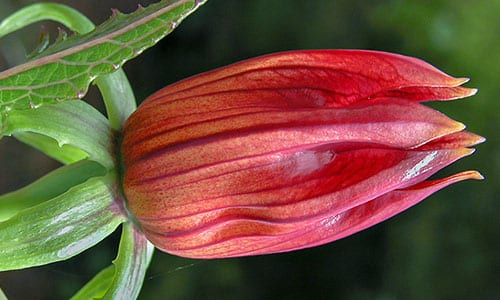 Campanulaceae
 Boraginaceae
 Tropaelaceae
 Orchidaceae
 Convolvulaceae
 Asteraceae
 Papaveraceae
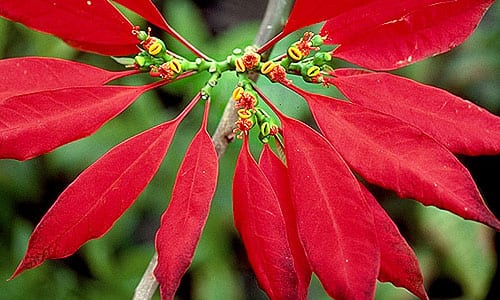 Euphorbiaceae
 Asclepiadaceae
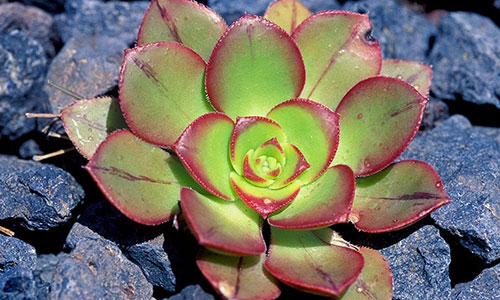 Crassulaceae
 Violaceae
 Solanaceae
 Cactaceae
 Geraniaceae