Canary flora > Exotic and ornamental
Yucca aloifolia
Yucca aloifolia L.
Aloe yucca, Dagger plant, Spanish bayonet
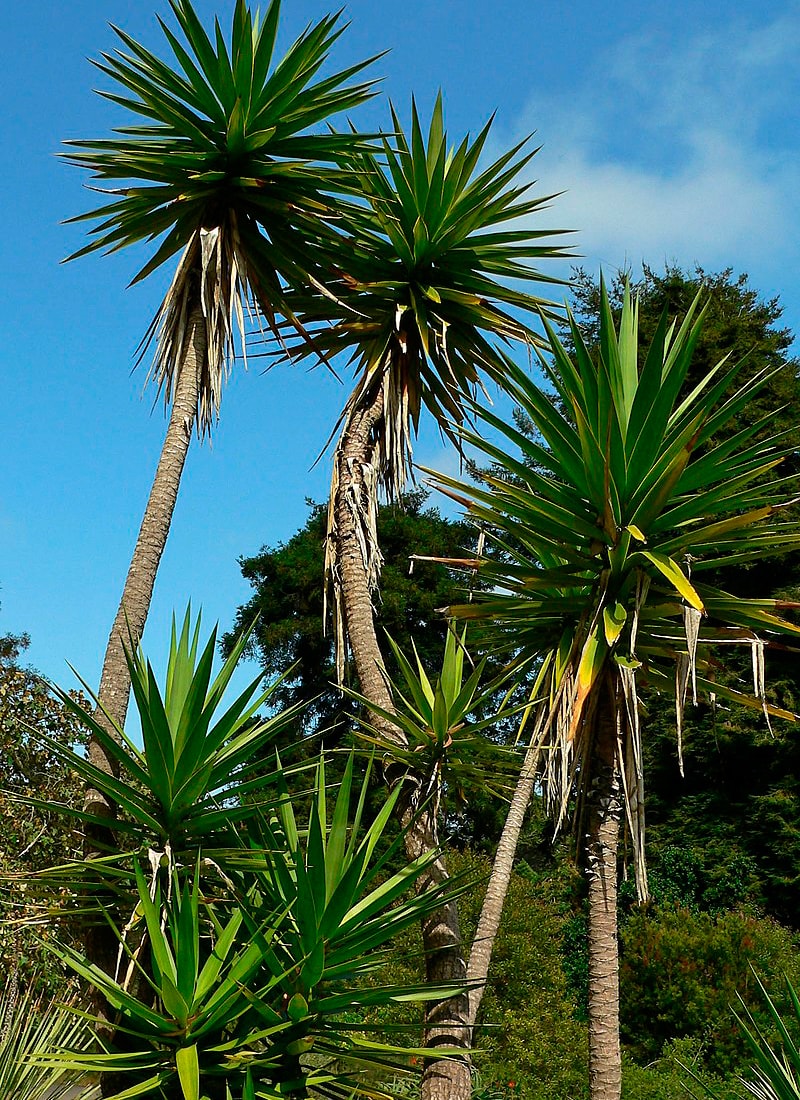
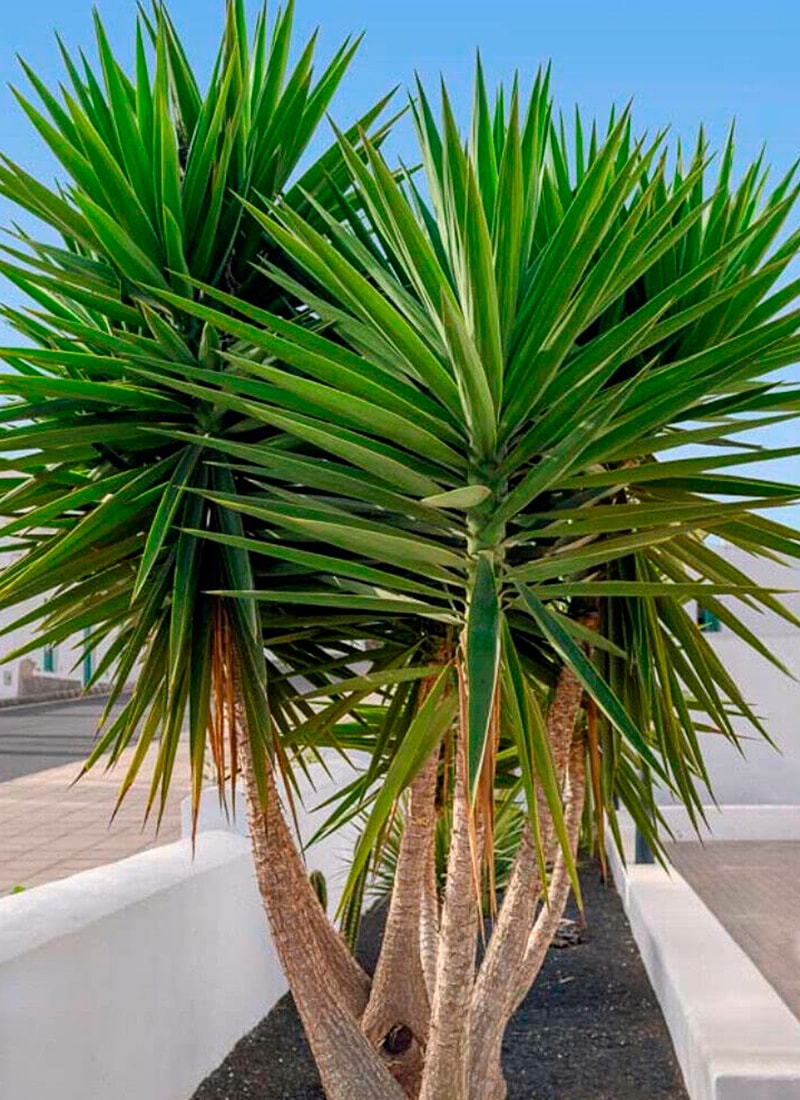
An evergreen, rhizomatous, palm-shaped shrub with a woody, simple or
branched stem, about 5-6 m high, covered with a greyish-brown bark very
marked by the scars of fallen leaves.
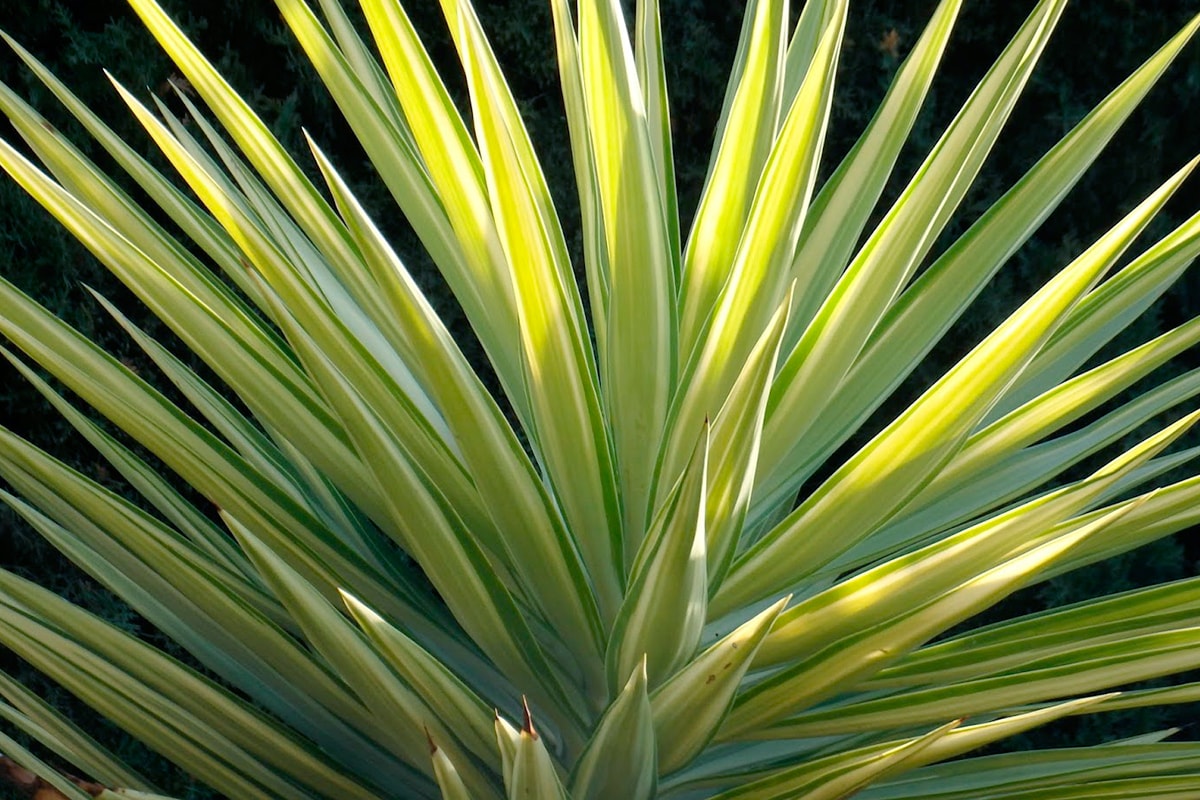
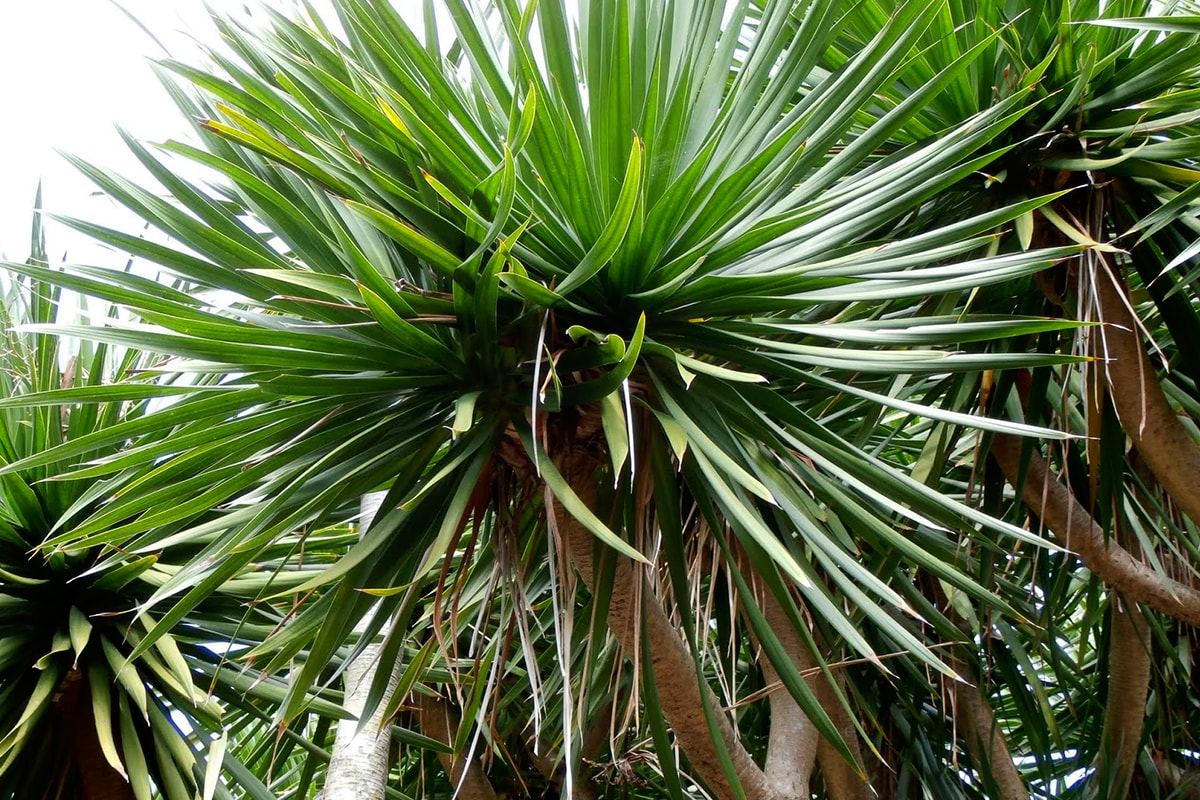
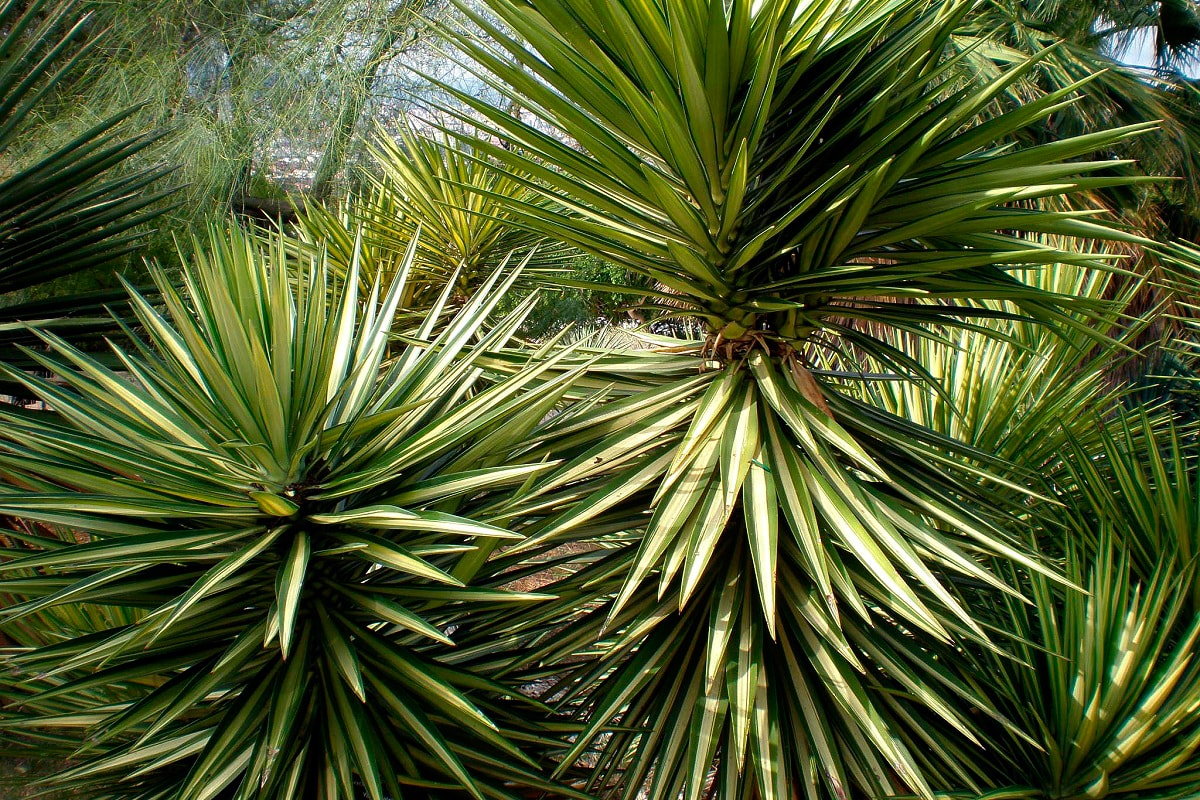
Its large dark green leaves, 25-40 cm long and 3-6 cm wide, are arranged in large rosettes at the ends of the stems.
They are simple, alternate, narrowly lanceolate, sessile, rigid, slightly concave on the upper side, rough on the underside, tapering at the base, grooved towards the apex, and ending in a sharp reddish-brown tip up to 4 cm long.
Its large dark green leaves, 25-40 cm long and 3-6 cm wide, are arranged in large rosettes at the ends of the stems.
They are simple, alternate, narrowly lanceolate, sessile, rigid, slightly concave on the upper side, rough on the underside, tapering at the base, grooved towards the apex, and ending in a sharp reddish-brown tip up to 4 cm long.
The flowers are grouped in showy, erect, terminal branched
inflorescences, 30-50 cm high, located at the end of the stems.
Individual flowers, 2-4 cm long, pendulous, with petaloid, bell-shaped perianth, formed by six creamy white tepals, sometimes with purple tones at the apex.
They produce fruit in the shape of an elongated berry up to 10 cm long, with longitudinal angles and more or less flat, pendulous intermediate faces, bright green at first, dark purple when ripe and almost black when dry, containing a fleshy, perfumed pulp.
They contain numerous compressed, shiny, black seeds.
Individual flowers, 2-4 cm long, pendulous, with petaloid, bell-shaped perianth, formed by six creamy white tepals, sometimes with purple tones at the apex.
They produce fruit in the shape of an elongated berry up to 10 cm long, with longitudinal angles and more or less flat, pendulous intermediate faces, bright green at first, dark purple when ripe and almost black when dry, containing a fleshy, perfumed pulp.
They contain numerous compressed, shiny, black seeds.
It flowers between September and November, although under favourable
conditions it flowers at any time of the year.
Multiplication is by seed and cuttings.
This species is native to some regions of the Caribbean and North America, growing in sandy coastal areas and soils as well as in low mountainous areas.
Its current distribution extends from the United States, Mexico, El Salvador, the Antilles, Argentina, southern Bolivia, etc.
Multiplication is by seed and cuttings.
This species is native to some regions of the Caribbean and North America, growing in sandy coastal areas and soils as well as in low mountainous areas.
Its current distribution extends from the United States, Mexico, El Salvador, the Antilles, Argentina, southern Bolivia, etc.