Canary Flora > Wild species
Bartsia trixago
Bartsia trixago L.
Familia
SCROPHULARIACEAE
Gallocresta, conejitos, boca de dragón
Description:
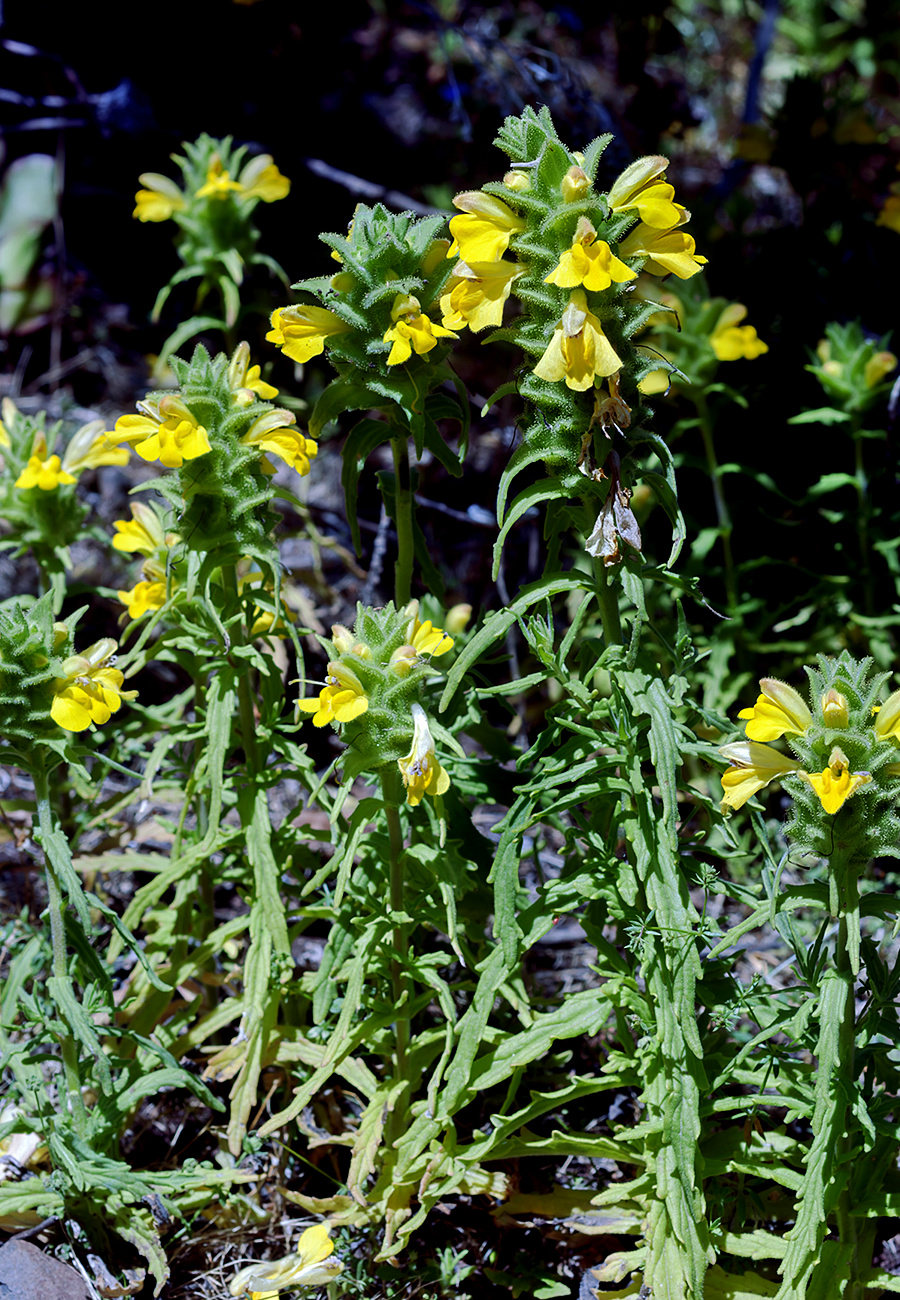
An annual herb about 10–80 cm tall, semi-parasitic, arising from a short,
distinctly swollen rhizome. It has erect, slender, rigid, cylindrical stems,
usually simple, though sometimes branching at the top.
Its leaves, approximately 2–6 cm long, are deep green and slightly hairy, and are sparsely distributed along the stem. They are simple, opposite, sessile, linear-lanceolate, with the lower ones occasionally pinnately divided, having coarsely serrated margins with deep, blunt teeth, prominent veining and a somewhat rough texture to the touch.
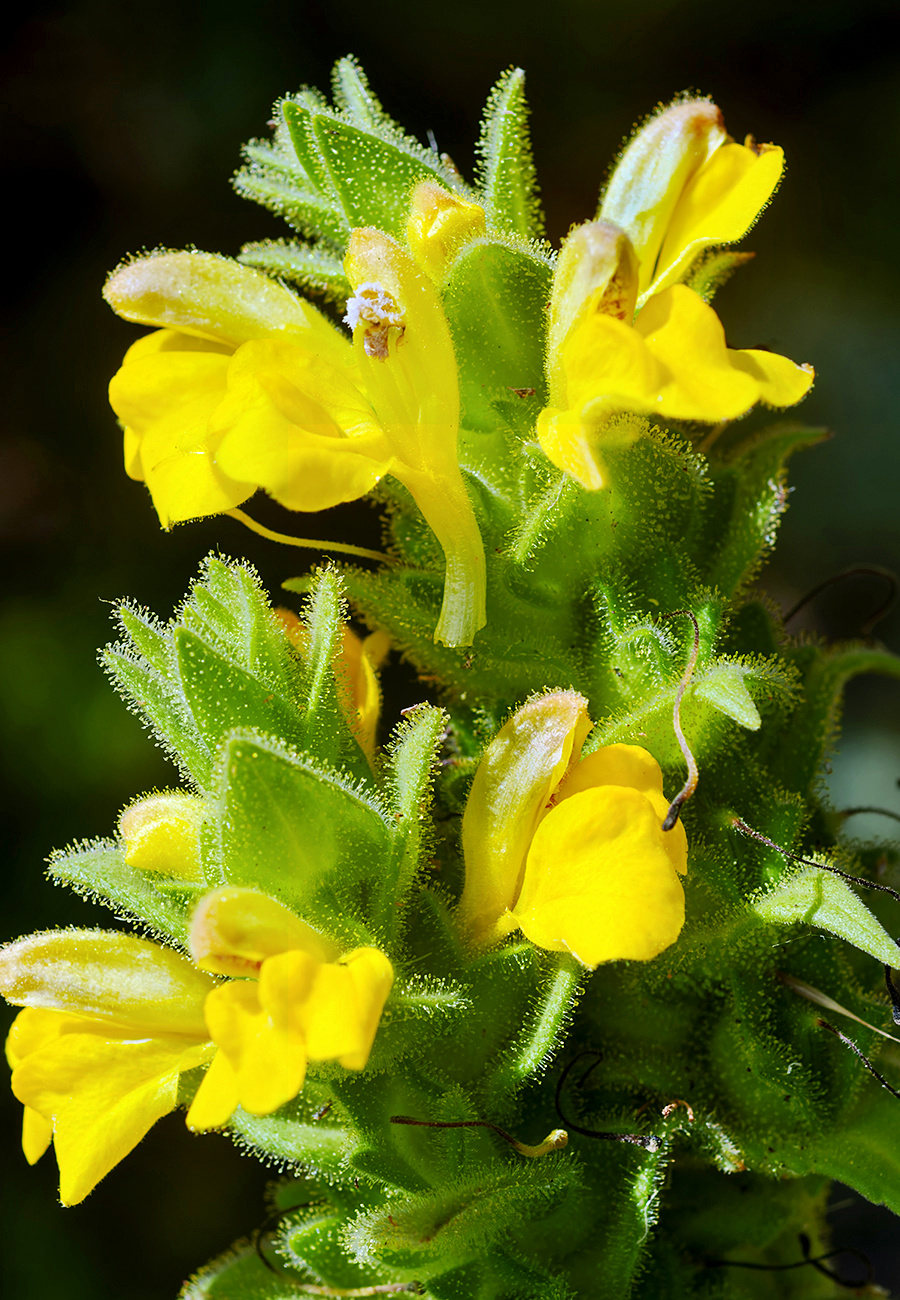
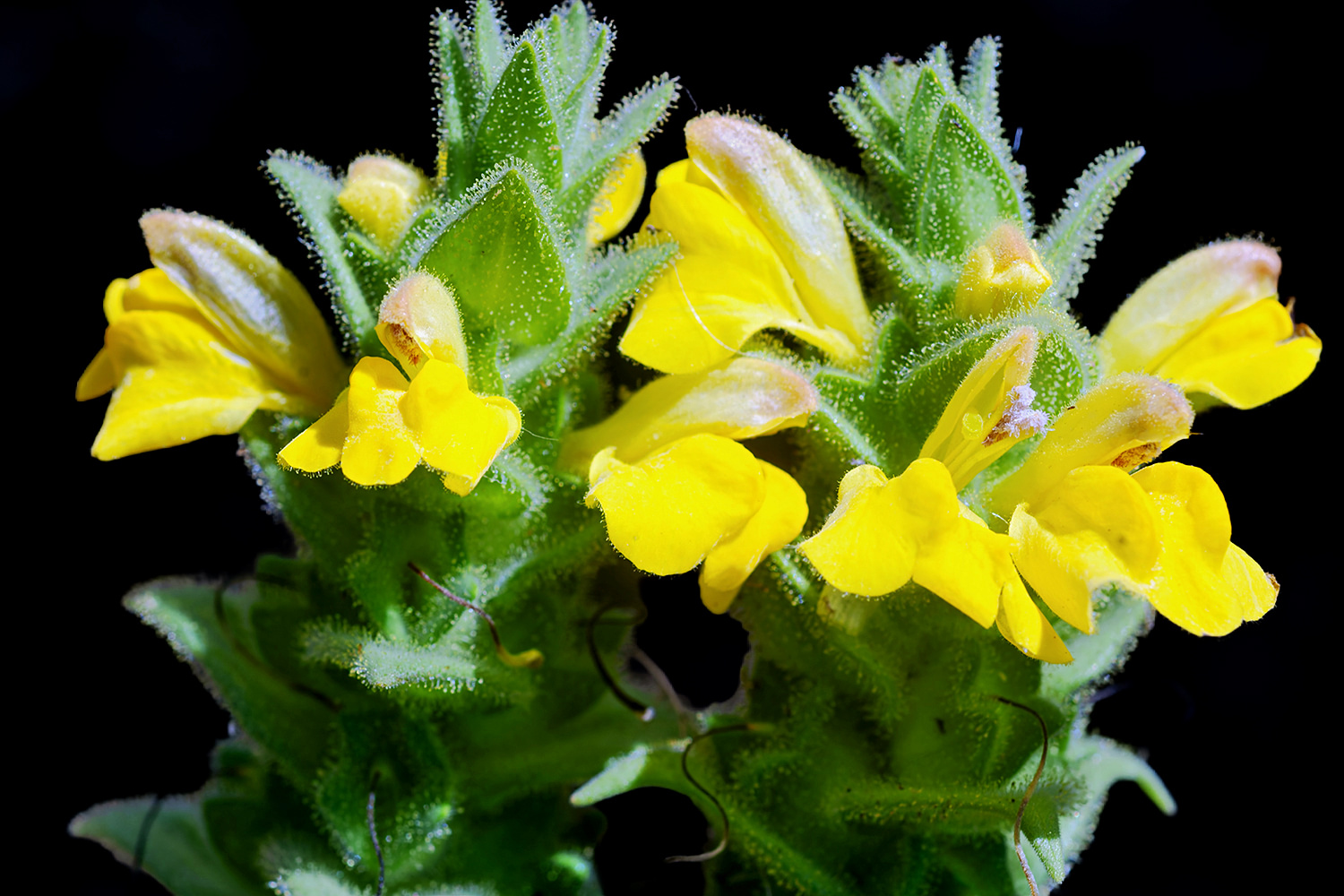
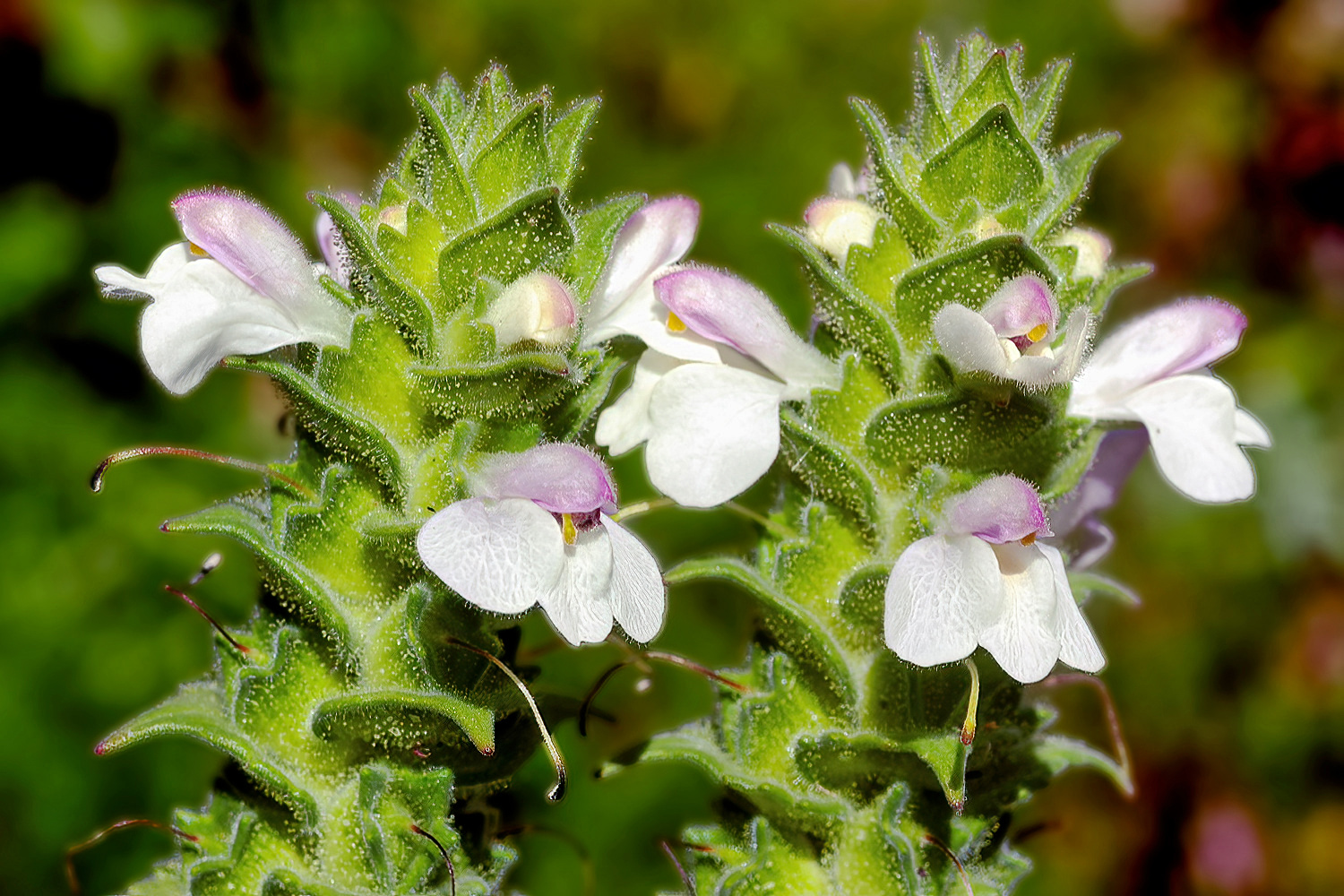
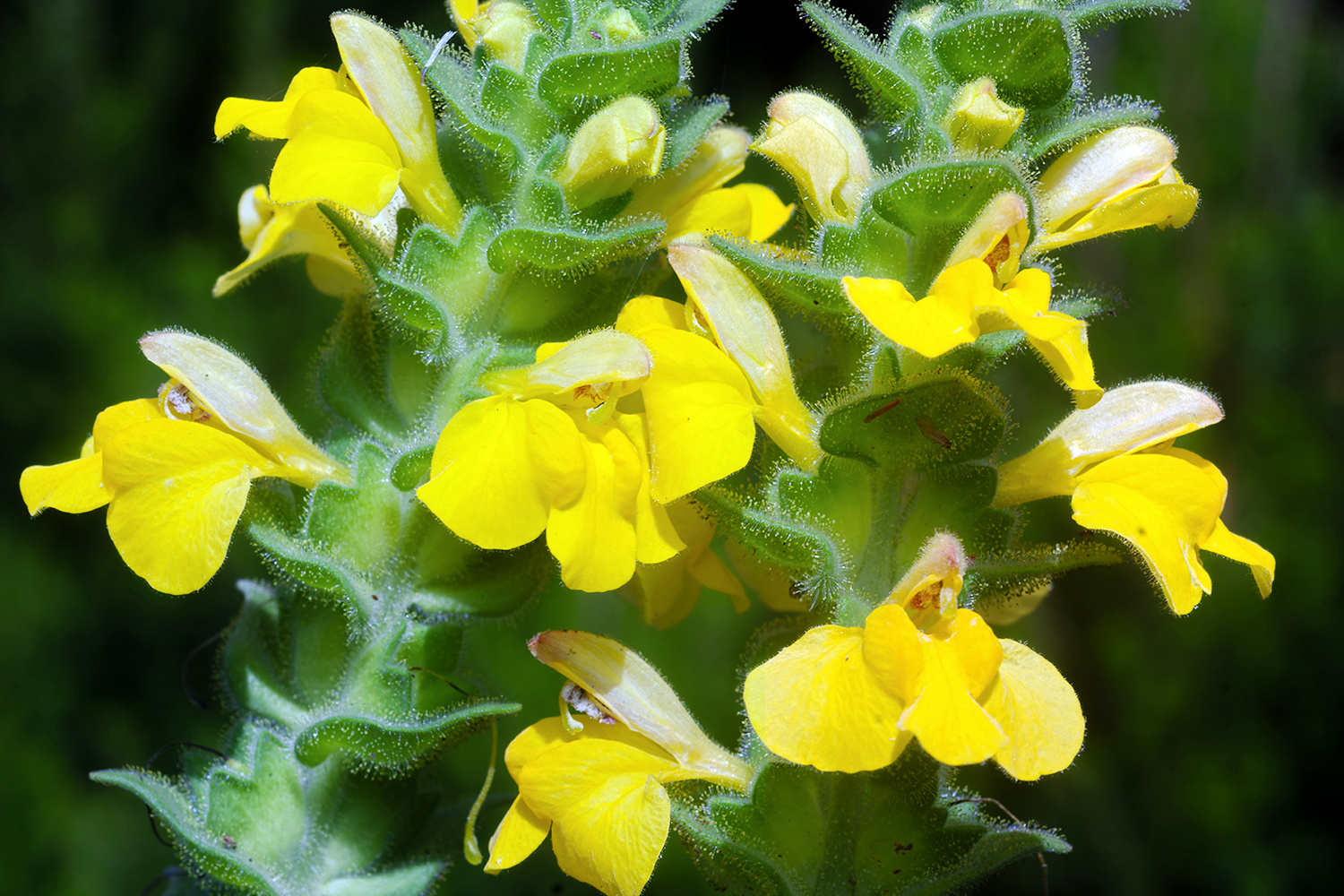
Its small, striking flowers, which come in a wide variety of colours ranging from white to yellow, including shades of pink and purple, are arranged in dense, terminal spikes with a pyramidal appearance; these are unbranched and up to 15 cm long, with lower bracts that are leaf-like, whilst the upper ones are entire, ovate and cordate, all greenish in colour and densely covered with fine hairs.
They have a dilated, inflated and bell-shaped calyx, hairy and glandular, with five fused sepals forming a tube that is split along the back to more than half its length, so that they appear to have two lobes, and with the lips briefly two-toothed. The corolla, up to 2.5 cm long, is more or less glandular and bilabiate, with a helmet-shaped upper lip and a longer, flat lower lip divided into three rounded lobes; there are four stamens, grouped in pairs, with purplish anthers covered in small bristles.
Its fruits are densely hairy, spherical capsules up to 1 cm in diameter, containing numerous very small seeds, which are elliptical to kidney-shaped, with longitudinal ribs and fine transverse stripes.
Habitat:
This species is relatively common in the Canary Islands, where it grows
on stony slopes, meadows, abandoned vegetable gardens, the verges of
paths and roads, etc., within the potential range of thermophilic
forests and montane evergreen woodland, although it may also be found in
damp and somewhat shady areas at the upper edge of the cardonal-tabaibal
habitat.
Flowering:
Spring, usually between March and July.
Propagation: By seed.
Uses: It can be used as an ornamental plant in rock gardens, where it is particularly attractive due to its spikes of such varied colours.
In some parts of the Mediterranean, it appears to have been used in the manufacture of perfumes.
Propagation: By seed.
Uses: It can be used as an ornamental plant in rock gardens, where it is particularly attractive due to its spikes of such varied colours.
In some parts of the Mediterranean, it appears to have been used in the manufacture of perfumes.