Canary Flora > Wild species
Aeonium urbicum
Aeonium urbicum (C. Sm. ex Buch) Webb & Berthel. ssp. urbicum
Familia
CRASSULACEAE
Verode de los tejados, bejeque, yerba puntera
Description:
A perennial, unbranched (monopodial) shrub 0.5–1.5 m tall, with an erect,
robust, fleshy stem that is greyish-green in colour, with smooth or slightly
fissured bark, and beautifully adorned by the narrow rhomboidal scars left
by the dead leaves as they fall. Occasionally, specimens with a branched
stem appear; this is sometimes caused by occasional fractures in the
terminal bud, and at other times by wounds inflicted by goats or rabbits
when they eat the tender leaves.
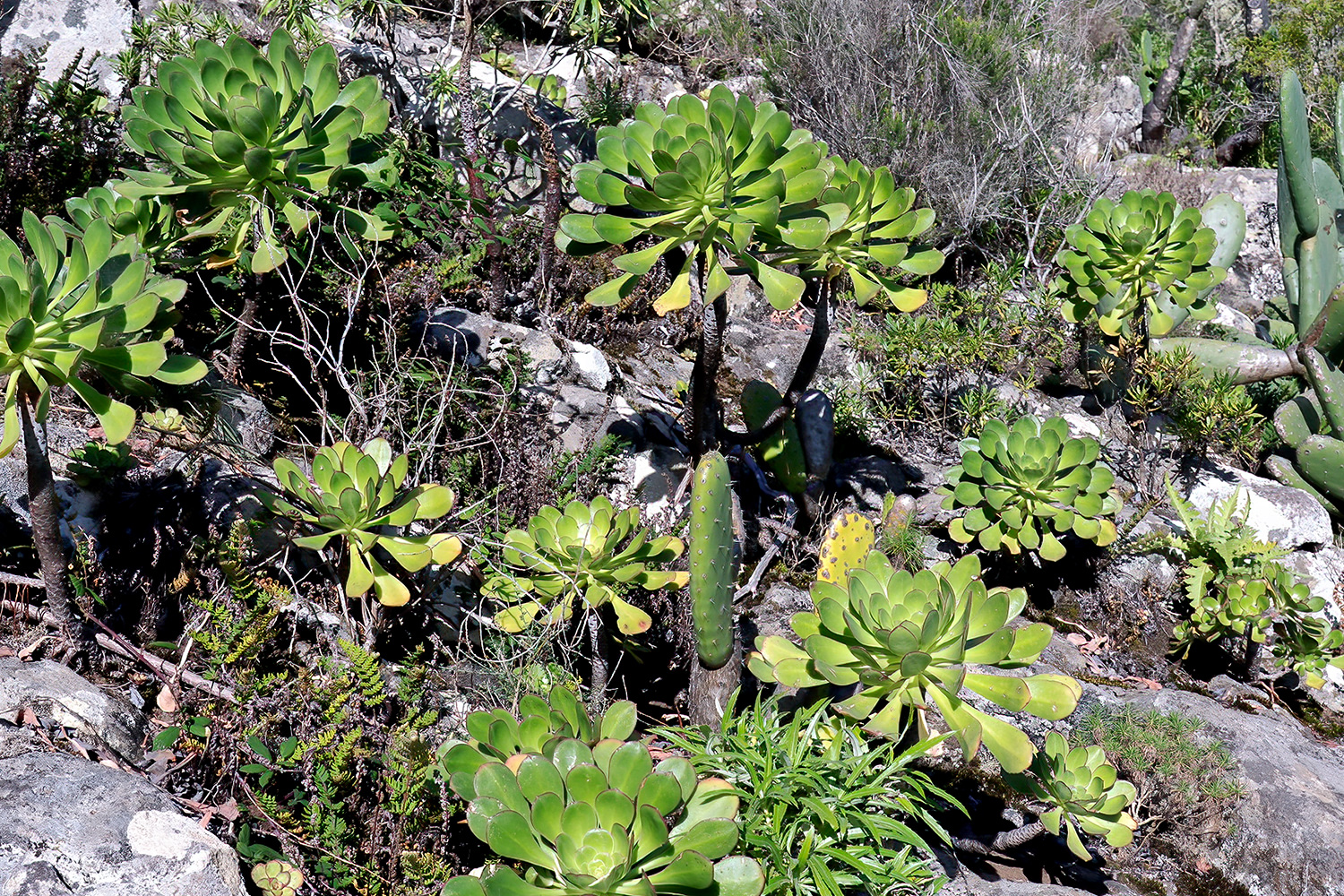
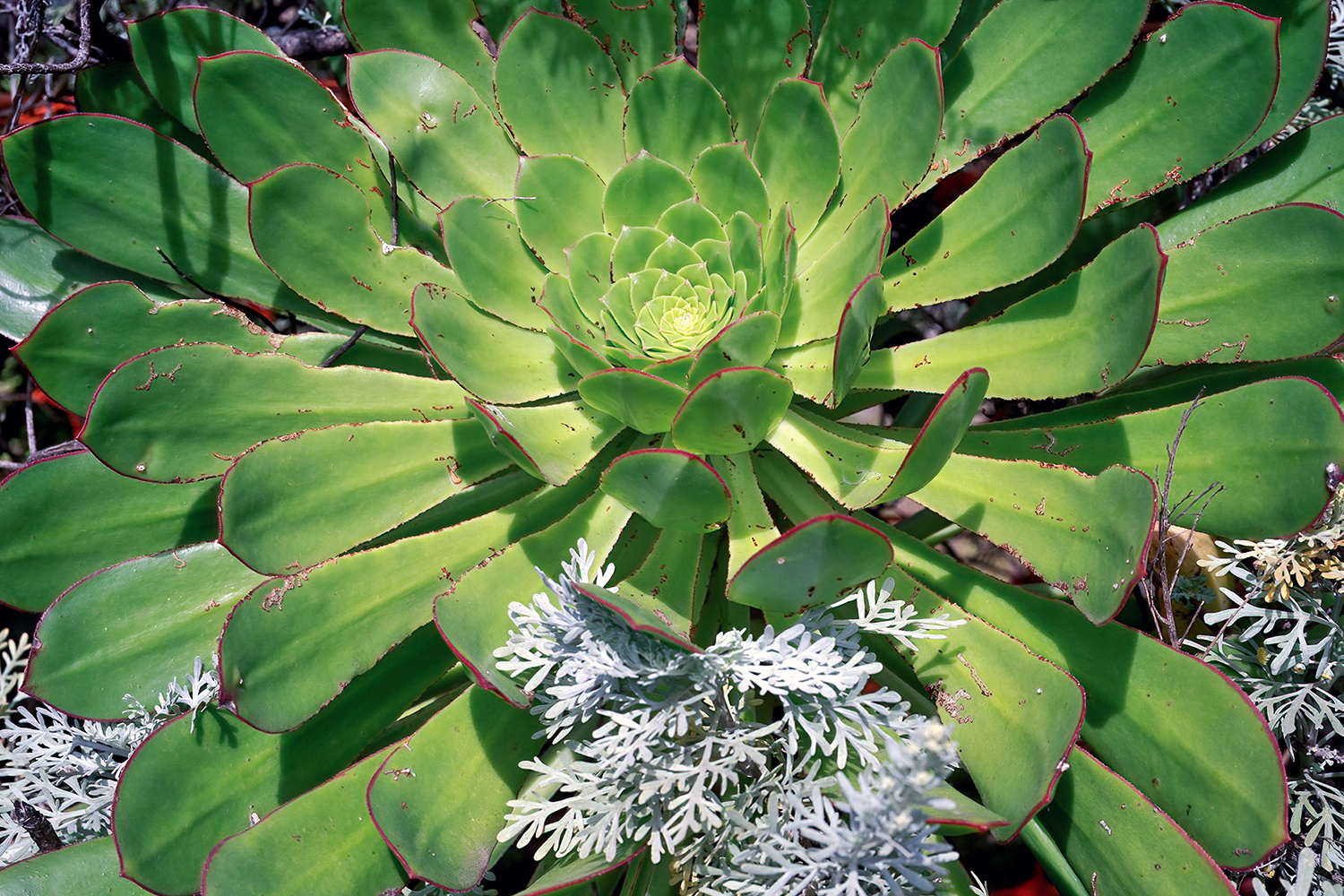
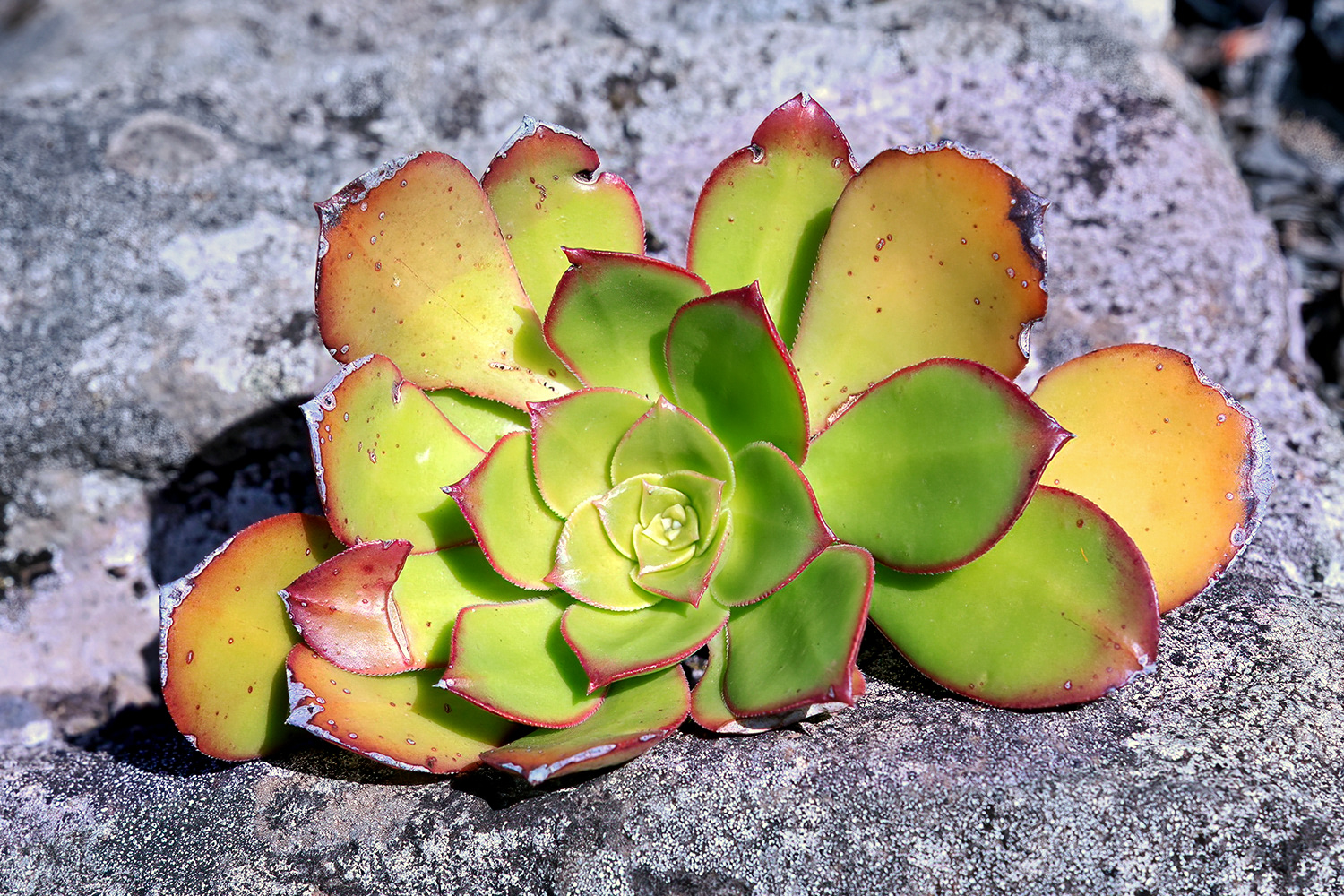
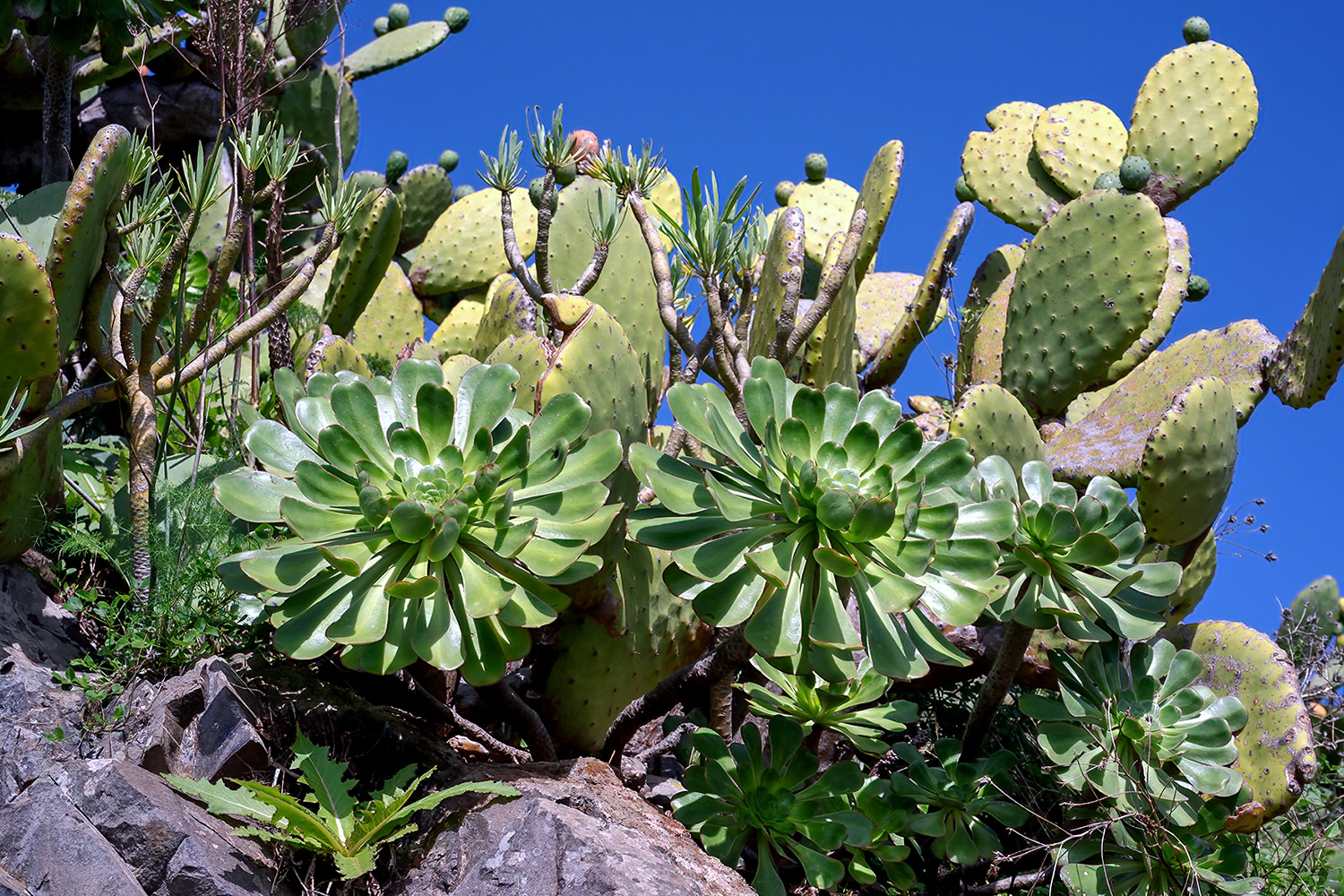
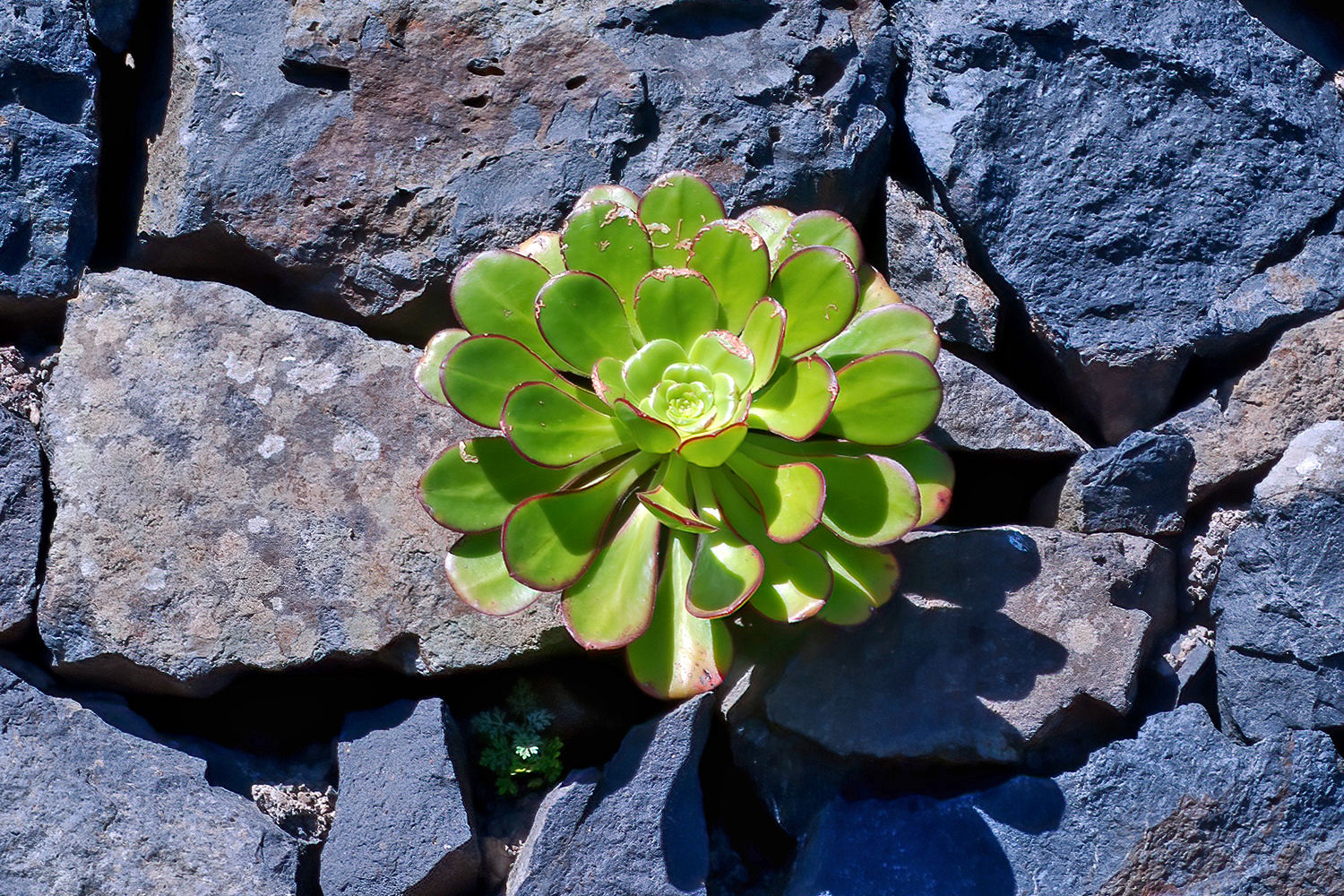
Its large, fleshy leaves, measuring around 8–18 cm long by 3–4 cm wide, are grouped in a dense terminal rosette measuring between 15 and 30 cm in diameter. They are simple, narrowly oblanceolate, pointed at the apex, pale green or bluish-green in colour, with a ciliate margin and a reddish edge running along it.
Its abundant, small, star-shaped flowers, approximately 1 cm in diameter and whitish, greenish or pinkish in colour, are grouped into enormous pyramidal inflorescences 15–75 cm long and 10–45 cm in diameter, which emerge from the centre of the leaf rosette. Each flower has 8–10 triangular sepals, about 2–3 mm long, glabrous and tapering to a point at the apex; the same number of lanceolate petals, 7–10 mm long, whitish, with the middle portion variegated pink; and twice as many stamens with whitish filaments and pale yellow to whitish anthers.
When fruiting, they produce a large quantity of tiny brown seeds, which germinate very easily.
It sometimes develops adventitious roots on the stem, which serve the dual purpose of supporting the plant and absorbing some of the ambient moisture during the driest months of the year.
Habitat:
Endemic to the island of Tenerife, it is frequently found and even
common in semi-humid areas of forested regions, although it is also
common in lower-lying areas with a semi-xeric environment.
It grows in abundance on walls and fences, as well as on the balconies and roofs of many old houses and buildings, adorning them in such an unusual way that it catches the eye of locals and visitors alike.
It grows in abundance on walls and fences, as well as on the balconies and roofs of many old houses and buildings, adorning them in such an unusual way that it catches the eye of locals and visitors alike.
Flowering:
Its flowering period is very long, spanning most of the spring months
and part of the summer.
Propagation: By seed and by cuttings, which root very easily.
Uses: It is frequently used as an ornamental plant, in both public and private gardens. However, this practice should be restricted to its natural range, given the high hybridisation potential of species in this genus, whilst maintaining strict respect for its natural populations.