Canary Flora > Wild species
Galactites tomentosus
Galactites tomentosus Moench
Familia
ASTERACEAE
Cardo borriquero, cardo silvestre, cardo blanco, cuajaleche
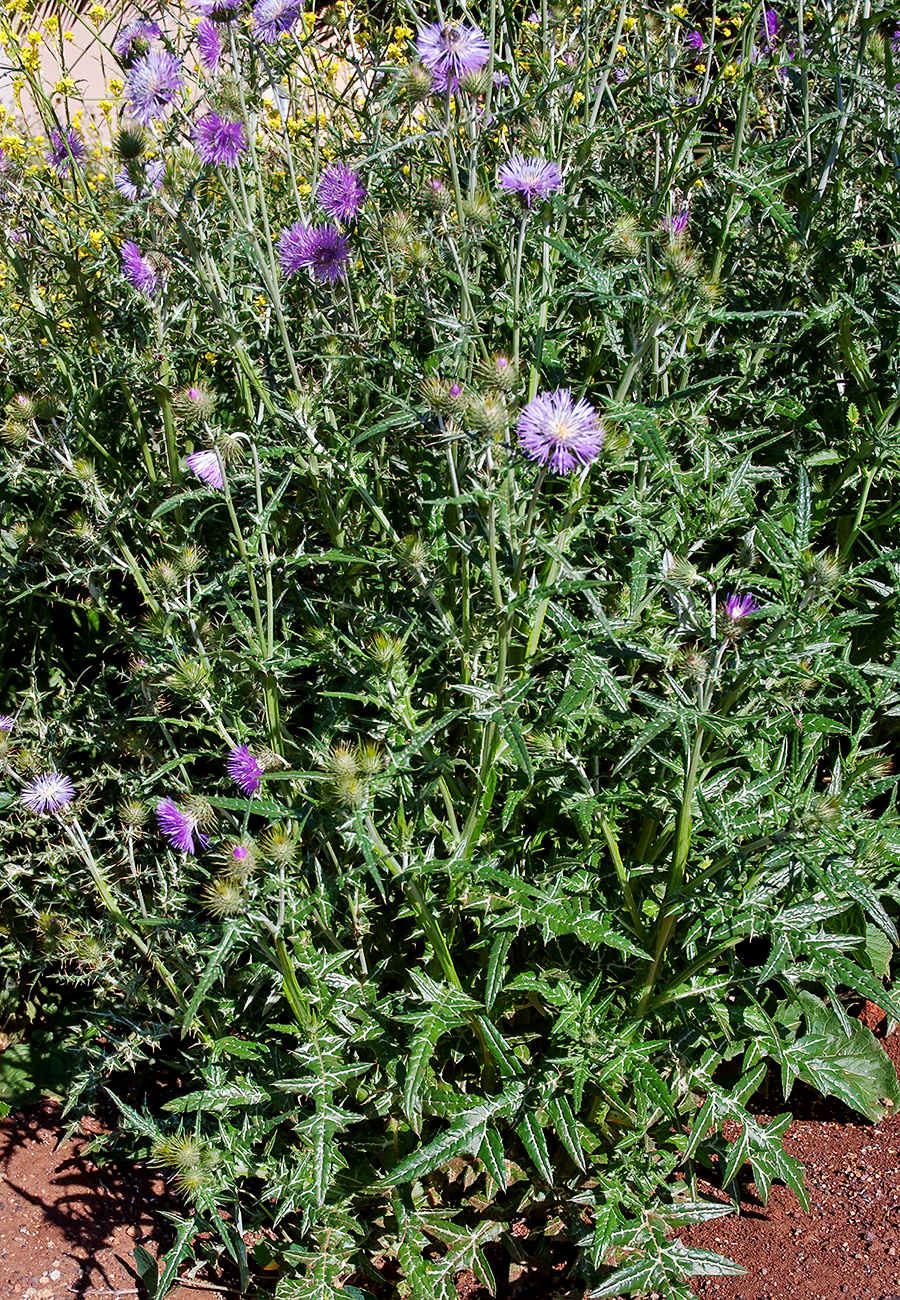
Description: An annual herbaceous plant
20–150 cm tall, with a long, thick tuberous root from which an erect stem
arises; the stem may be sparsely or densely branched and is more or less
covered with cottony tomentum, depending on the age and specific location of
each specimen.
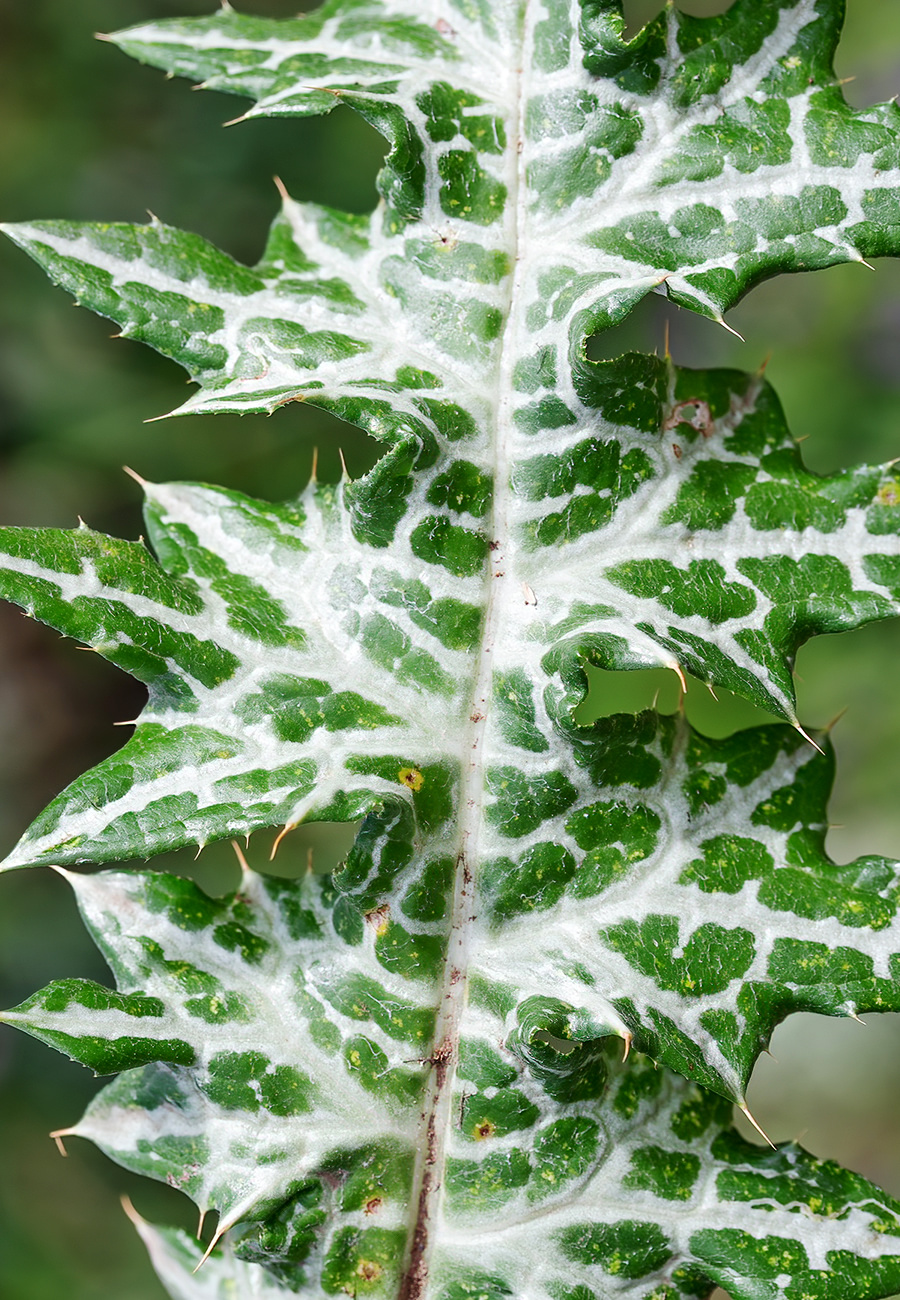
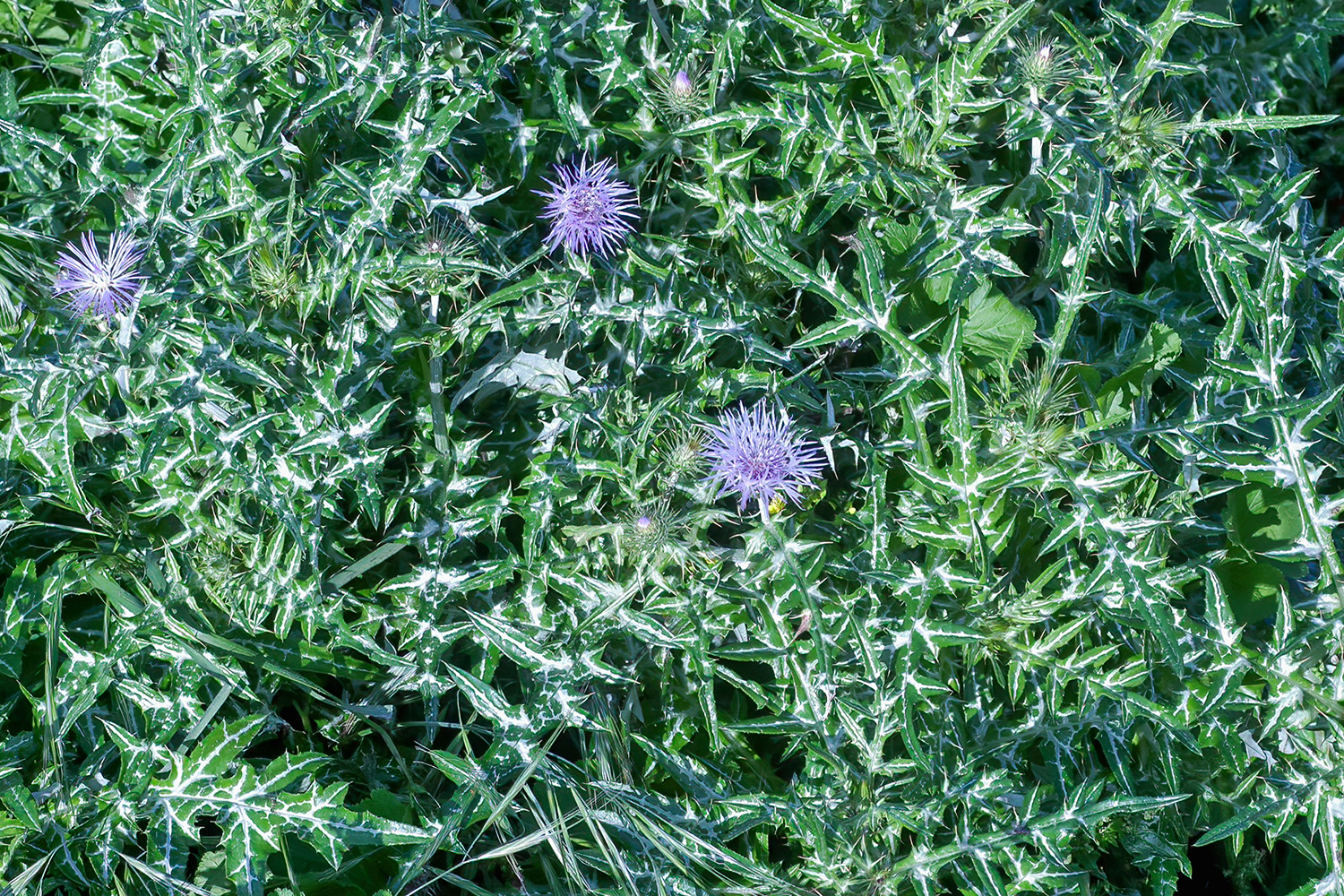
The lower leaves, which fall off early and are up to 50 cm long, are arranged in a large rosette at the base of the stem; they are simple, petiolate, inversely lanceolate and have finely serrated margins. The cauline leaves, between 5 and 20 cm long, are arranged alternately along the stem. They are sessile, deeply divided (pinnatifid), and the leaf lobes are tipped with short, fine, sharp, yellowish spines. All have a smooth, bright green upper surface with irregular whitish-green spots, whilst the underside has very prominent venation and is covered with a light whitish tomentum. Where they join the stem, they form an extremely long decurrent portion, resembling a spiny, winged strip on both sides of the stem, which joins the base of the preceding leaf.
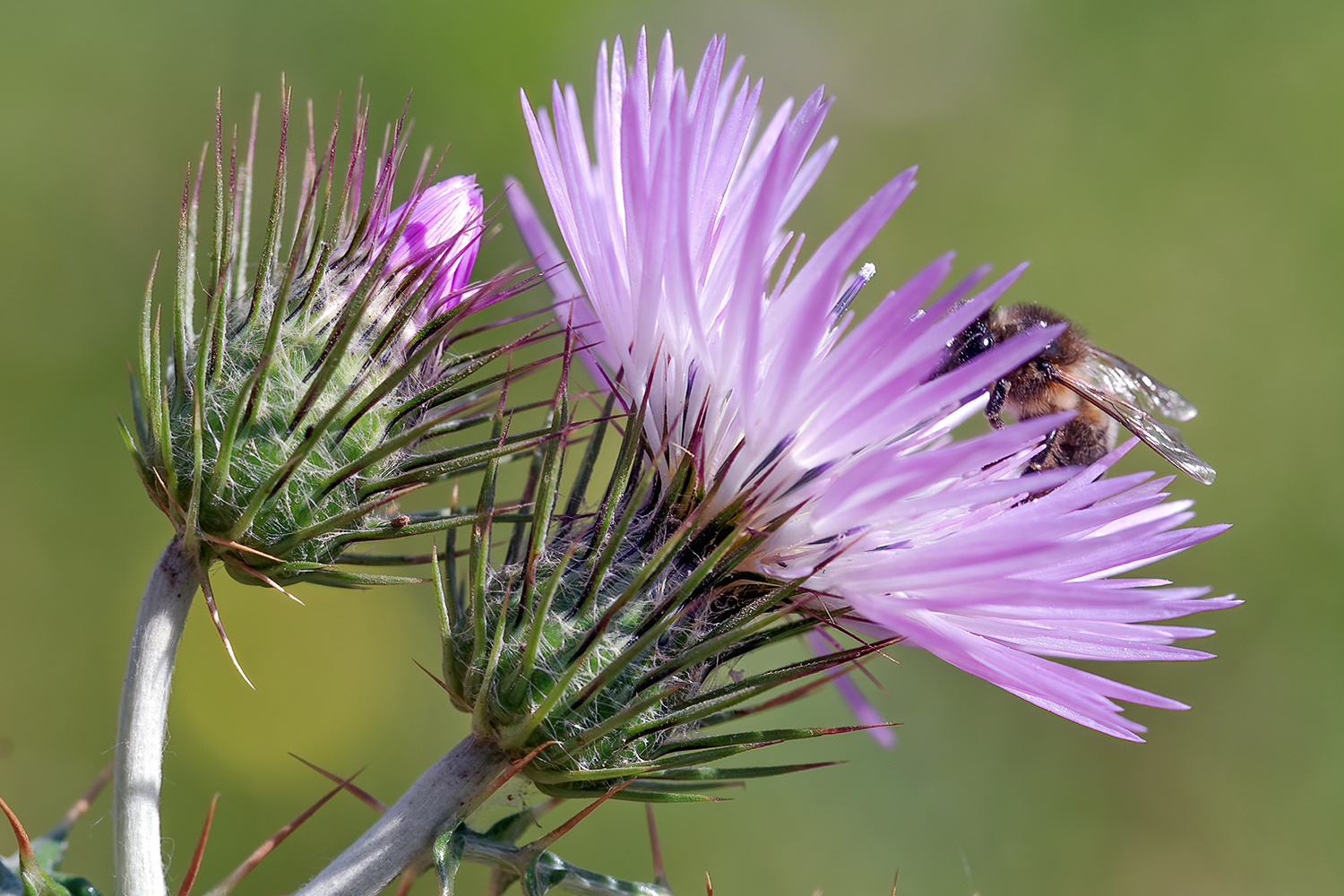
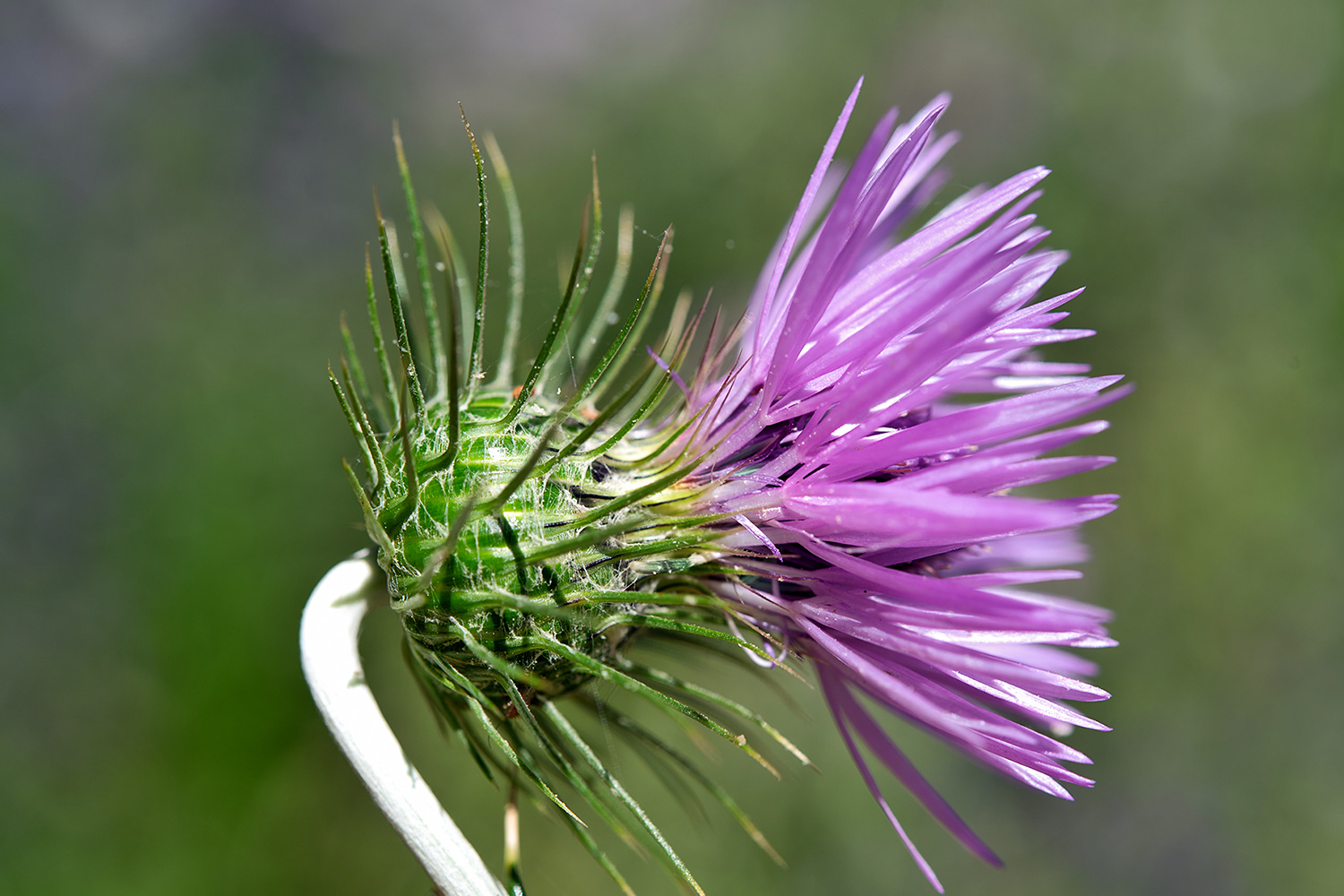
Its striking and somewhat fragrant flowers, which are slender and tubular in shape and lilac or purple in colour, are arranged in semi-globose heads about 3–4 cm in diameter, either solitary or in corymbose clusters, resting on a bell-shaped receptacle lined with fine, spiny, triangular bracts 1–1.5 cm long; as they ripen, they open radially at the tip into five lobes. The outer flowers, which are slightly larger and more intensely coloured than the rest, are sterile, as their purpose is to attract pollinating insects.
The fruits are blackish achenes, approximately 2–4 cm long, glabrous, striated, and bearing a long, white, simple, feathery pappus that falls off readily, with 1–3 rows of unequal feathery hairs fused at the base into a ring; their function is to facilitate dispersal by the wind.
Habitat: A species native to the
Mediterranean, it is common and even abundant in the Canary Islands in
grasslands, abandoned vegetable gardens, along the edges of paths and
roads, on disturbed land, etc., in the lowland and mid-altitude areas of
the islands, as well as in cleared areas of the montane forest.
In many places, it behaves as an invasive plant, occupying large areas of land and displacing native species.
In many places, it behaves as an invasive plant, occupying large areas of land and displacing native species.
Flowering: From late winter to
mid-summer.
Propagation: By seeds.
Uses: In some parts of Gran Canaria, its flowers – picked at the right time and dried in the shade – are used as milk rennet for making so-called ‘flower cheeses’, or ‘half-flower cheeses’ when mixed in equal parts with kid rennet. For the same purpose, the flowers of other thistles are more commonly used, such as the artichoke (Cynara scolymus) or the wild thistle (Onopordon carduelium).
Its flowers are edible and can be used in soups and salads. The tender stems are eaten raw, with oil or vinegar, or boiled, like asparagus, although their lack of fleshiness does not justify the risk of pricking oneself on their spines.
Young plants are occasionally used as fodder for livestock.