Canary Flora > Wild species
Aeonium canariense
Aeonium canariense (L.) Webb & Berthel. ssp. canariense
Familia
CRASSULACEAE
Verode, pastel de risco
Description:
A perennial herb with a very short, thick, almost woody stem, occasionally
branched at the base and rarely erect.
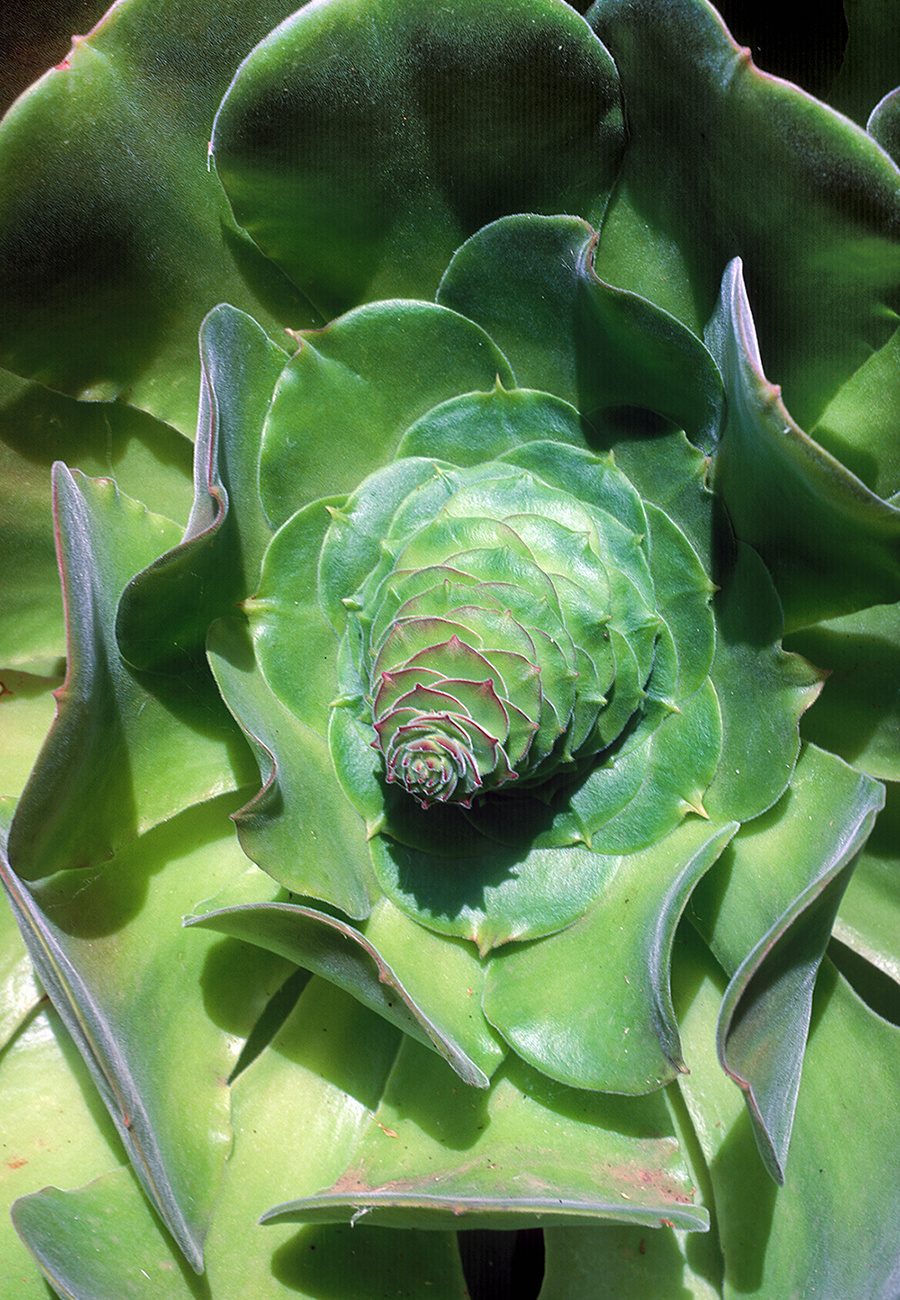
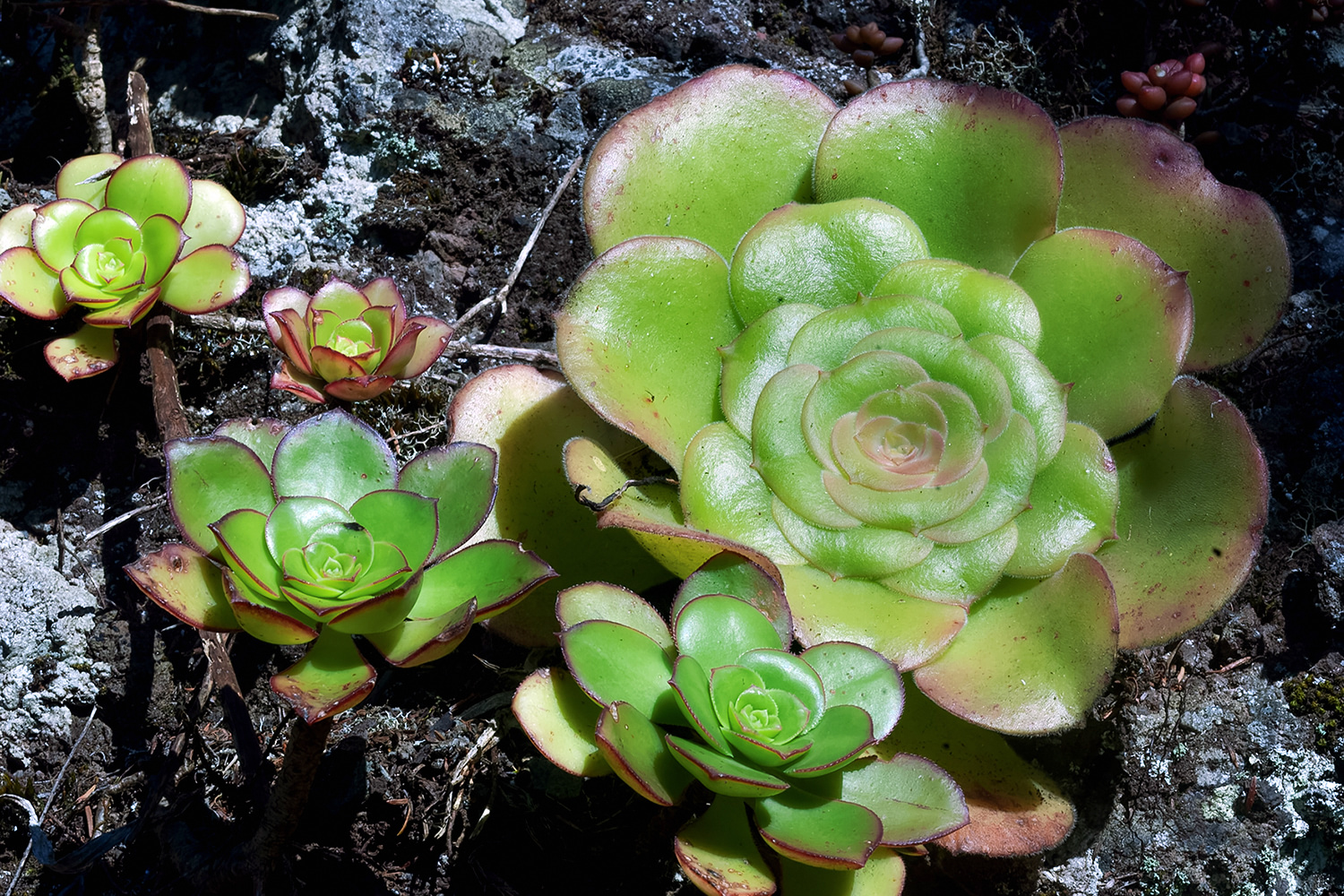
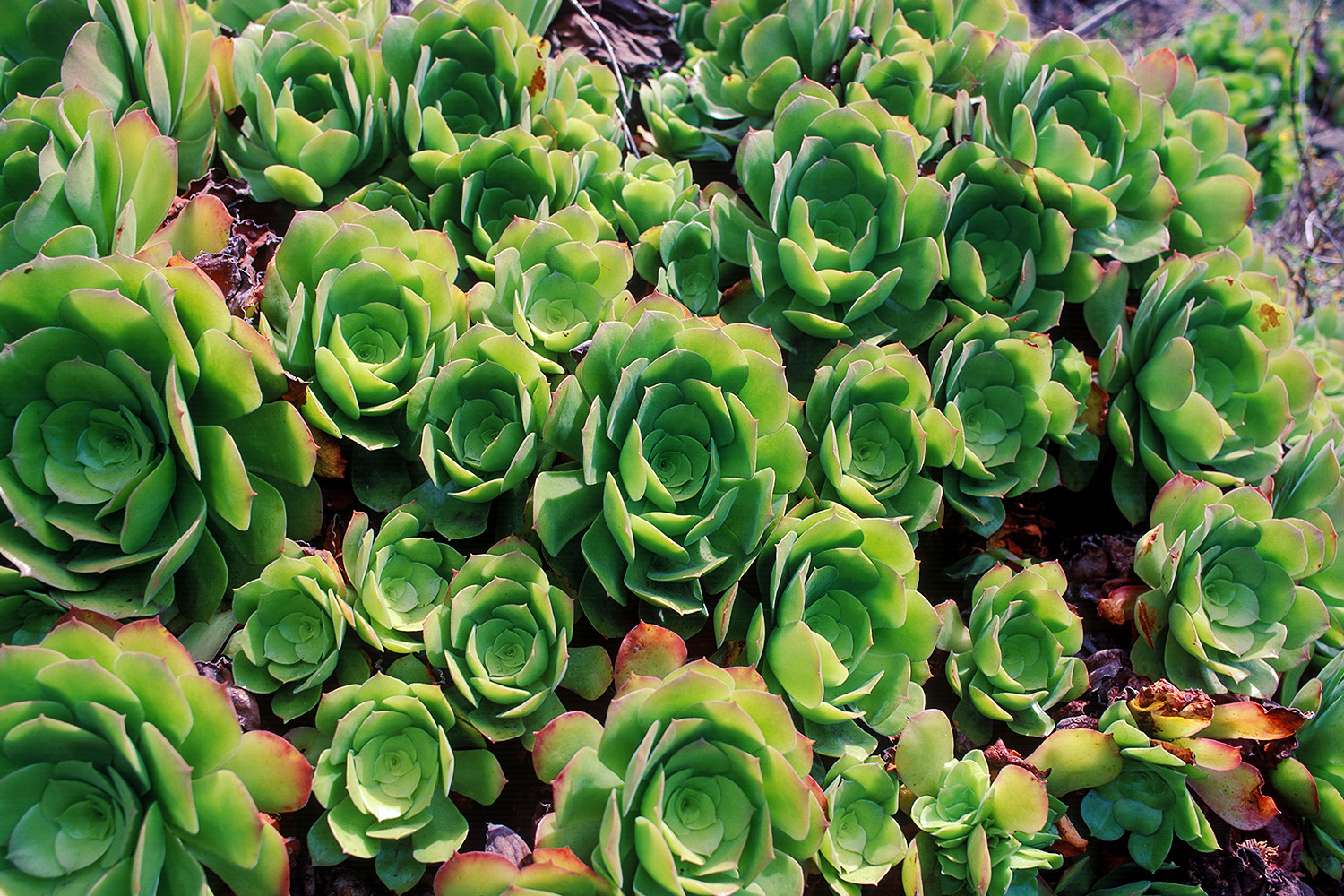
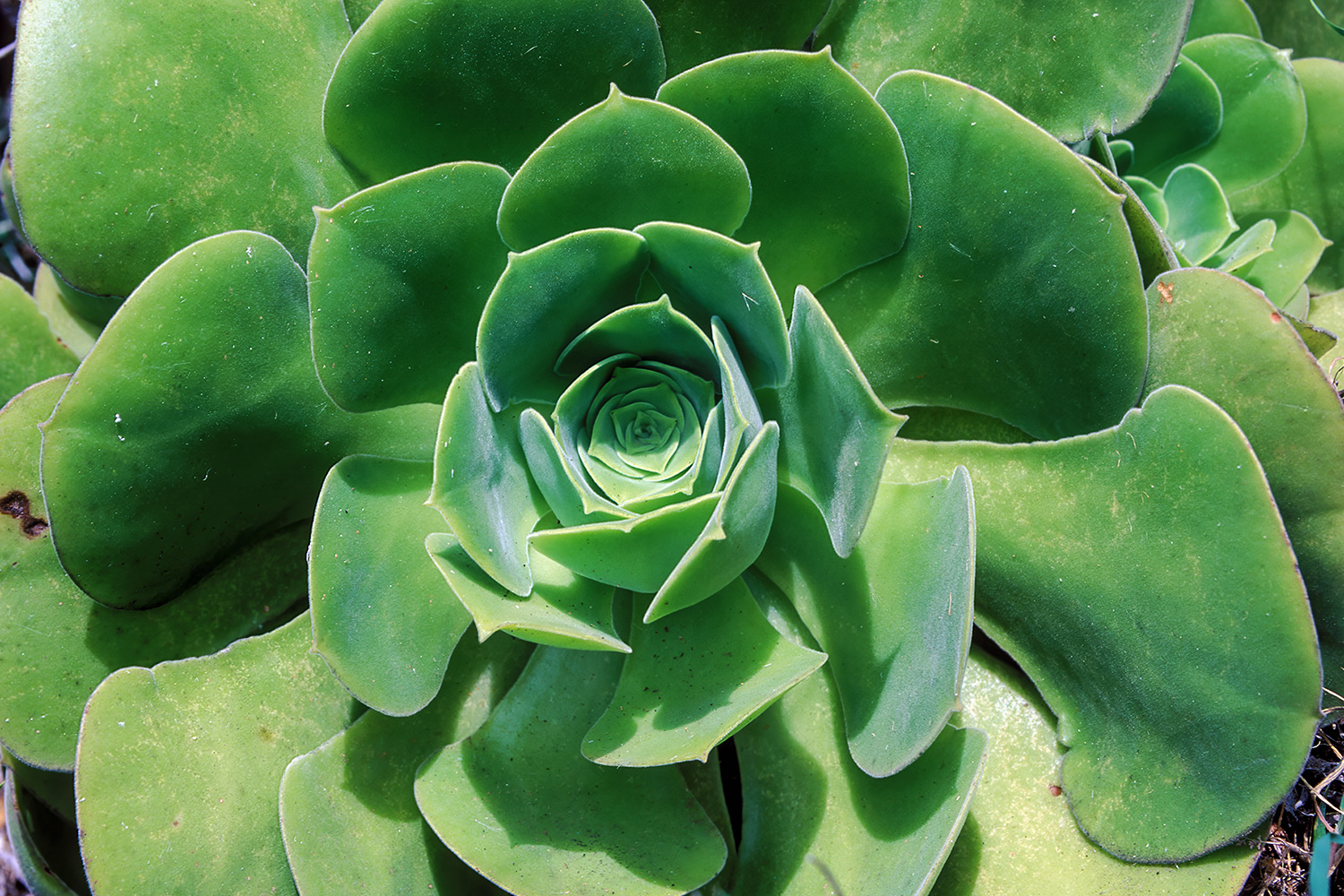
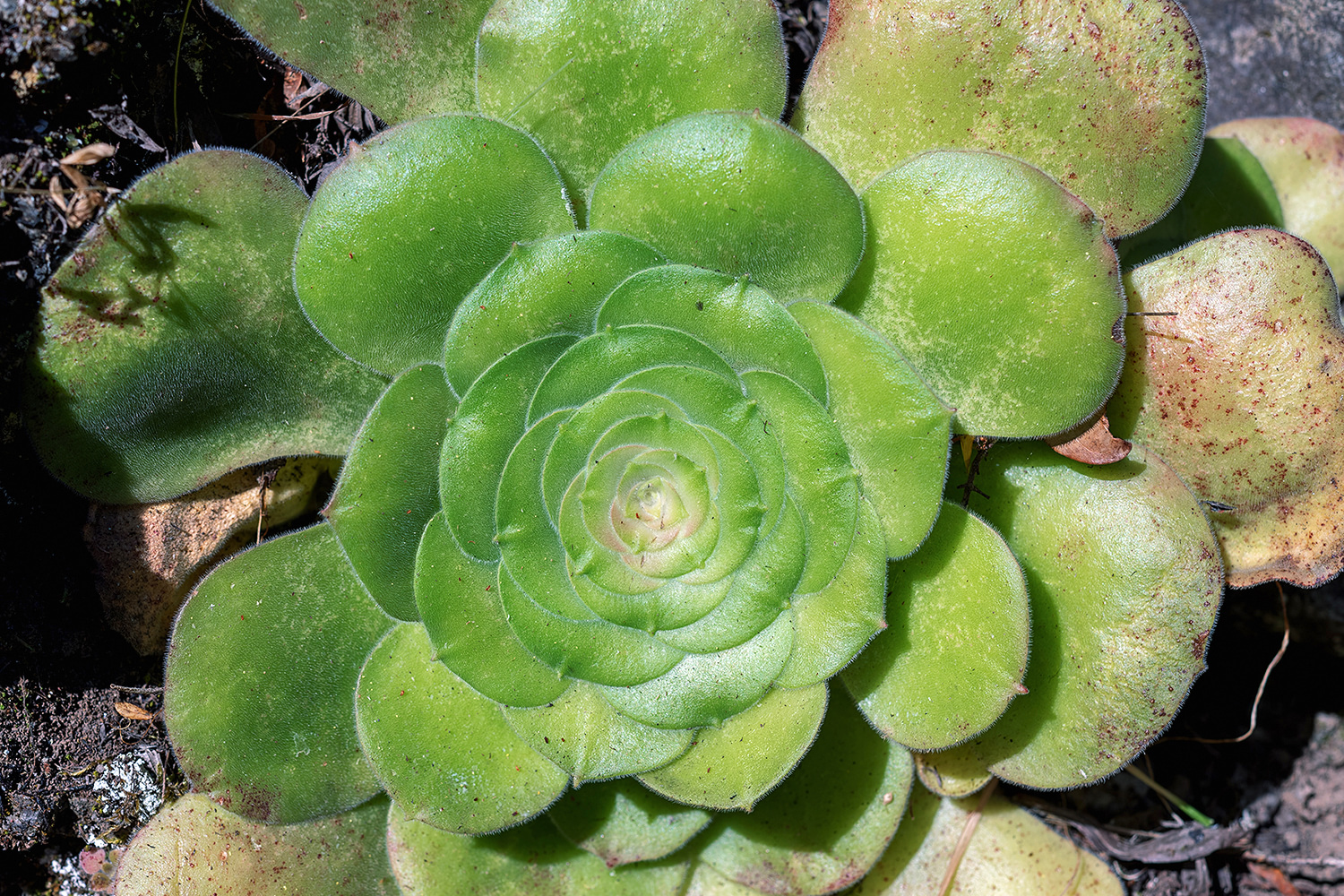
The leaves are large, 6–20 cm long and 3–8 cm wide, very fleshy, simple, ovate to spatulate in shape, sometimes with a wavy margin, subtly ciliate along the edges, covered with a soft glandular pubescence on both surfaces, and with a rounded or mucronate apex. They are clustered at the base of the stem, forming a beautiful basal rosette, generally flattened due to the semi-erect position of the leaves, and measuring between 15–40 cm in diameter, although in some exceptional specimens they may be much larger. Their colour is a deep, velvety green, but in sunny conditions they turn pinkish or reddish. Once dead, the leaves remain attached to the trunk for a long time, taking on almost the colour, texture, consistency and flexibility of leather.
Its abundant star-shaped yellow flowers, approximately 1 cm in diameter, are grouped into a spectacular ovate-pyramidal inflorescence 30–45 cm high and about 20–30 cm in diameter, supported by a sturdy flowering stem 12–30 cm long that emerges from the centre of the leafy rosette, with leaflets decreasing in size towards the tip. Each flower has 8–10 sepals, lanceolate to ovate and about 3–5 mm long; the same number of petals, which are narrowly elliptical to lanceolate, about 7–9 mm long, acute at the apex and pale yellowish-green, almost whitish; and twice as many stamens, about 6–7 mm long, with glabrous, whitish filaments and yellow anthers. When fruiting, they produce an enormous quantity of tiny brown or blackish seeds.
Young plants often form dense clusters of up to several dozen individuals.
During the summer, the plants enter a period of vegetative dormancy, and the rosettes close in on themselves to a greater or lesser extent, taking on a more or less compact shape.da.
The leaves are large, 6–20 cm long and 3–8 cm wide, very fleshy, simple, ovate to spatulate in shape, sometimes with a wavy margin, subtly ciliate along the edges, covered with a soft glandular pubescence on both surfaces, and with a rounded or mucronate apex. They are clustered at the base of the stem, forming a beautiful basal rosette, generally flattened due to the semi-erect position of the leaves, and measuring between 15–40 cm in diameter, although in some exceptional specimens they may be much larger. Their colour is a deep, velvety green, but in sunny conditions they turn pinkish or reddish. Once dead, the leaves remain attached to the trunk for a long time, taking on almost the colour, texture, consistency and flexibility of leather.
Its abundant star-shaped yellow flowers, approximately 1 cm in diameter, are grouped into a spectacular ovate-pyramidal inflorescence 30–45 cm high and about 20–30 cm in diameter, supported by a sturdy flowering stem 12–30 cm long that emerges from the centre of the leafy rosette, with leaflets decreasing in size towards the tip. Each flower has 8–10 sepals, lanceolate to ovate and about 3–5 mm long; the same number of petals, which are narrowly elliptical to lanceolate, about 7–9 mm long, acute at the apex and pale yellowish-green, almost whitish; and twice as many stamens, about 6–7 mm long, with glabrous, whitish filaments and yellow anthers. When fruiting, they produce an enormous quantity of tiny brown or blackish seeds.
Young plants often form dense clusters of up to several dozen individuals.
During the summer, the plants enter a period of vegetative dormancy, and the rosettes close in on themselves to a greater or lesser extent, taking on a more or less compact shape.da.
Habitat:
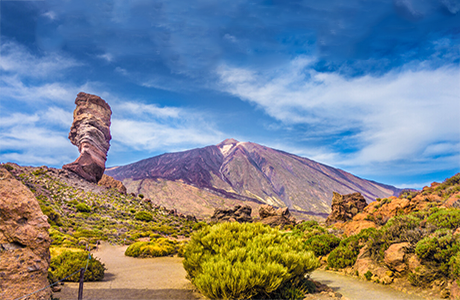
A frequent, and even common, species endemic to the Canary Islands,
found in rocky and rugged areas, from the coastal zones to the laurel
and fayal-heath forests of Tenerife, particularly in dry, sunny spots
along the island’s northern coast, from Anaga to Teno.
Flowering:
Spring and summer, usually between April and August.
Propagation: By seeds and cuttings. As with all unbranched species of this genus, the adult plant dies after flowering.
Uses: Its use as an ornamental plant is becoming increasingly common. It is very easy to grow and requires little care; however, watering and fertiliser should be kept to a minimum, as otherwise the plants will grow to disproportionate sizes, detracting from their original beautiful form.
However, this plant should not be introduced outside its natural range, to avoid undesirable effects of hybridisation with other species within its broad and diverse genus. Furthermore, absolute respect must be shown for its natural populations, preventing the collection of specimens by unscrupulous collectors.
Propagation: By seeds and cuttings. As with all unbranched species of this genus, the adult plant dies after flowering.
Uses: Its use as an ornamental plant is becoming increasingly common. It is very easy to grow and requires little care; however, watering and fertiliser should be kept to a minimum, as otherwise the plants will grow to disproportionate sizes, detracting from their original beautiful form.
However, this plant should not be introduced outside its natural range, to avoid undesirable effects of hybridisation with other species within its broad and diverse genus. Furthermore, absolute respect must be shown for its natural populations, preventing the collection of specimens by unscrupulous collectors.