Canary Flora > Wild species
Aeonium cuneatum
Aeonium cuneatum Webb & Berthel.
Familia
CRASSULACEAE
Góngaro de Anaga, verode, bejeque de monte
Description: A perennial, succulent herb
with a short, not very thick, erect stem covered with a thin, greyish-brown
bark. It frequently produces stoloniferous stems around it, up to 25 cm
long.
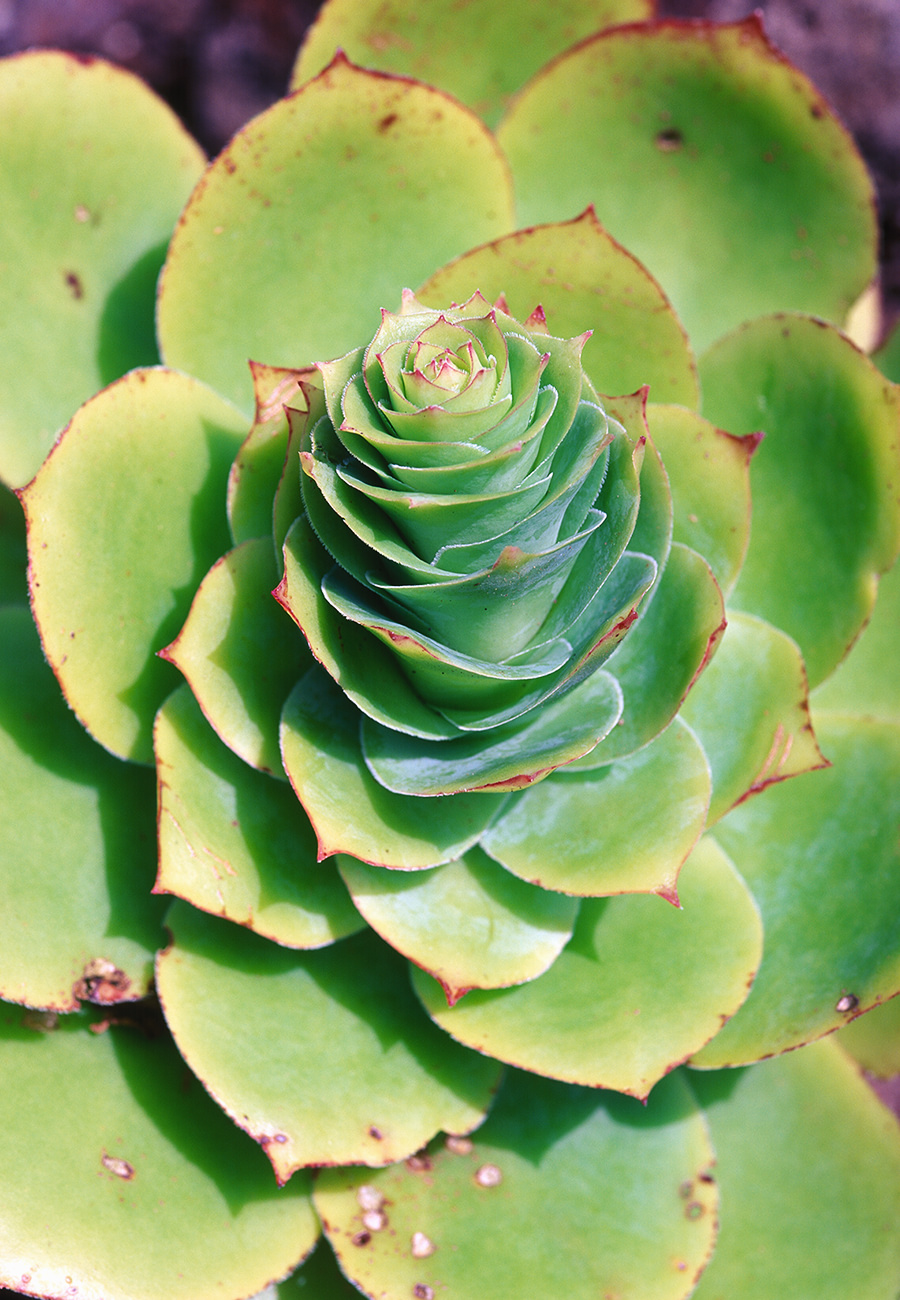
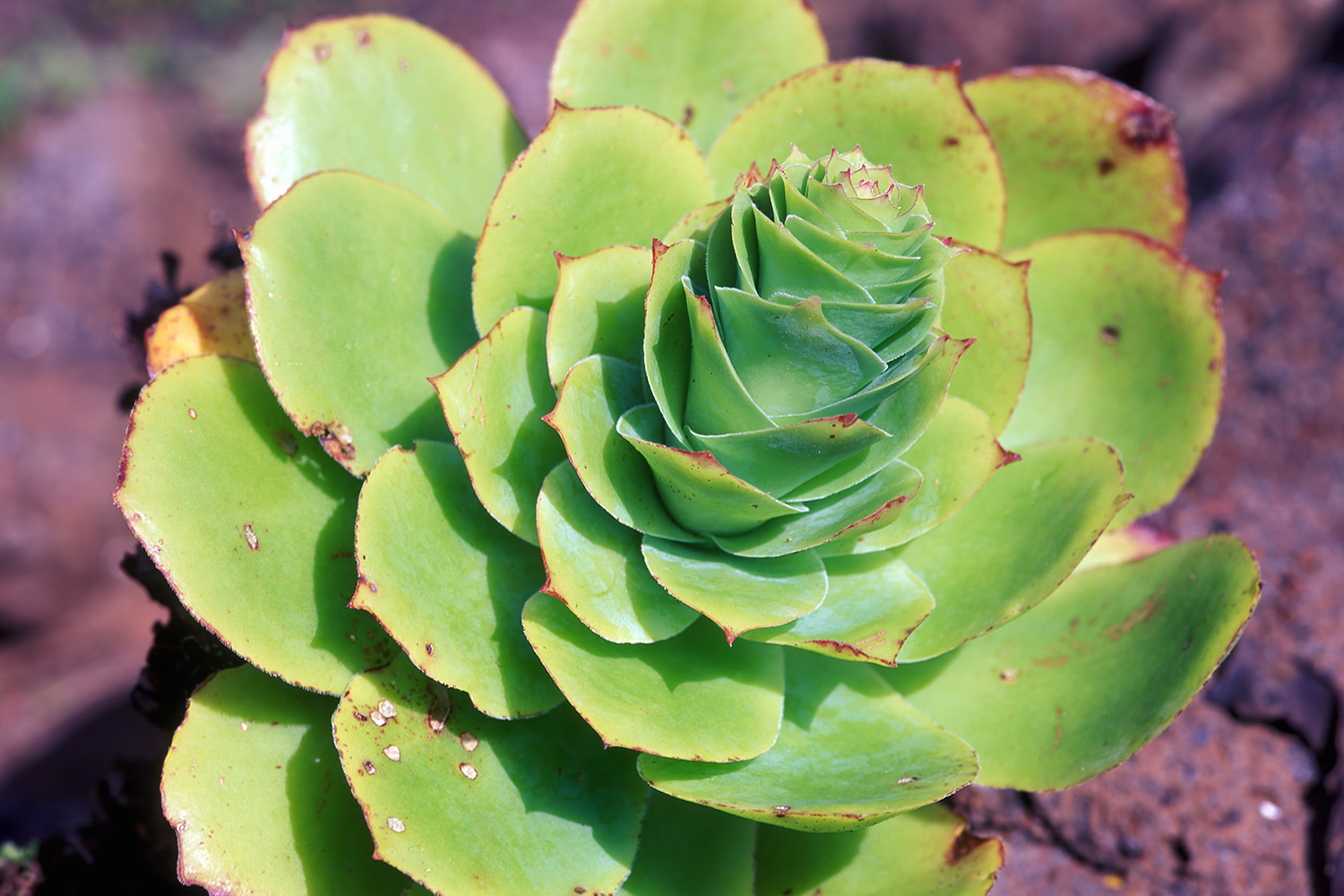
Its succulent leaves are grouped in large rosettes measuring between 15 and 50 cm in diameter, each containing around 5–13 leaves, and are usually surrounded by smaller lateral rosettes arising from the stoloniferous stems. The leaves are large, 10–25 cm long by 5–8 cm wide, rigid, very smooth, obovate to oblanceolate, mucronate at the apex, finely ciliate along the margins, and entirely covered with a very fine waxy coating that gives them a characteristic bluish-green colour. The central leaves usually grow very close together and erect, forming a sort of more or less narrow crown, which, during the rainy season or in very humid conditions, holds a large amount of water.
After several years of growth, the mother rosette produces a tall flower stalk up to 60 cm high, densely leafy and topped by a large conical inflorescence up to 50 cm high and 30 cm in diameter, brimming with small, star-shaped, sulphur-yellow flowers. Each flower has 8–9 triangular, pubescent sepals, about 3–4 mm long, the same number of oblanceolate petals, about 7 mm long, glabrous, tapering to a point at the apex and sulphur-yellow in colour, and twice as many stamens with glabrous filaments and yellow anthers.
When ripe, they produce a vast quantity of tiny seeds which are dispersed around the plant.
Its succulent leaves are grouped in large rosettes measuring between 15 and 50 cm in diameter, each containing around 5–13 leaves, and are usually surrounded by smaller lateral rosettes arising from the stoloniferous stems. The leaves are large, 10–25 cm long by 5–8 cm wide, rigid, very smooth, obovate to oblanceolate, mucronate at the apex, finely ciliate along the margins, and entirely covered with a very fine waxy coating that gives them a characteristic bluish-green colour. The central leaves usually grow very close together and erect, forming a sort of more or less narrow crown, which, during the rainy season or in very humid conditions, holds a large amount of water.
After several years of growth, the mother rosette produces a tall flower stalk up to 60 cm high, densely leafy and topped by a large conical inflorescence up to 50 cm high and 30 cm in diameter, brimming with small, star-shaped, sulphur-yellow flowers. Each flower has 8–9 triangular, pubescent sepals, about 3–4 mm long, the same number of oblanceolate petals, about 7 mm long, glabrous, tapering to a point at the apex and sulphur-yellow in colour, and twice as many stamens with glabrous filaments and yellow anthers.
When ripe, they produce a vast quantity of tiny seeds which are dispersed around the plant.
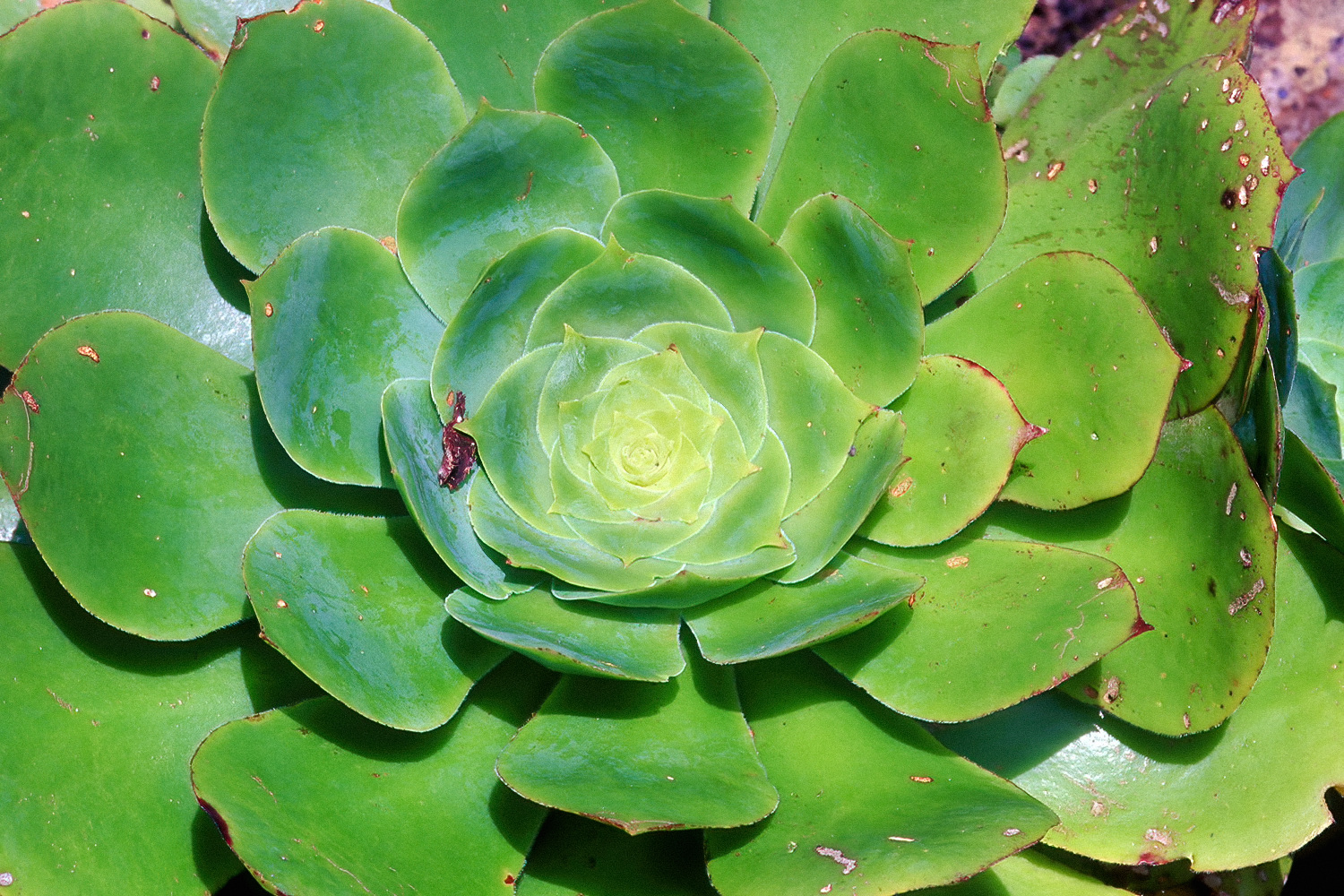
Habitat: A species endemic to the
island of Tenerife, restricted to the humid forests of the ancient Teno
and Anaga massifs, being much more common in the latter area. It grows
on cliffs, slopes and embankments rich in organic matter and well
watered by rainfall.
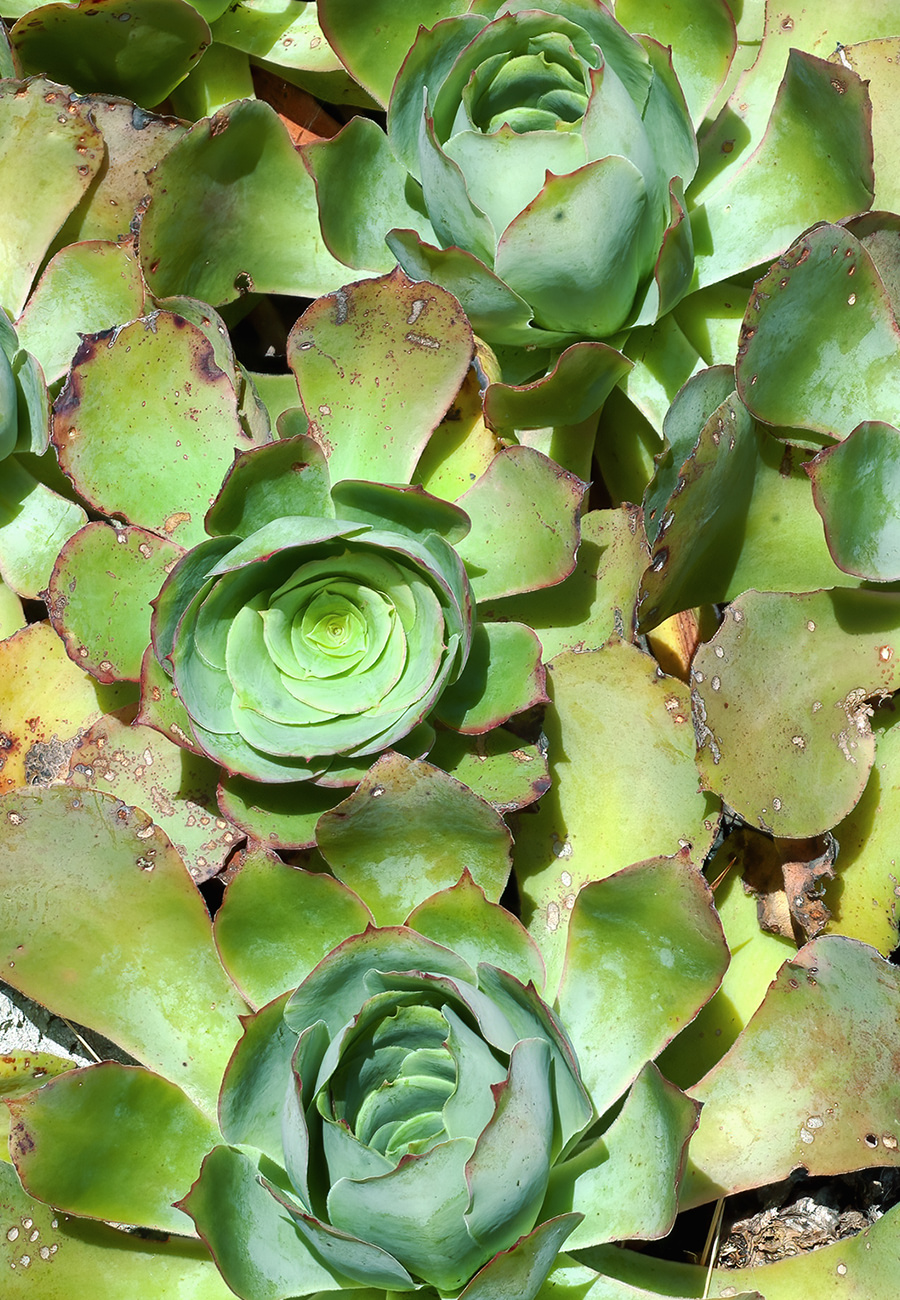
It is locally abundant, sometimes forming dense and extremely beautiful colonies. Quite frequently, it grows epiphytically on the trunks of the large trees of the Canarian montane forest: loros (Laurus novocanariensis), viñátigos (Persea indica), tilos (Ocotea foetens), etc.
In some places, it shares its habitat with another species of similar size and appearance (Aeonium canariense), which is clearly distinguishable from it by the dense, soft down covering its leaves, as well as other characteristics less noticeable to the naked eye.
It is locally abundant, sometimes forming dense and extremely beautiful colonies. Quite frequently, it grows epiphytically on the trunks of the large trees of the Canarian montane forest: loros (Laurus novocanariensis), viñátigos (Persea indica), tilos (Ocotea foetens), etc.
In some places, it shares its habitat with another species of similar size and appearance (Aeonium canariense), which is clearly distinguishable from it by the dense, soft down covering its leaves, as well as other characteristics less noticeable to the naked eye.
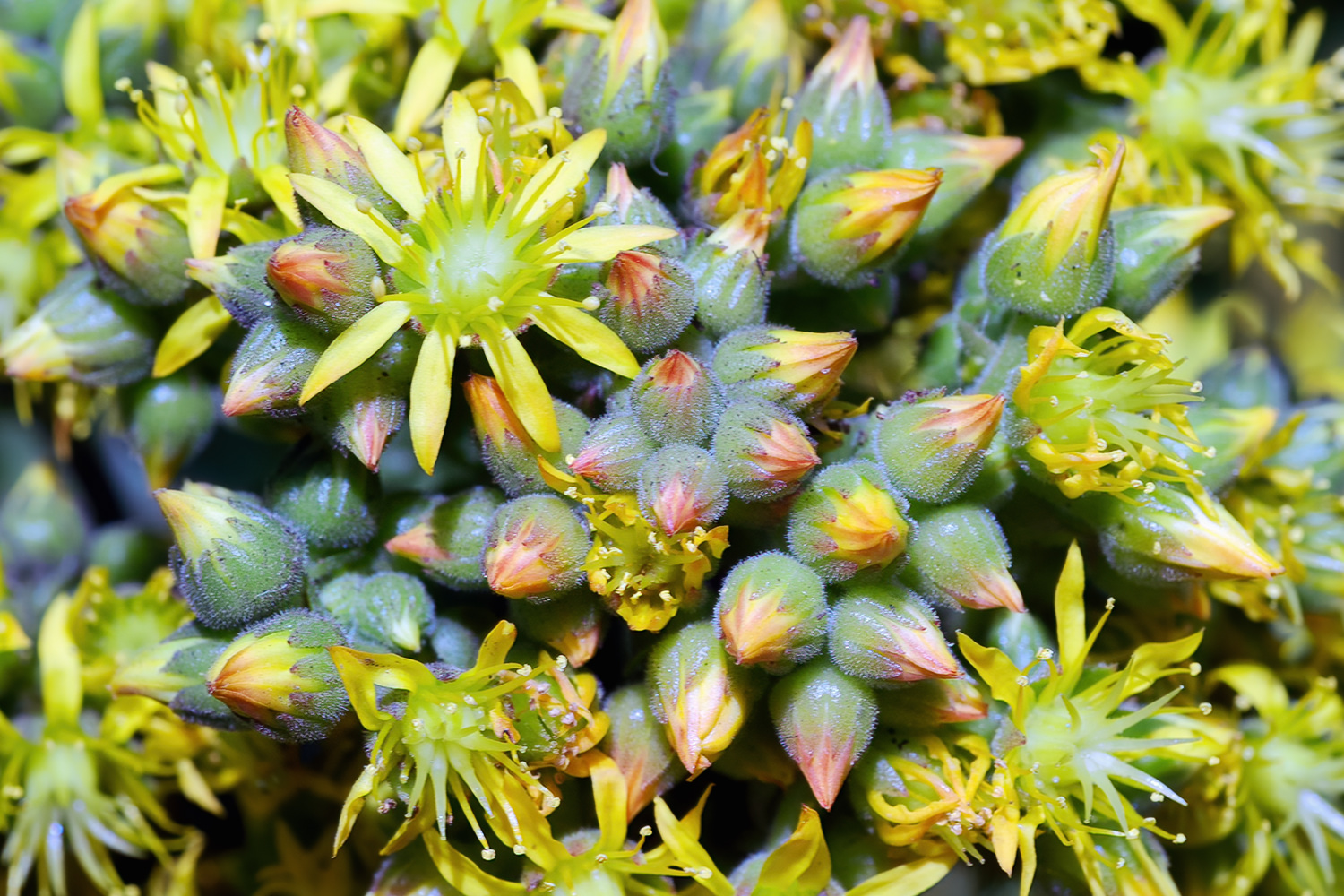
Flowering: Spring and part of the
summer.
Propagation: By seeds and cuttings.
Uses: It is increasingly used for ornamental purposes. It is very easy to grow and requires little care; however, watering and fertilisation should be kept to a minimum, as otherwise the plants will grow to disproportionate sizes, detracting from their original beautiful form. However, this plant should not be introduced outside its natural range, in order to avoid undesirable effects of hybridisation with other species within its broad and diverse genus; furthermore, any cultivation must be carried out with scrupulous respect for its natural populations.
Propagation: By seeds and cuttings.
Uses: It is increasingly used for ornamental purposes. It is very easy to grow and requires little care; however, watering and fertilisation should be kept to a minimum, as otherwise the plants will grow to disproportionate sizes, detracting from their original beautiful form. However, this plant should not be introduced outside its natural range, in order to avoid undesirable effects of hybridisation with other species within its broad and diverse genus; furthermore, any cultivation must be carried out with scrupulous respect for its natural populations.