Canary Flora > Wild species
Convolvulus canariensis
Convolvulus canariensis L.
Familia
CONVOLVULACEAE
Corregüela de monte, corregüelón, corrigüelón
Description: A herbaceous climber, woody
at the base, with evergreen or semi-evergreen foliage, having slender,
flexible branches up to 10 m long, which climb like lianas until they reach
the top of the host plants. The older ones become woody and are covered in a
thick, greyish-brown bark; the younger ones are reddish-green in colour and
finely hairy.
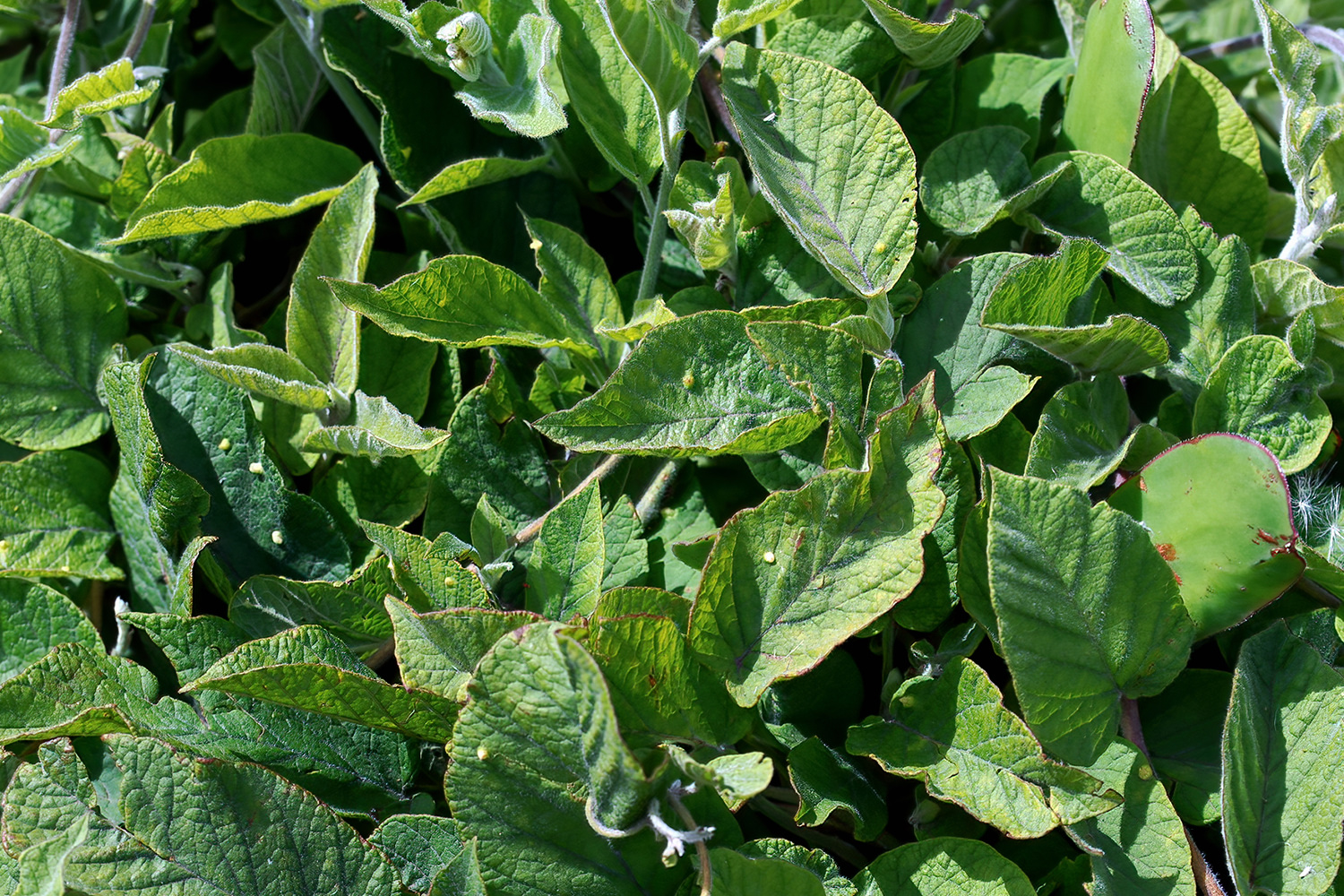
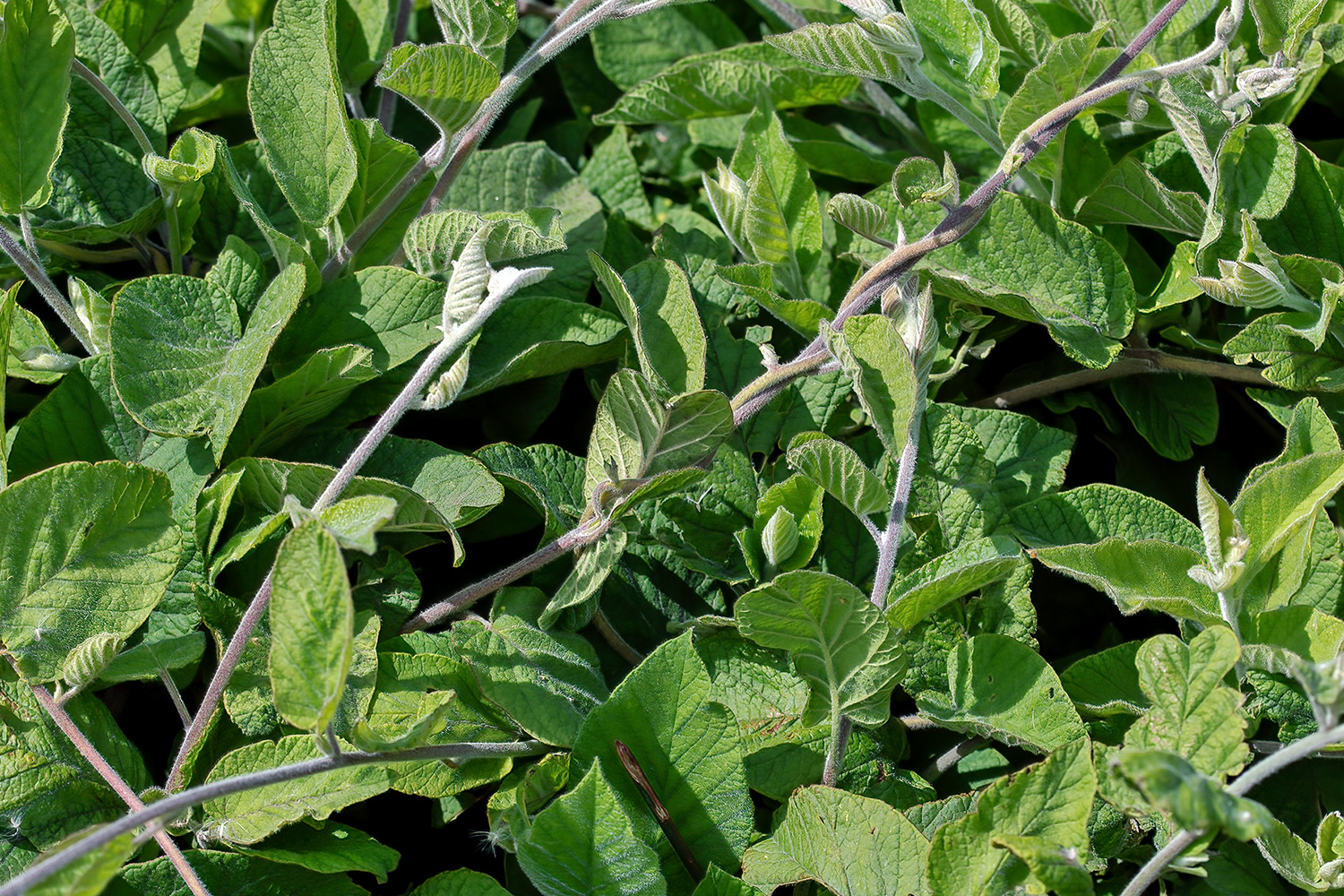
The leaves, which are pale green when young and deep green as they mature, are between 5 and 10 cm long. They are simple, alternate, petiolate, long-cordate, entire, apiculate, densely and softly hairy on both surfaces, and with prominent veins on the underside. They are frequently attacked by mites, whose bites cause them to develop swollen, yellowish galls.
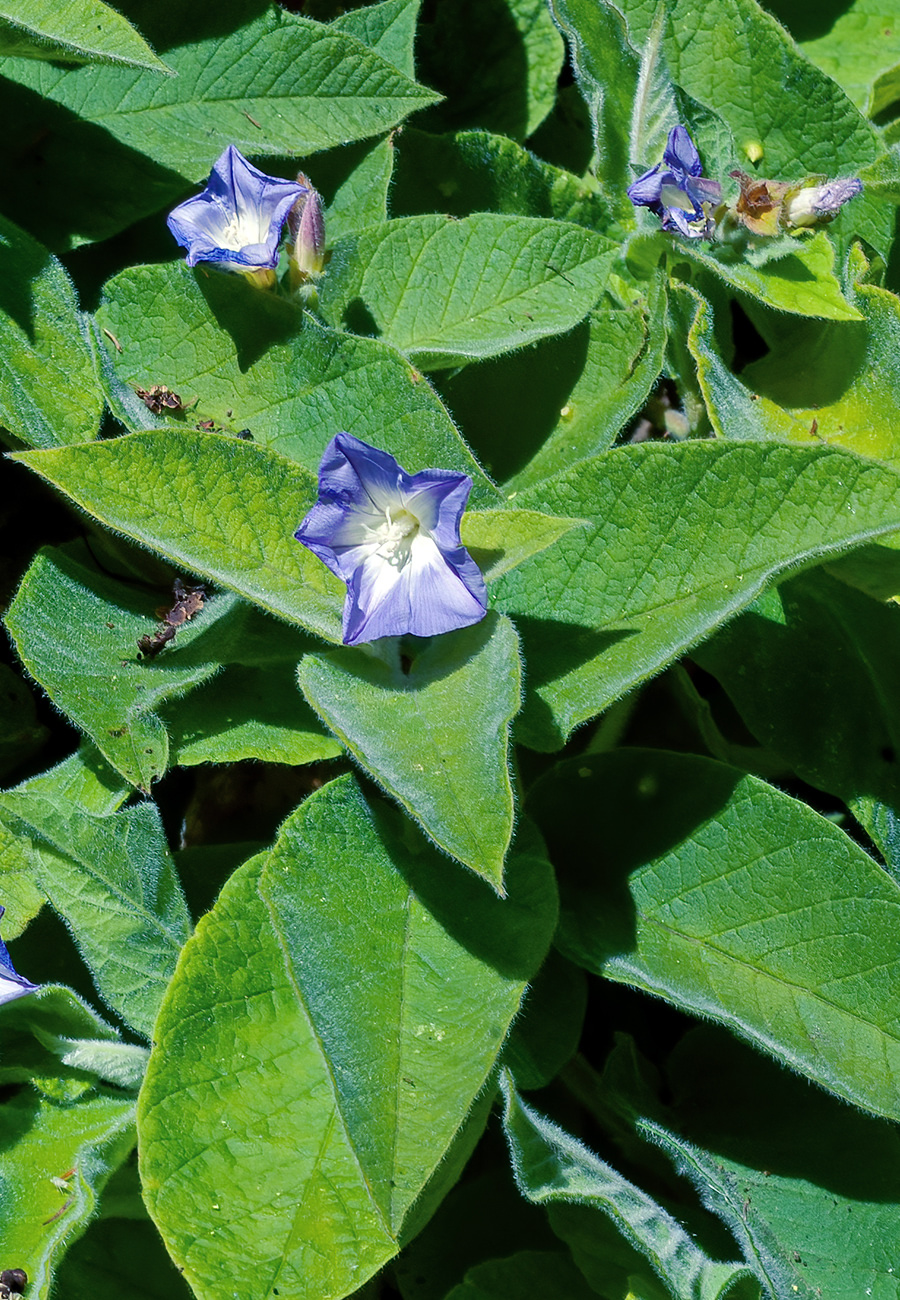
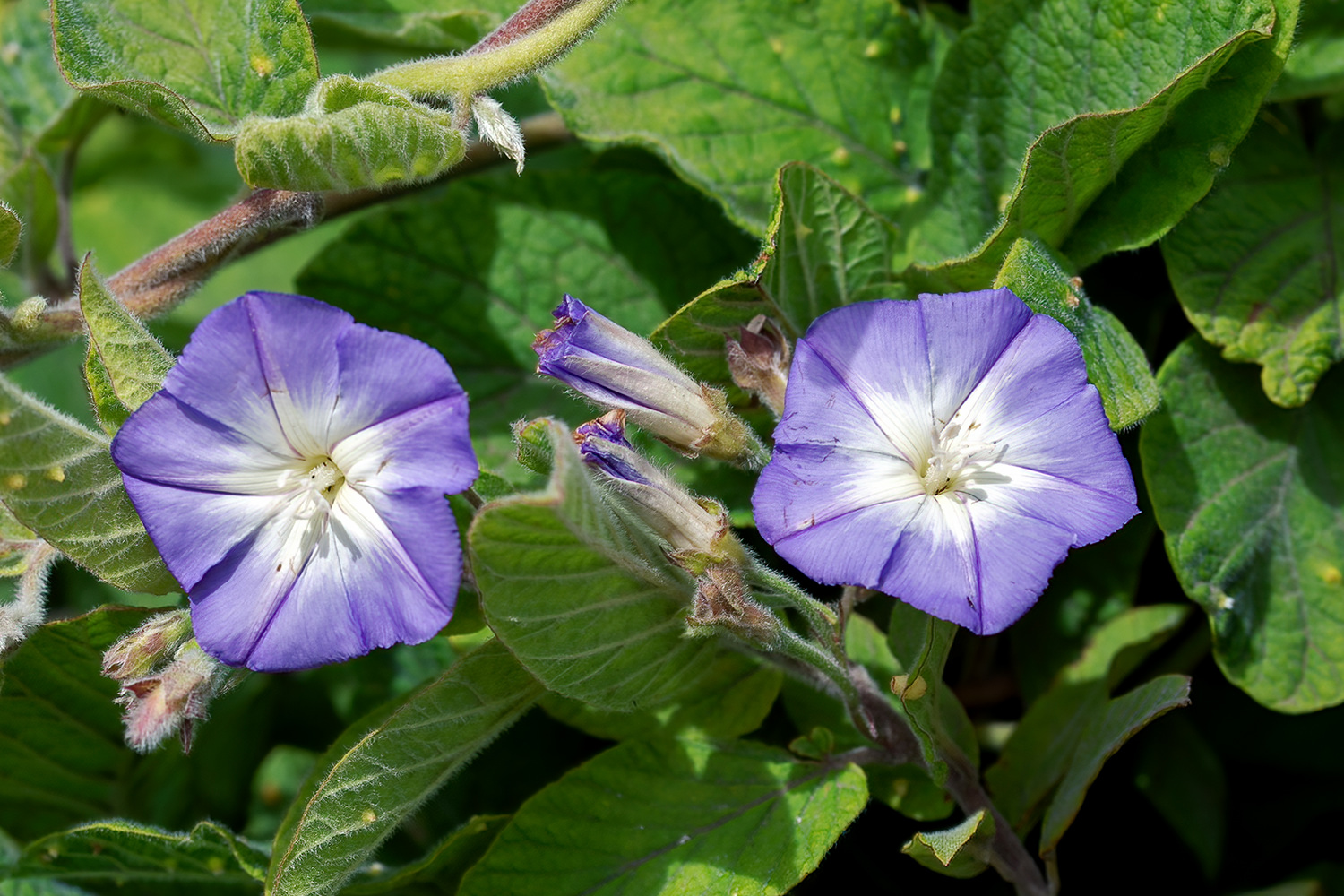
Its striking flowers are grouped in axillary corymbs of between four and nine flowers each, supported by long, slender peduncles. They have a short, hairy calyx and a bell-shaped corolla about 3–4 cm in diameter, with five shallow lobes in muted shades ranging from pink to violet, lighter towards the throat, and with clearly defined radial lines where the lobes fold.
The fruits are smooth, pear-shaped capsules, sitting on a persistent calyx, and containing one to four rough, blackish seeds.
The hairiness of this species is particularly dense and soft on the young leaves and on the flower buds before they open, where a fine, silvery, shiny down is clearly visible.
Habitat: A species endemic to the
Canary Islands, relatively common in laurel forest and fayal-brezal
habitats. It typically makes use of the structure of the large trees in
these types of woodland to entwine itself around them, whilst also
benefiting from the rich soil on which they stand.
At other times, however, it grows at the base of small shrubs in the poorer, sunnier areas, or on cliffs and slopes, forming dense mats covering an area of up to several square metres.
At other times, however, it grows at the base of small shrubs in the poorer, sunnier areas, or on cliffs and slopes, forming dense mats covering an area of up to several square metres.
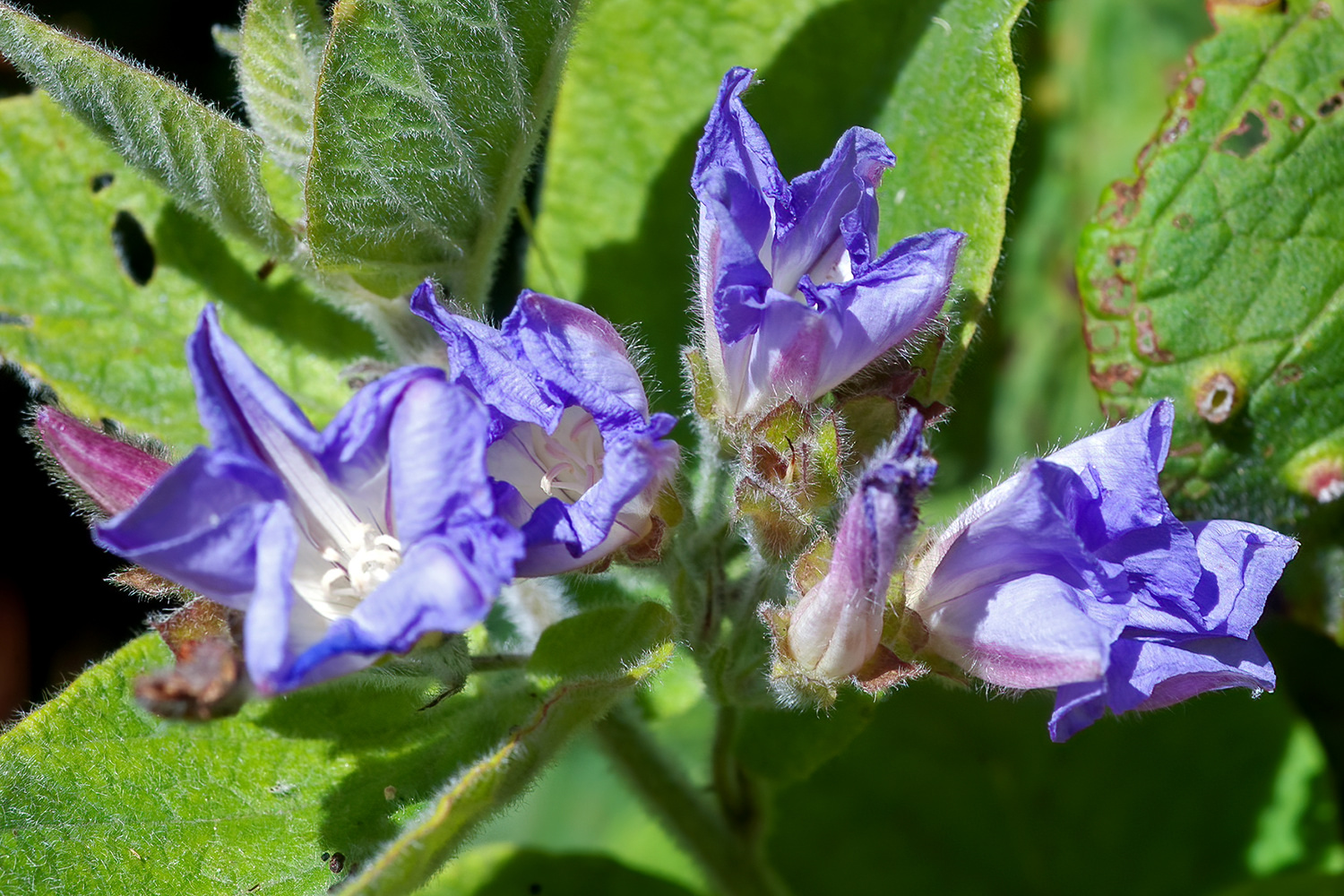
Flowering: Spring and summer.
Propagation: By seed, cuttings and underground shoots.
Uses: It can be used as an ornamental plant in cool, mid-altitude locations. It is a fast-growing plant and tolerates various soil types, although it prefers rich, deep and well-drained soil.
It should be watered moderately and placed in a sunny spot; for best growth and appearance, it is advisable to plant it next to a dry tree trunk, where it can twine freely.
However, this practice must be carried out with the utmost respect for its natural populations.