Canary Flora > Wild species
Aeonium lindleyi
Aeonium lindleyi ssp. lindleyi Webb & Berthel.
Familia
CRASSULACEAE
Gomereta, bequeque, higuereta
Description: A small shrub, varying
greatly in size and habit, ranging from specimens 5–10 cm tall to others
covering an area of more than half a square metre and reaching up to 50 cm
in height. They are usually stocky or spreading in form, with a pendulous or
semi-erect habit and tortuous branching, featuring numerous twisted stems
intertwined with one another; the young stems are pubescent, viscous and
light green in colour; later becoming woody or semi-woody, brittle, and
covered with a thin, slightly fissured bark of a greyish-whitish colour;
frequently with adventitious roots.
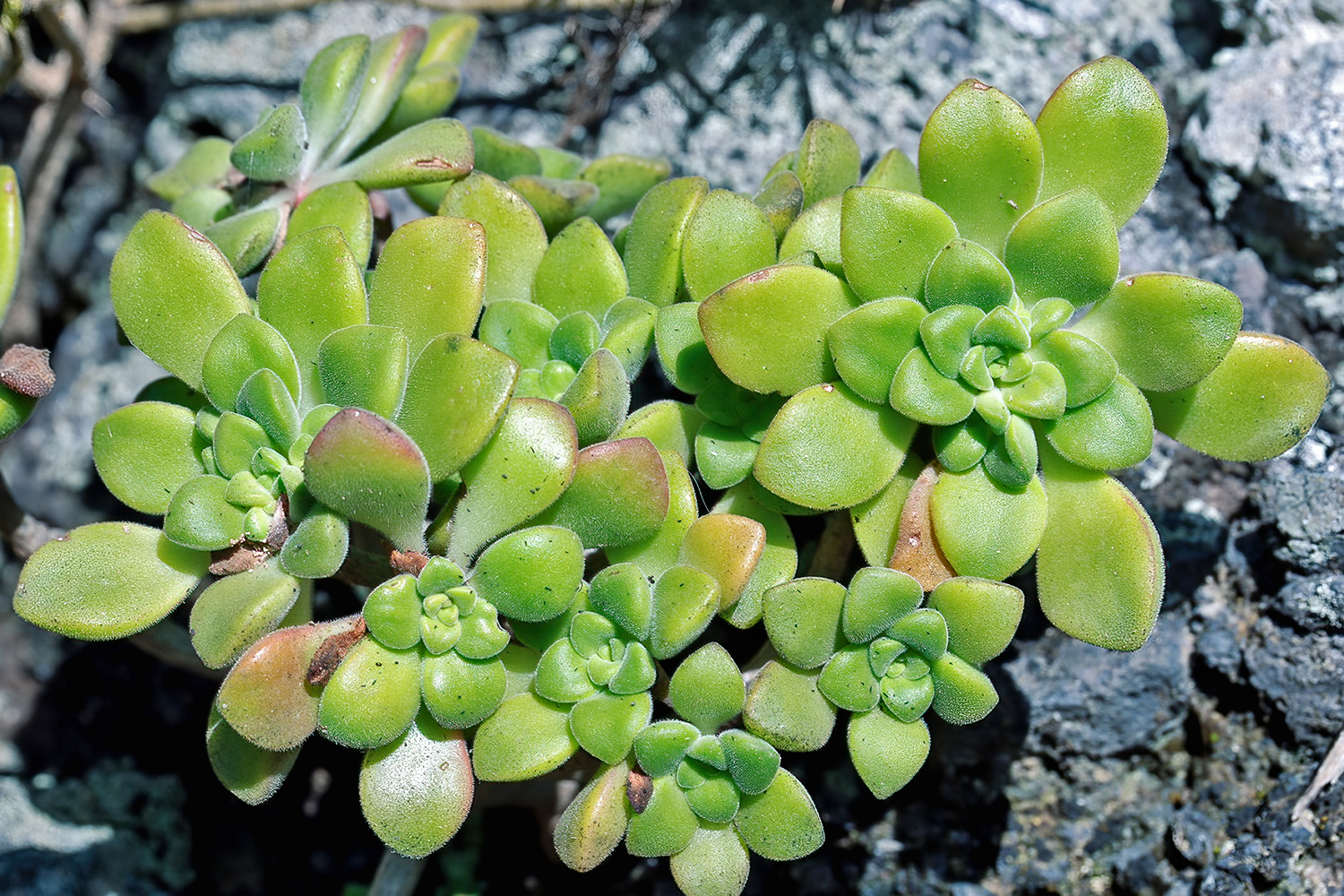
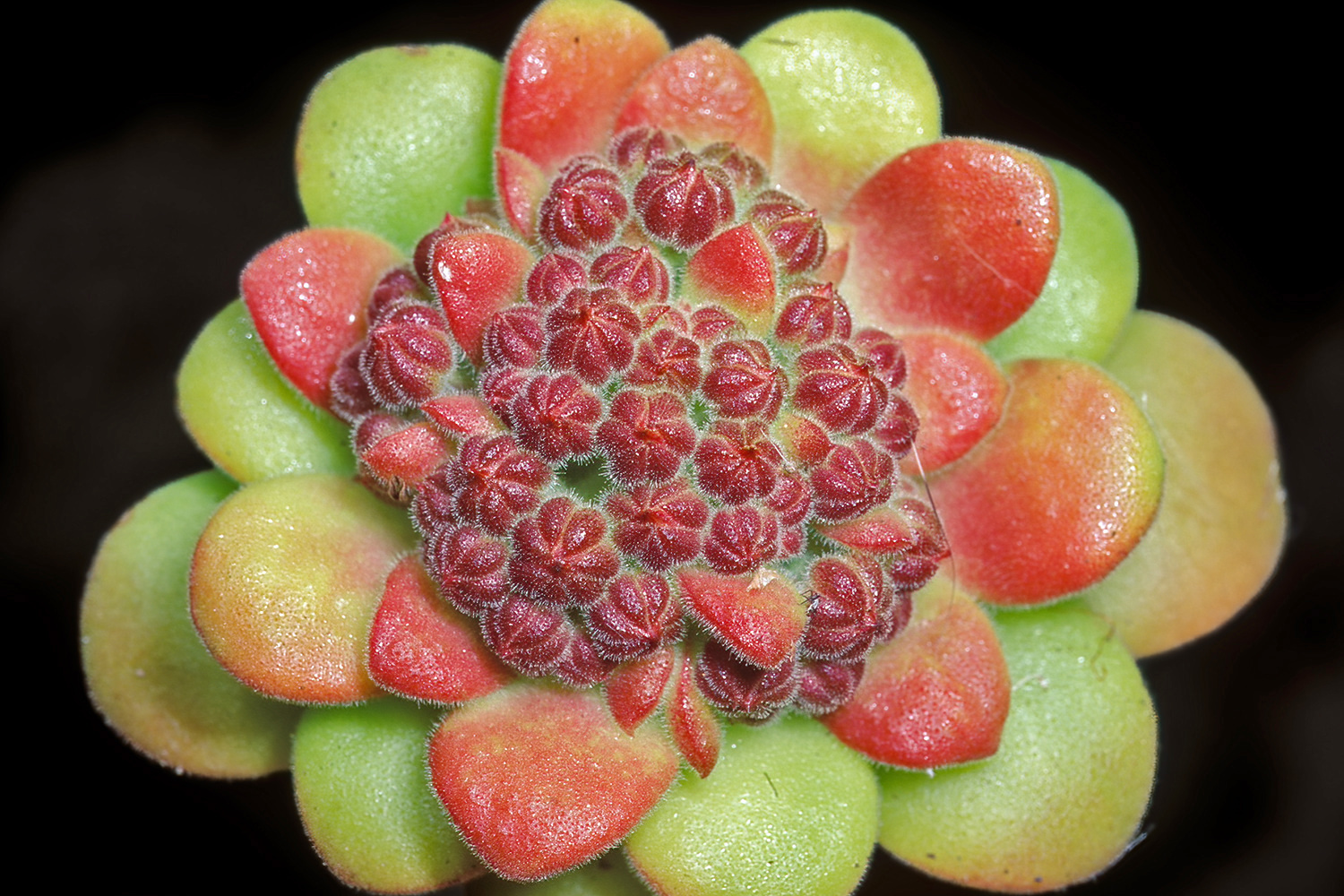
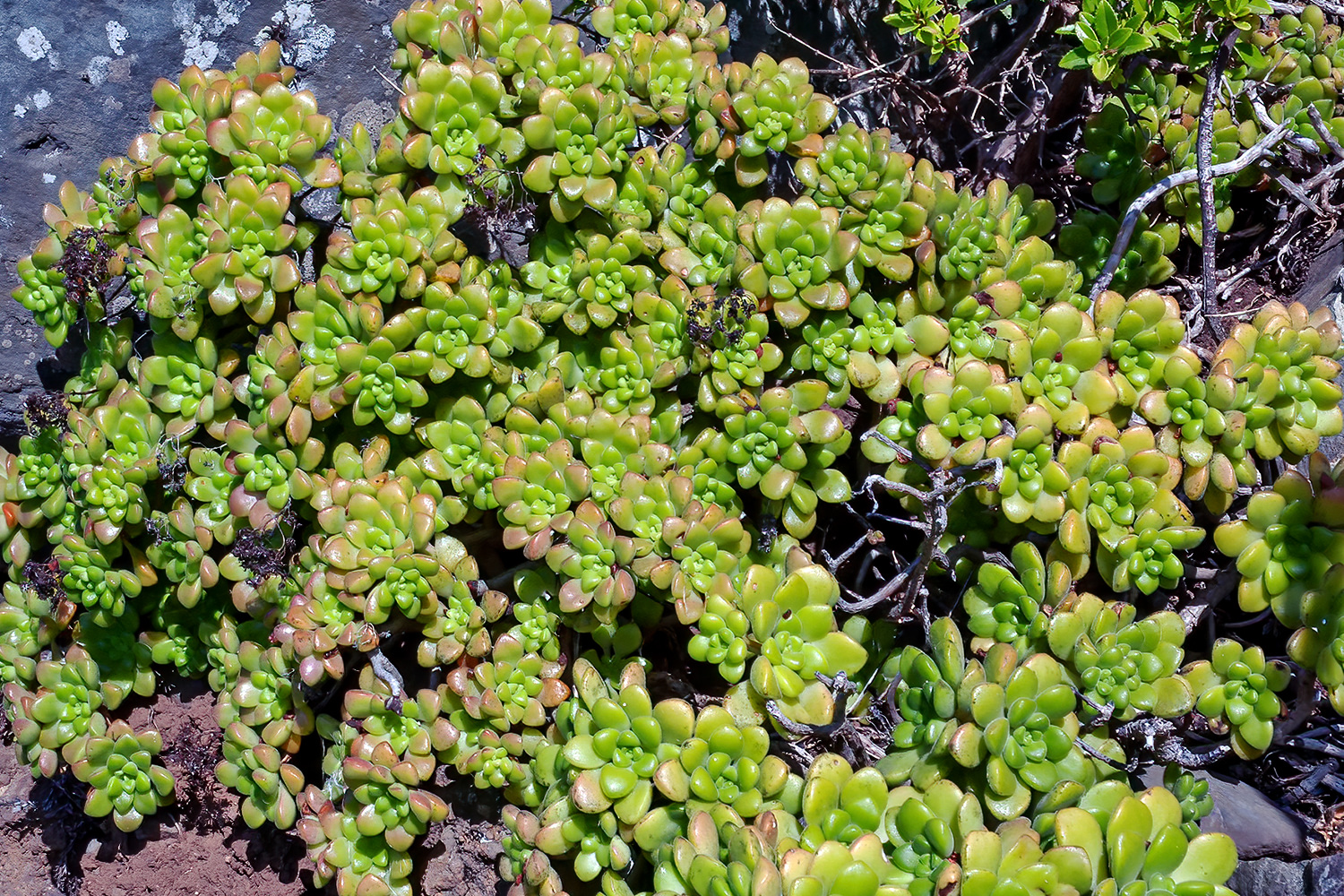
Its small leaves, about 2–4 cm long, are arranged in tiny, dense terminal rosettes measuring between 4 and 9 cm in diameter, usually comprising between five and thirteen leaves each. They are thick and very fleshy, pubescent, sticky, obovate to oblanceolate in shape, mucronate at the apex, dark green in colour, with a yellowish-reddish margin lined with curved white cilia. In very sunny conditions, or during the summer months, the entire leaf surface takes on yellowish-reddish hues.
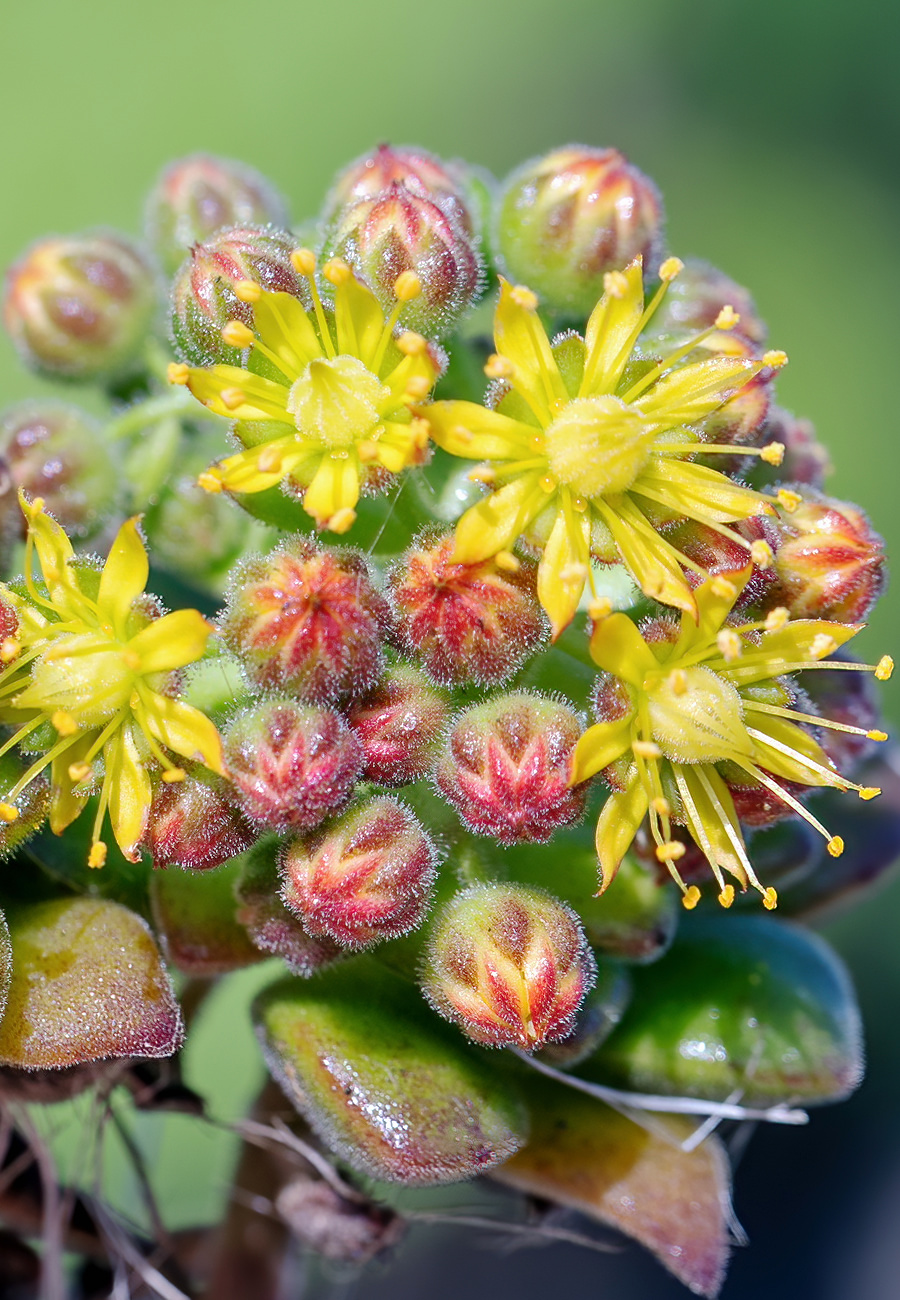
Its striking, tiny star-shaped flowers, barely 1 cm in diameter, grow in clusters of small, globular inflorescences at the tips of the stems, usually comprising between 15 and 85 flowers each. They are regular and divided, each with 8–9 pointed sepals, the same number of bright yellow petals—elliptical to lanceolate and about 5–7 mm long—and twice as many stamens, with glabrous filaments and yellow anthers. When ripe, it produces a vast number of tiny seeds.
The whole plant has a faint balsamic scent, which becomes more intense the more the plants are exposed to very sunny conditions or during the driest periods.
Habitat: Its habitat is confined to
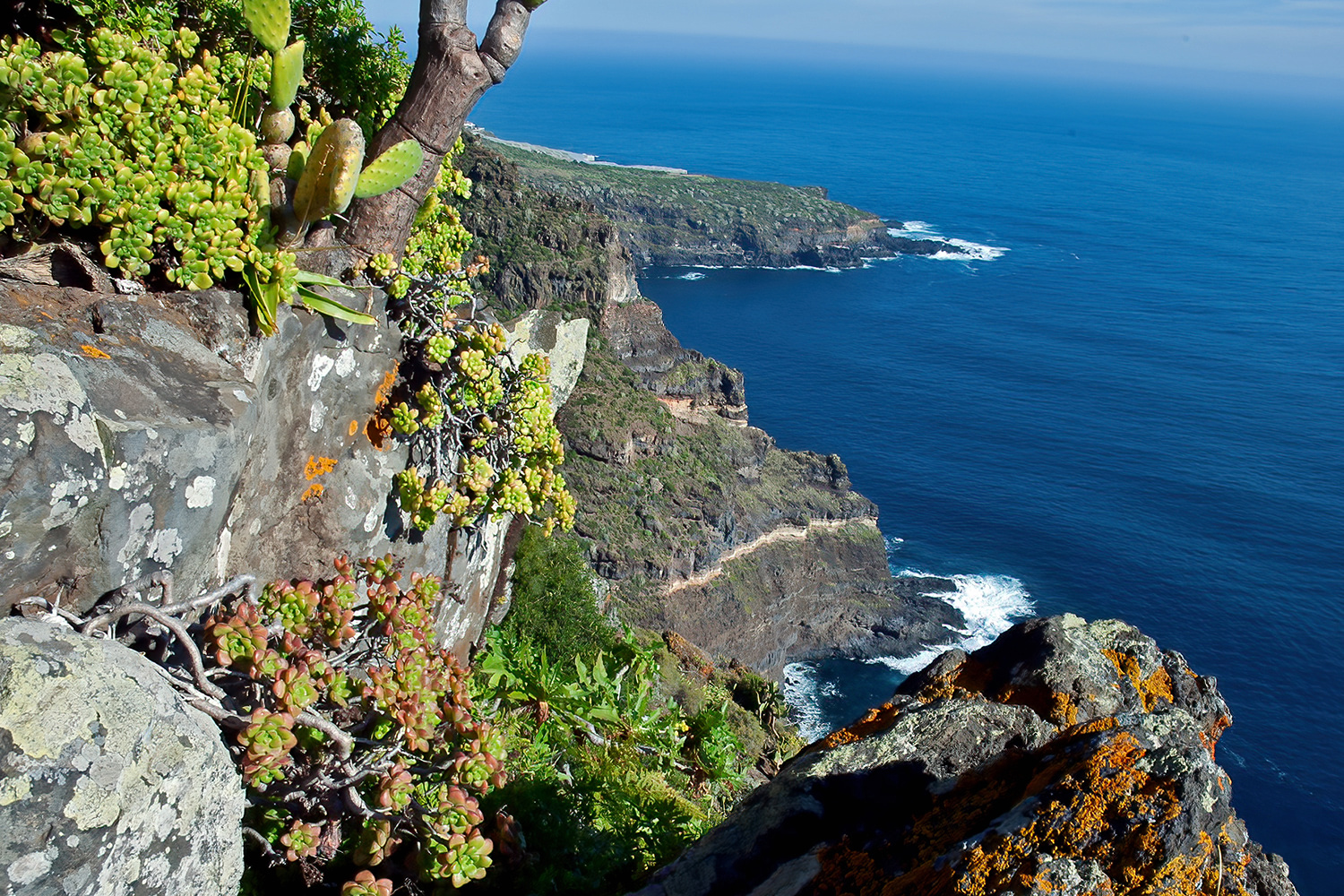
the dry, sunny coastal area of the north-east of the island of Tenerife,
where it is an endemic species. It is commonly found on the coastal
cliffs of Taganana, Bajamar, Punta Hidalgo, Tacoronte, Santa Úrsula, La
Orotava, Puerto de la Cruz, etc. It is relatively abundant on the slopes
of the ravines that converge in the San Andrés neighbourhood, as well as
on the cliffs and rock faces near the hamlet of Los Batanes.
It usually grows in groups of several plants, which can occasionally cover a considerable area.
It usually grows in groups of several plants, which can occasionally cover a considerable area.
Flowering: Its abundant and striking
flowering takes place between April and June, although some plants may
still be in bloom as late as summer and autumn.
Propagation: By seed and cuttings, which should be left to dry for a few days before planting.
Uses: It is increasingly used for ornamental purposes. It is very easy to grow and requires little care; watering and fertiliser should be kept to a minimum, as otherwise the plants will grow to disproportionate sizes, detracting from their original beautiful form. However, this plant should not be introduced outside its natural range, to avoid undesirable effects of hybridisation with other species within its broad and diverse genus, and out of strict respect for its natural populations.