Canary Flora > Wild species
Monanthes laxiflora
Monanthes laxiflora (DC.) Bolle
Familia
CRASSULACEAE
Hierba colgante, hierba puntera, pelotilla, bejequillo, arroz
Description: A very small succulent,
about 5–20 cm long, perennial, evergreen, with a trailing or semi-erect
growth habit, and profusely branched; the branches are sometimes twisted, at
other times more spread out, and rarely clustered. The twigs are slender,
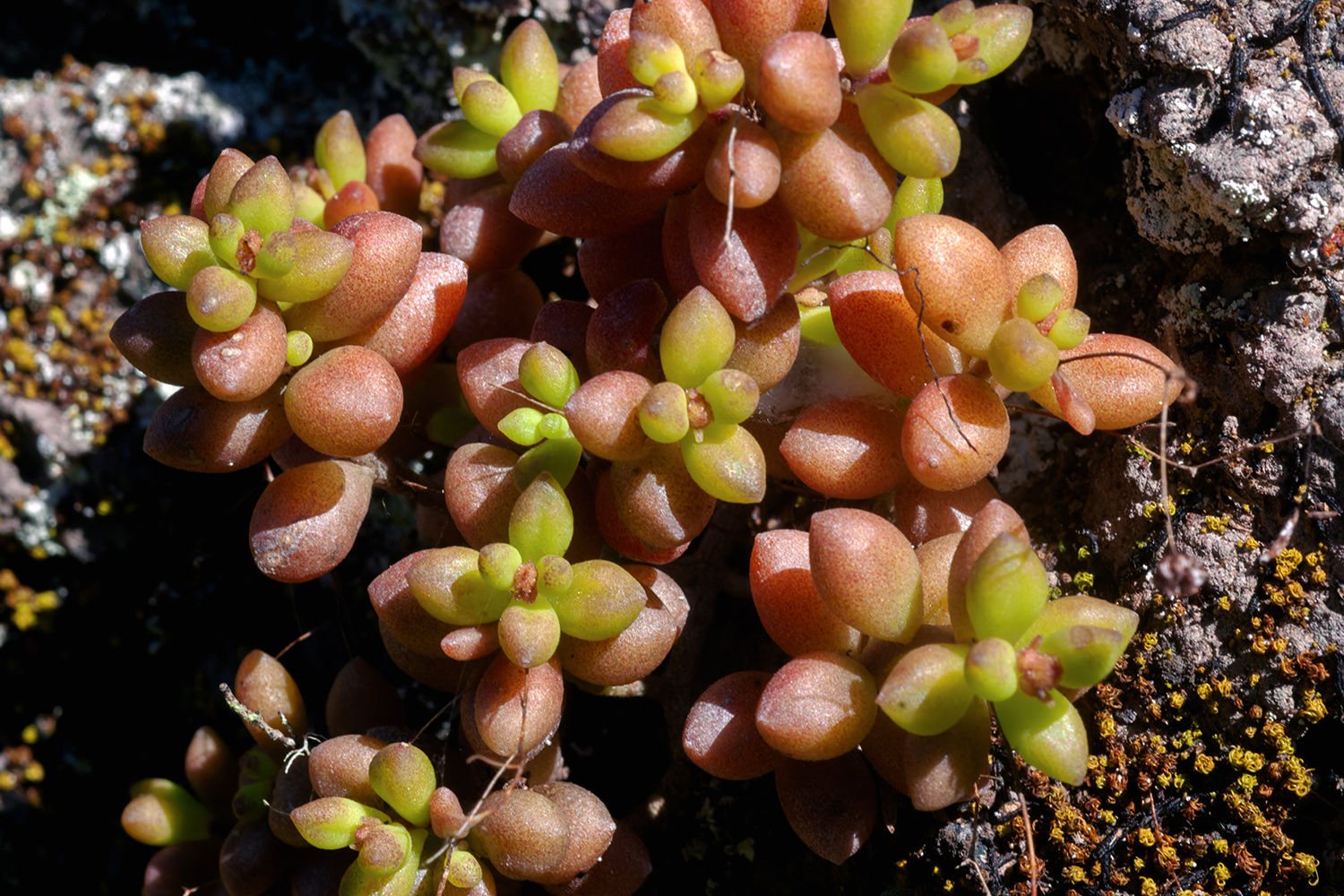
fleshy, very brittle and greyish-green in colour, becoming progressively
redder towards the tips, or in very sunny conditions.
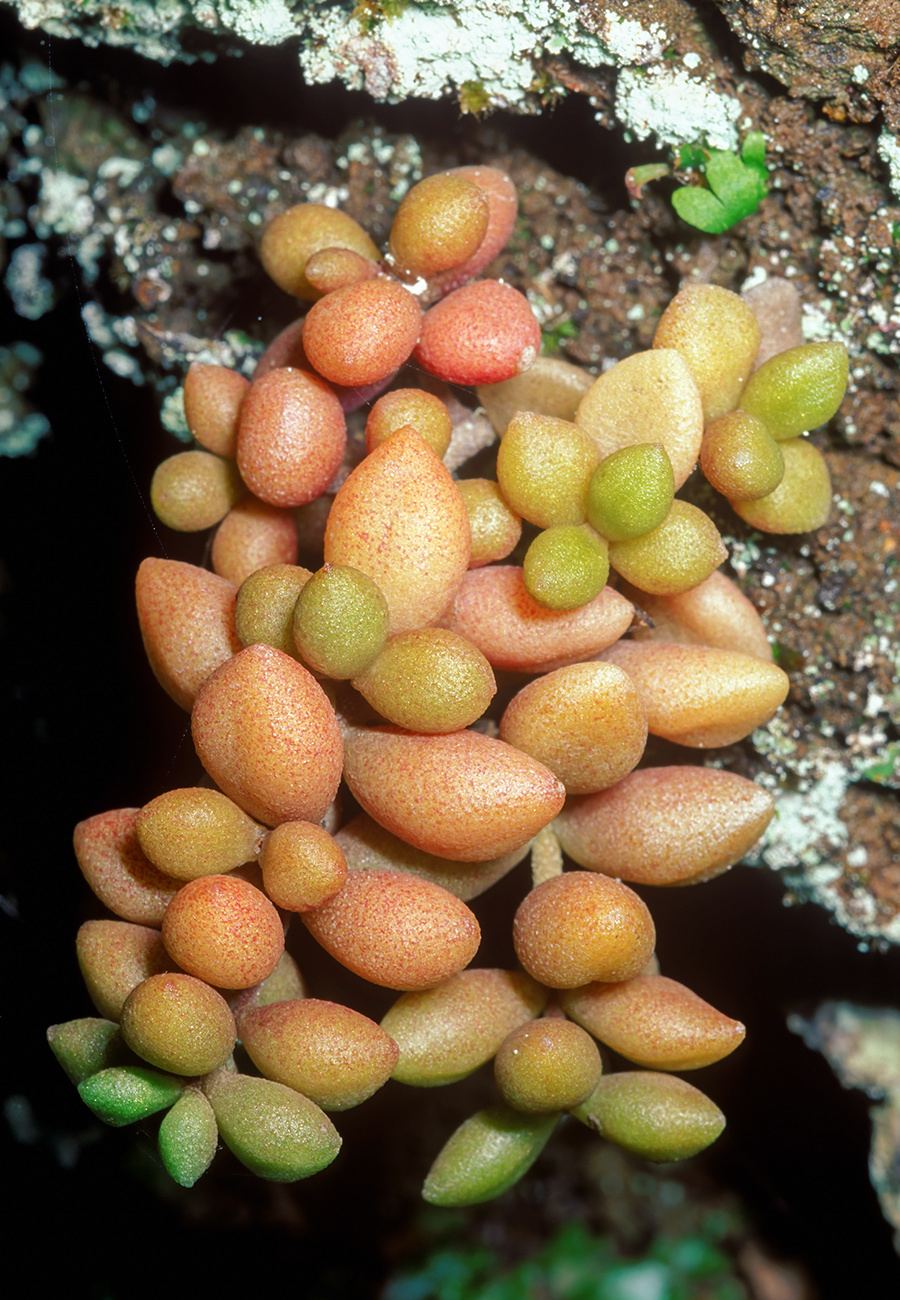
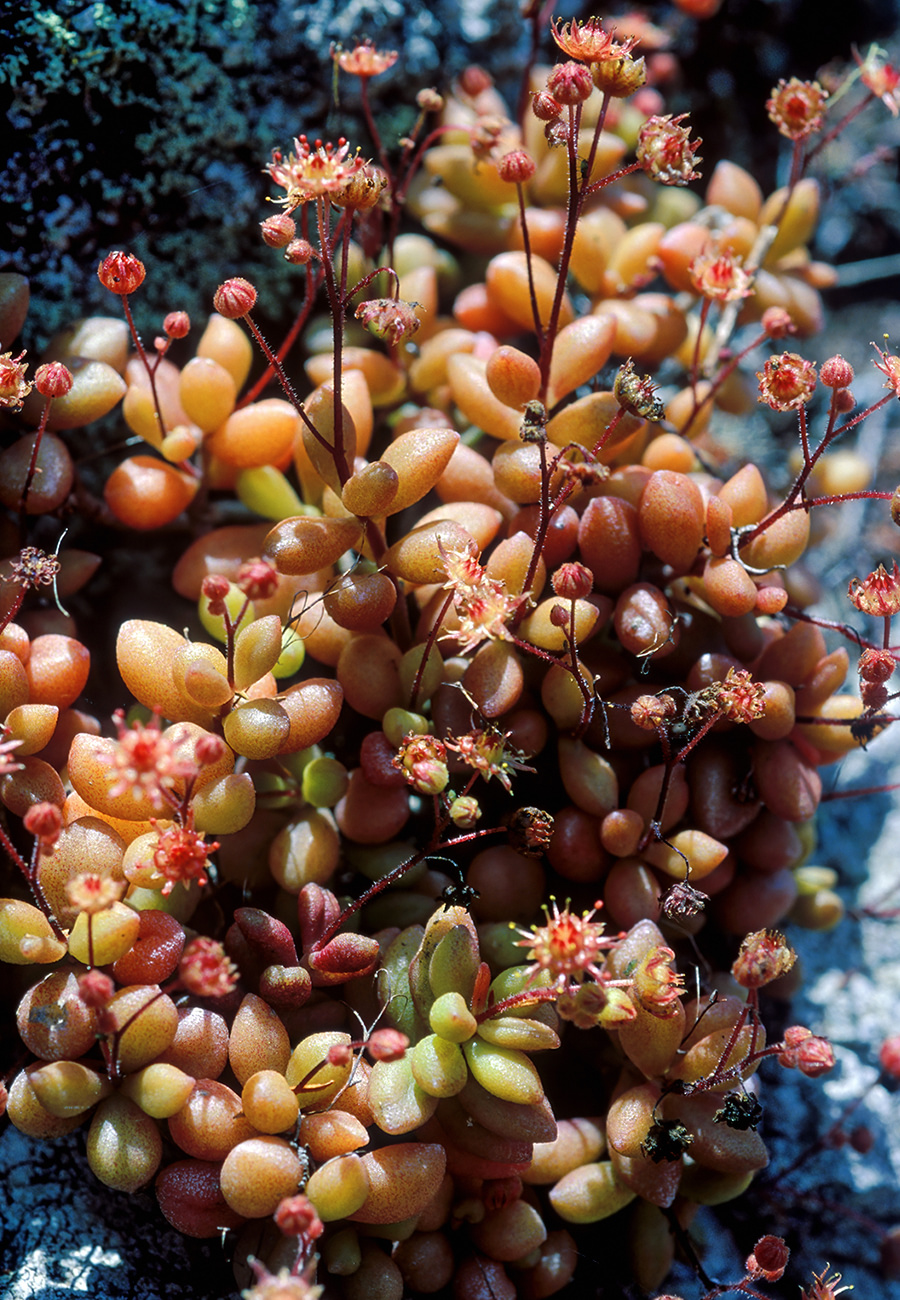
Its variable, very thick and fleshy leaves, 0.5–1 cm long, are simple, opposite, sessile, oval to almost cylindrical in shape, varying in colour from pale green to greenish-blue and silvery-grey, and covered with tiny reddish papillae. They have a great capacity to store water; squeezing just one of them yields several drops of sap.
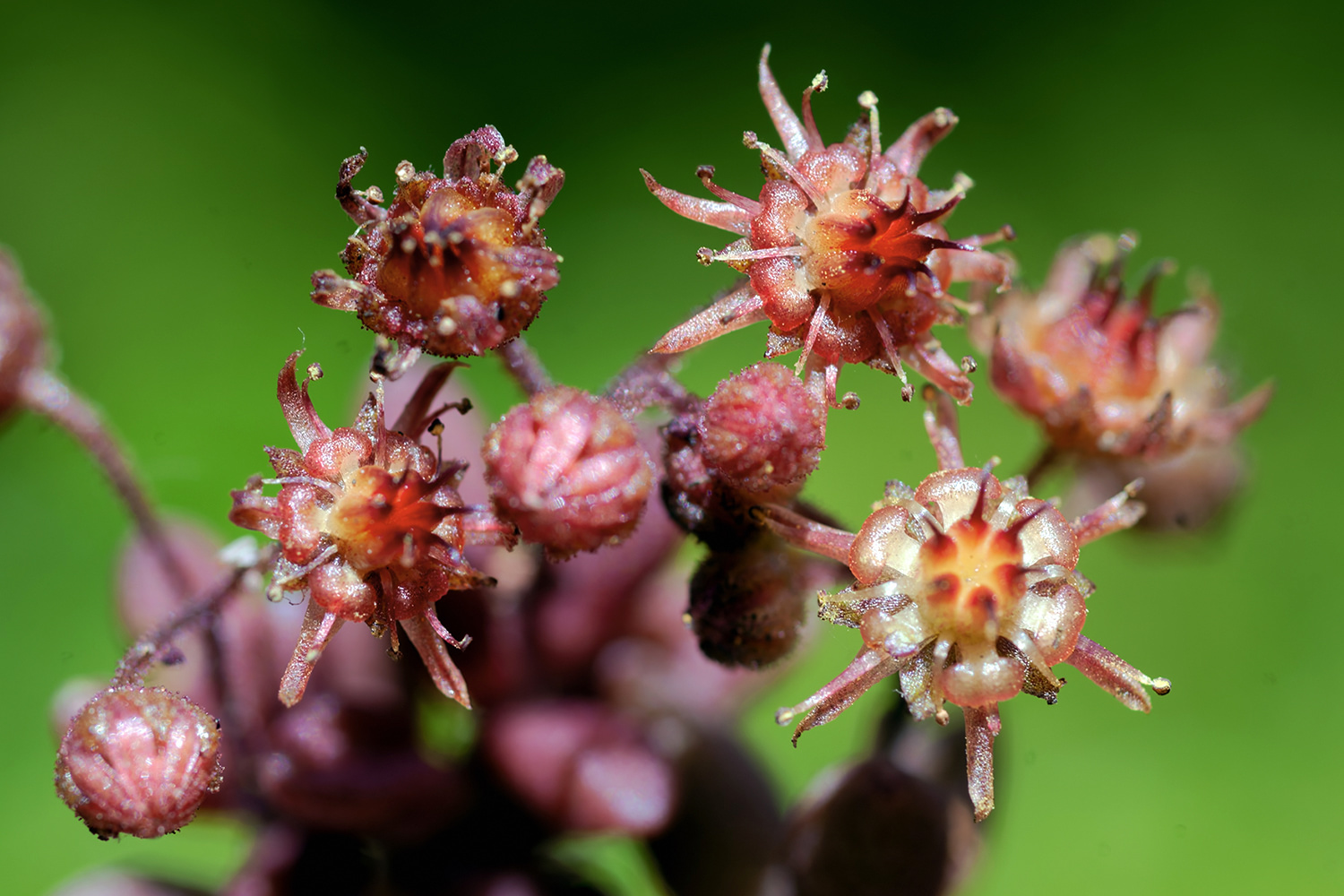
Its tiny star-shaped flowers, about 5–8 mm in diameter and reddish-yellow in colour, are grouped in small, pendulous inflorescences situated at the end of long, very slender peduncles, which tremble in the slightest breeze, each bearing between 2 and 8 flowers. Each flower has between 6–8 yellowish-green, glabrous, pointed sepals; the same number of petals, about 3–4 mm long, linear or oblong, pointed at the apex, pale yellow and often tinged with reddish-brown; and twice as many stamens with thread-like filaments and tiny, rounded anthers.
The fruits are tiny capsules containing a few minuscule brown or black seeds.
Its variable, very thick and fleshy leaves, 0.5–1 cm long, are simple, opposite, sessile, oval to almost cylindrical in shape, varying in colour from pale green to greenish-blue and silvery-grey, and covered with tiny reddish papillae. They have a great capacity to store water; squeezing just one of them yields several drops of sap.
Its tiny star-shaped flowers, about 5–8 mm in diameter and reddish-yellow in colour, are grouped in small, pendulous inflorescences situated at the end of long, very slender peduncles, which tremble in the slightest breeze, each bearing between 2 and 8 flowers. Each flower has between 6–8 yellowish-green, glabrous, pointed sepals; the same number of petals, about 3–4 mm long, linear or oblong, pointed at the apex, pale yellow and often tinged with reddish-brown; and twice as many stamens with thread-like filaments and tiny, rounded anthers.
The fruits are tiny capsules containing a few minuscule brown or black seeds.
Habitat: A
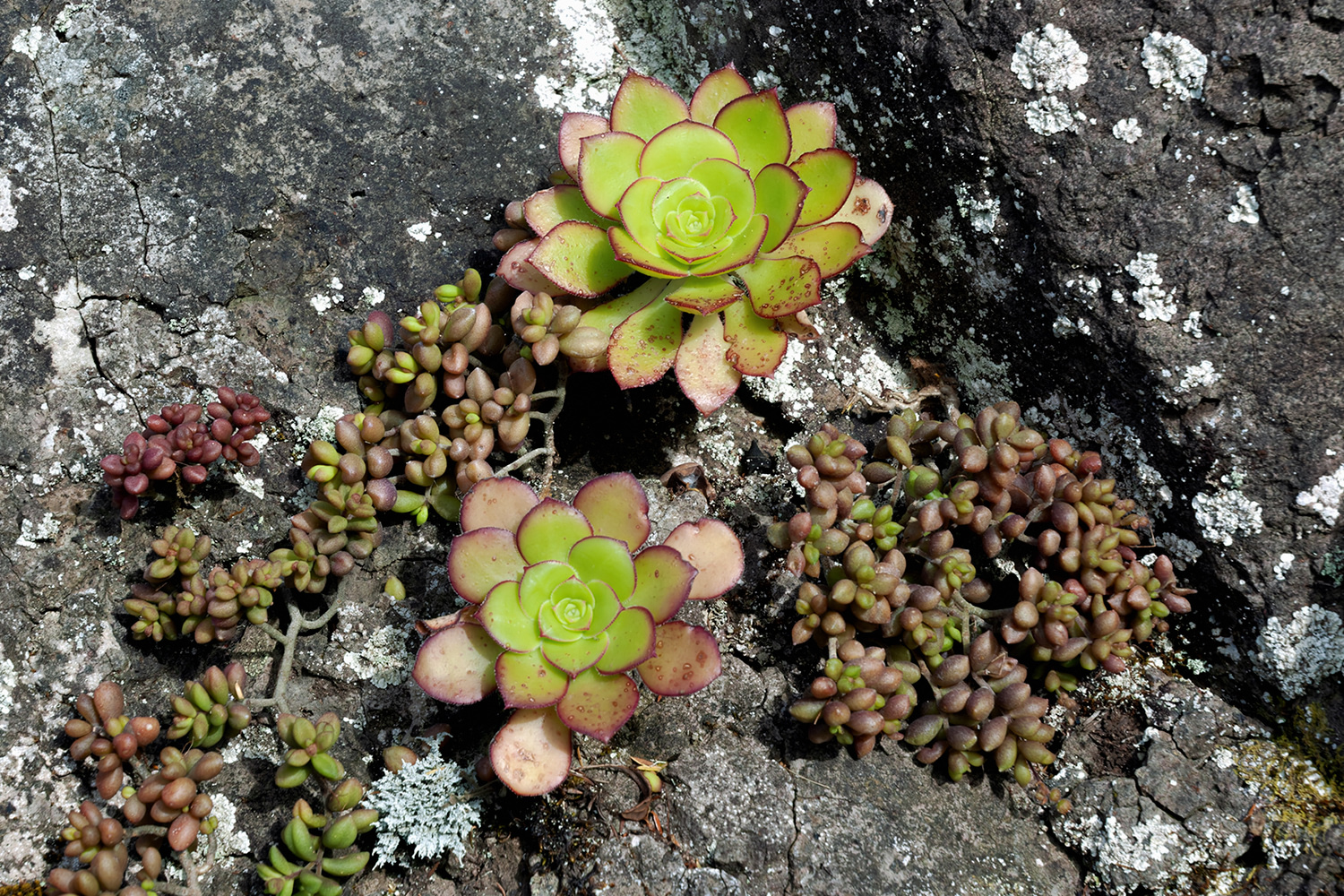
species endemic to the Canary Islands, predominantly rock-dwelling,
typically found in crevices and fissures on crags, cliffs and rocky
slopes in the lower and middle elevations of the islands; it always
seeks out cool, damp areas, although it can tolerate sunny conditions if
necessary. It is locally abundant.
Flowering: Winter and spring.
Propagation: It is propagated by seeds and cuttings.
Uses: It can be grown as an ornamental plant, which will be particularly appreciated by succulent enthusiasts. It propagates easily and is very low-maintenance, although care must be taken with its fragile stems, which break very easily.
However, this practice should be carried out within its natural range to avoid possible hybridisation upon coming into contact with other species of the same genus – which are so abundant on our islands – whilst also showing due respect for its natural populations.
Propagation: It is propagated by seeds and cuttings.
Uses: It can be grown as an ornamental plant, which will be particularly appreciated by succulent enthusiasts. It propagates easily and is very low-maintenance, although care must be taken with its fragile stems, which break very easily.
However, this practice should be carried out within its natural range to avoid possible hybridisation upon coming into contact with other species of the same genus – which are so abundant on our islands – whilst also showing due respect for its natural populations.