Canary Flora > Wild species
Papaver rhoeas
Papaver rhoeas L.
Familia
PAPAVERACEAE
Amapola roja, amapola común, majapola
Description: An annual herb of highly
variable appearance and size, usually 30–90 cm tall, with thick, deep roots
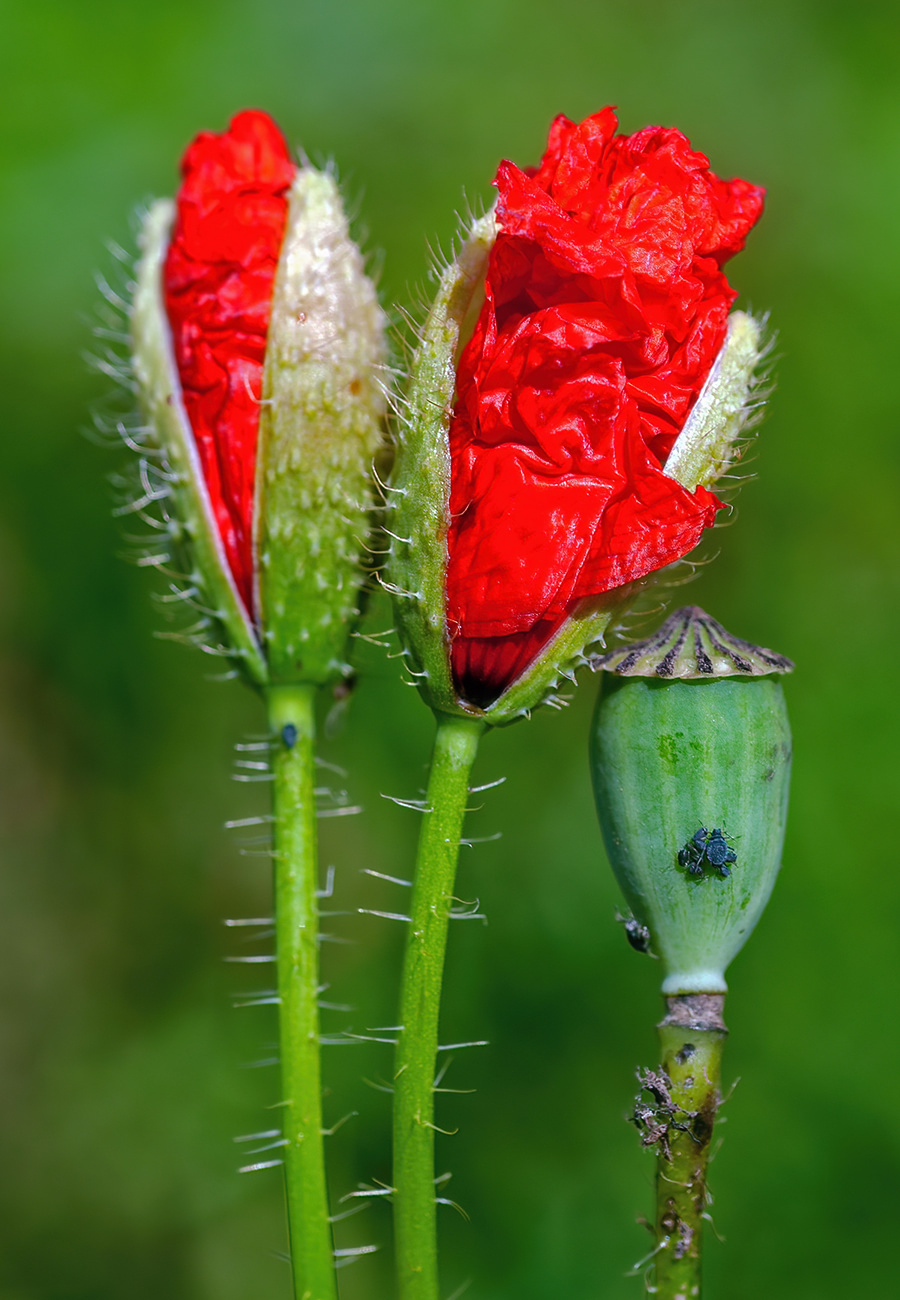
and long, slender, erect, sparsely branched stems that are greenish in
colour but turn reddish over time, and are sparsely covered with small,
stiff hairs that are somewhat rough to the touch.
Its leaves, which are ash-green in colour and about 4–12 cm long, grow alternately in the axils of the secondary stems; they may be pinnatifid, pinnatipartite, or once or twice pinnatisect, sometimes subentire, with more or less lanceolate segments, the terminal segment up to three times larger, irregularly toothed and bearing stiff hairs on both the veins and the margins.
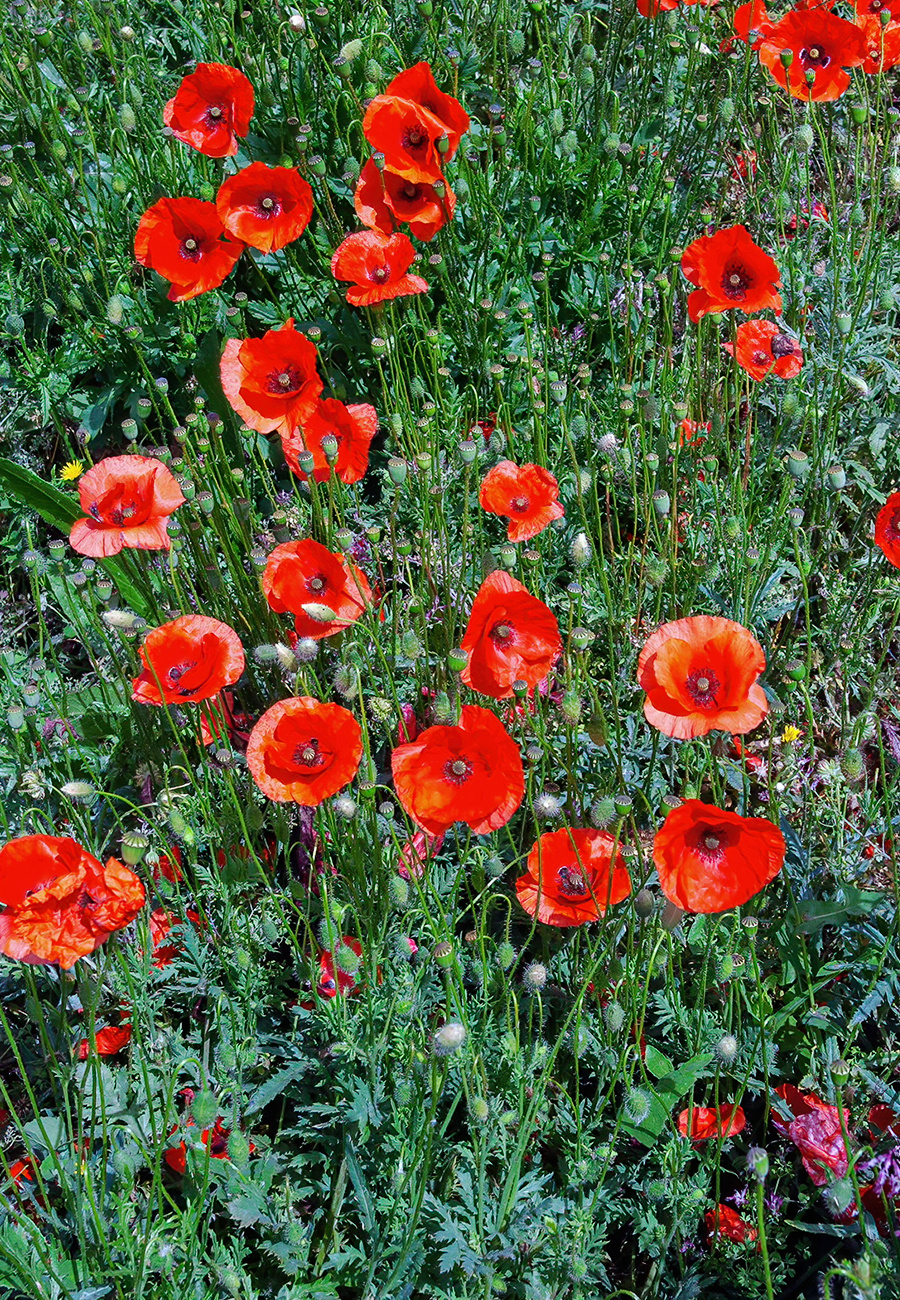
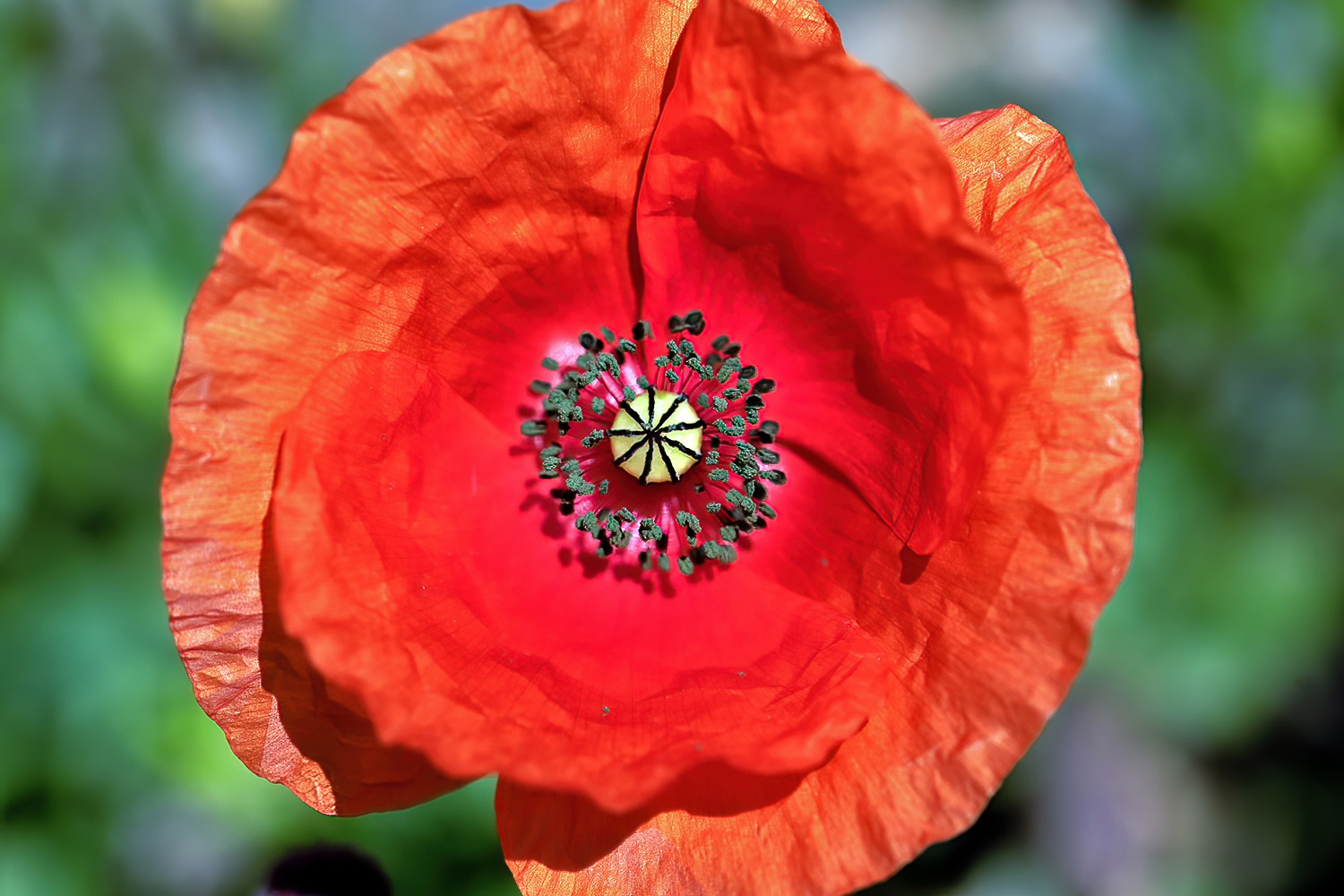
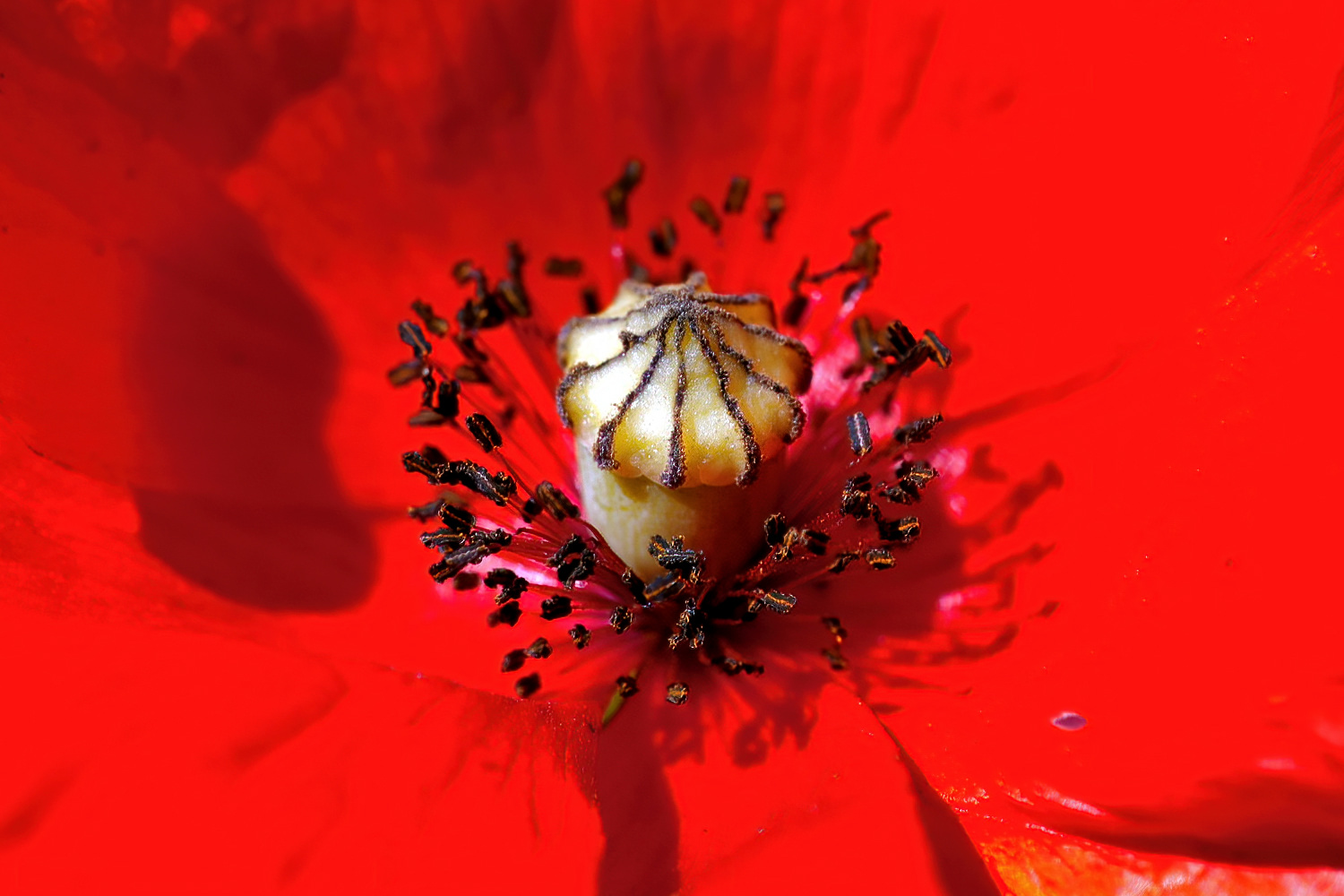
Its striking flowers, between 2 and 5 cm in diameter, grow singly at the end of long, slender peduncles. The calyx consists of two light green, deciduous sepals, and the corolla of four petals, arranged in pairs, broadly obovate or suborbicular, very delicate and quickly falling off, with a rough, papery texture and a red or orange colour, often with black spots at their base. At its centre, a dense ring of very fine stamens with bluish anthers forms, surrounding the developing fruit, which consists of an elongated capsule covered by a flat disc adorned with between 8 and 12 prominent radial ridges, which are in fact the stigmas.
This capsule, 1–2 cm tall and internally divided into several compartments, contains a large number of tiny seeds, which, upon ripening, emerge through minute pores opening beneath the upper part of the disc. These tiny seeds are, as in all species of the genus, brown in colour, kidney-shaped, pitted and with a polygonal reticulum.
The entire plant contains a whitish, sticky latex.
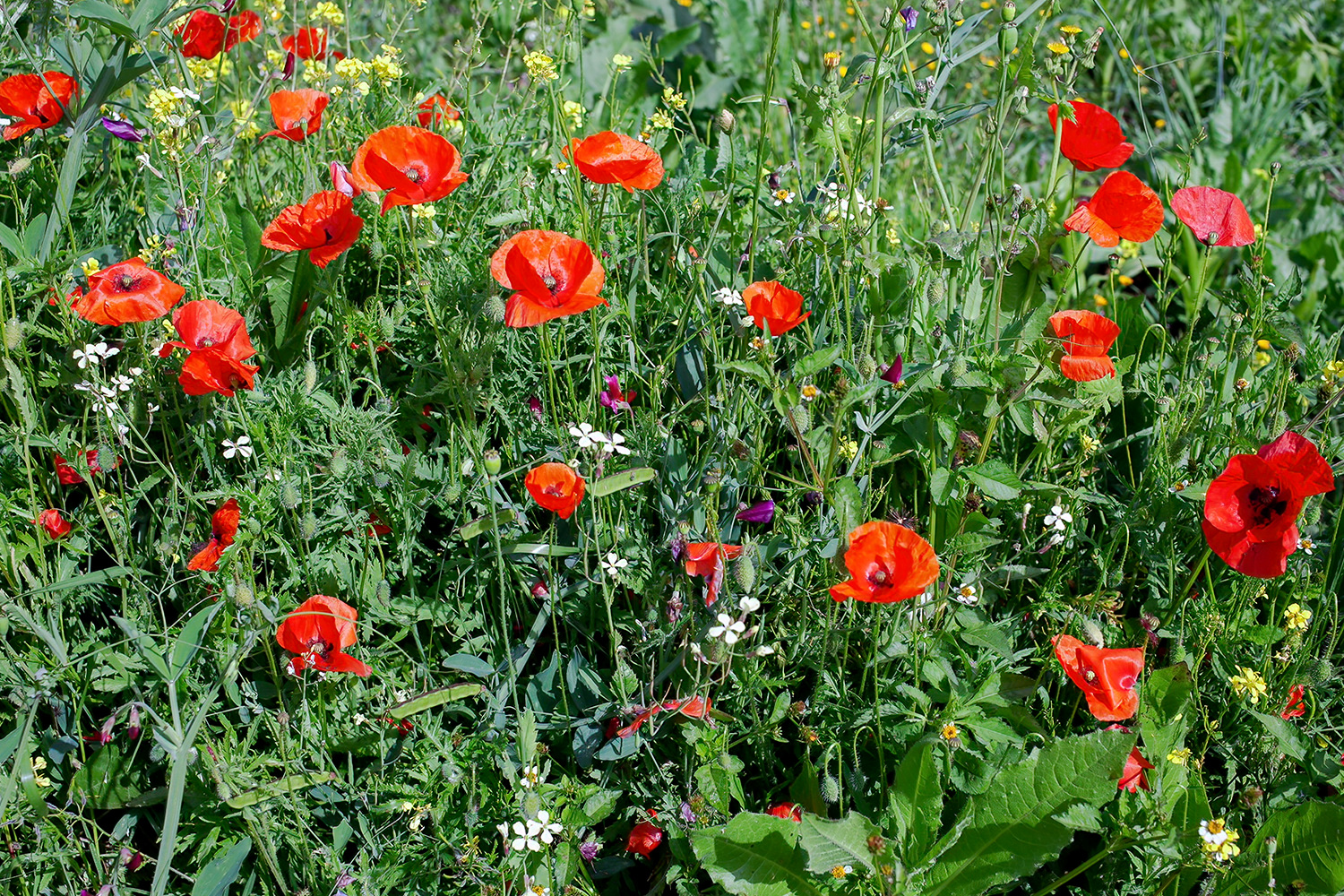
Habitat: This species is very common
throughout the lowland and midland areas of our archipelago, preferring
cereal crops, abandoned vegetable gardens, ruderal sites, disturbed
land, and the verges of paths and roads, etc.
Flowering: Spring, although flowering
specimens can be seen from mid-winter until almost the end of summer.
Propagation: By seed.
Uses: It is a beautiful plant which, in many parts of the world, is used as a seasonal ornamental, well suited to rockeries, pots and window boxes alike. It requires full sun or partial shade, moderate temperatures and well-drained soil.
Its seeds yield an edible oil, and in some places they are used to decorate sweets and cakes. Its tender leaves can be eaten in salads, mixed with other ingredients to temper their intense flavour.
The petals provide a red dye that was traditionally used to colour wine and certain medicines. They were also used to dye wool, a process that was carried out very simply: the freshly picked petals were soaked for a couple of hours; they were then boiled, the mixture was left to cool, the wool was immersed in it, and the mixture was boiled again.