Canary Flora > Wild species
Abutilon grandifolium
Abutilon grandifolium (Willd.) Sweet
Familia
MALVACEAE
Malvavisco, farolito, pelotazo, malva amarilla, abutilo
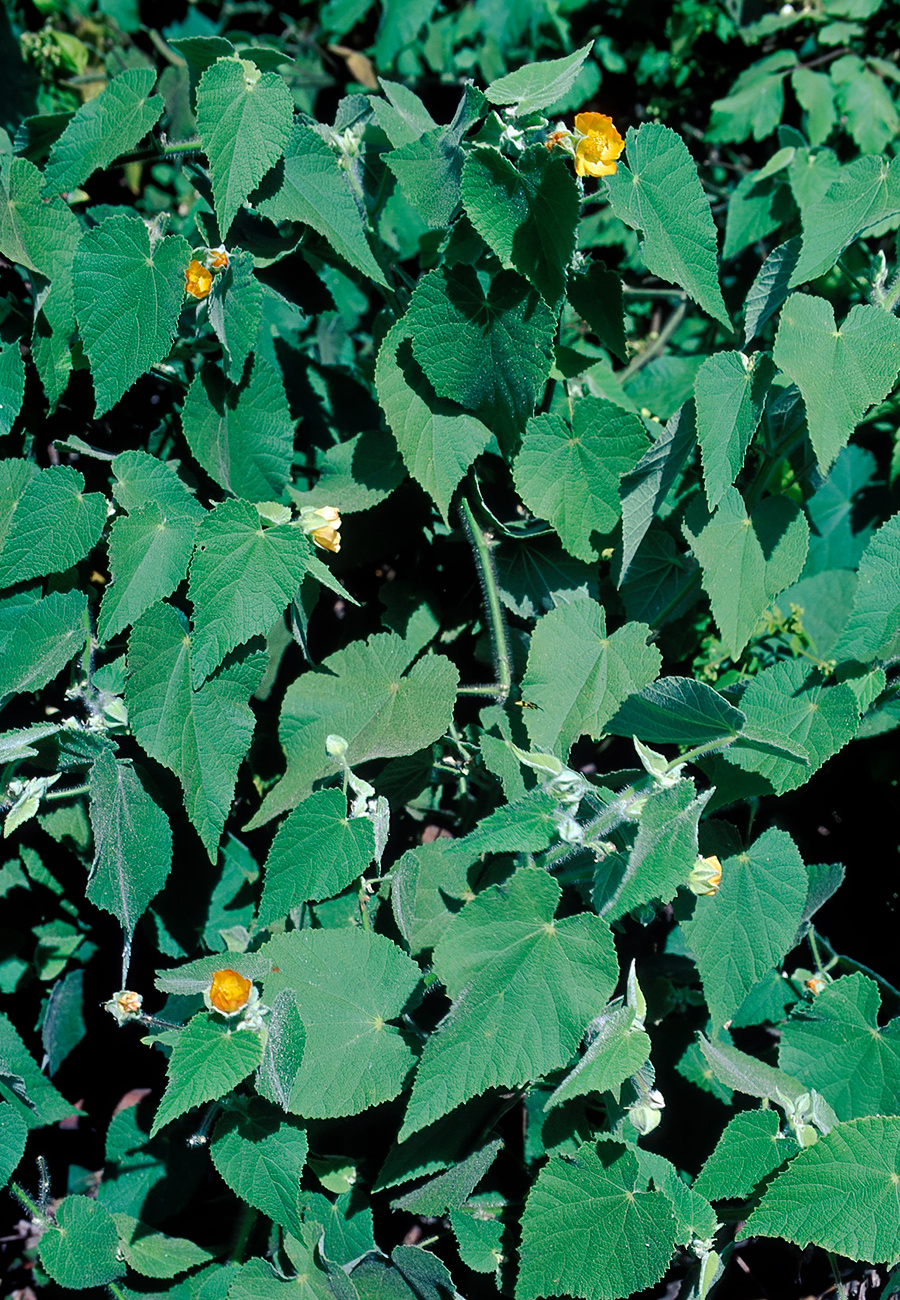
Description: A shrub 1–3 m tall, densely
and irregularly branched almost from the base, with slender, cylindrical,
semi-woody branches that are greenish in colour and entirely covered with
long, whitish glandular hairs.
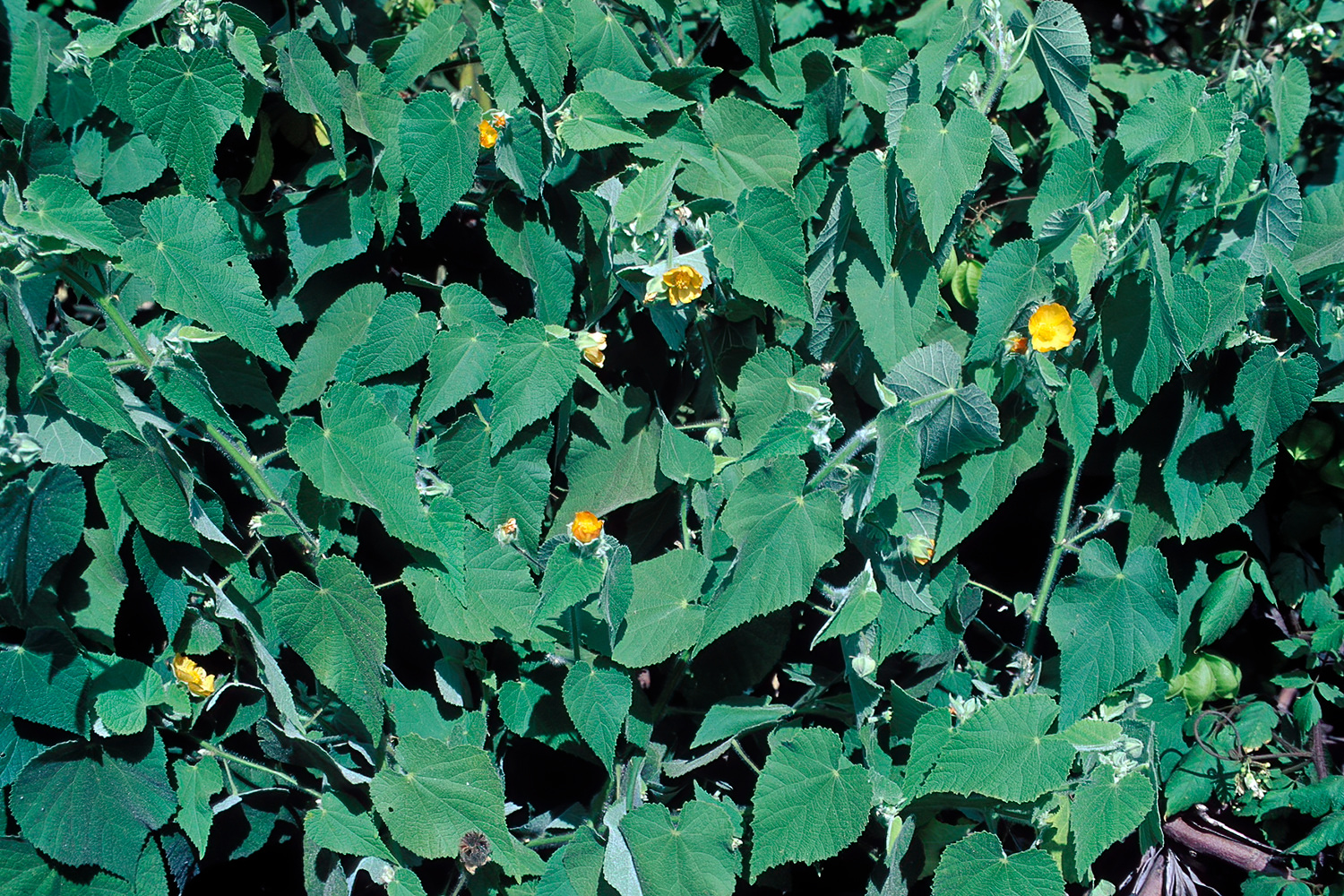
Its foliage is dense, with large, heart-shaped leaves up to 15–20 cm long, ranging in colour from pale green to dark green, and covered on both sides with a soft down. They are simple, alternate, long-petiolate, between ovate and orbicular in shape, strongly cordate to almost sagittate at the base, with two lobes that sometimes overlap, short-serrated at the margins and pointed at the apex.
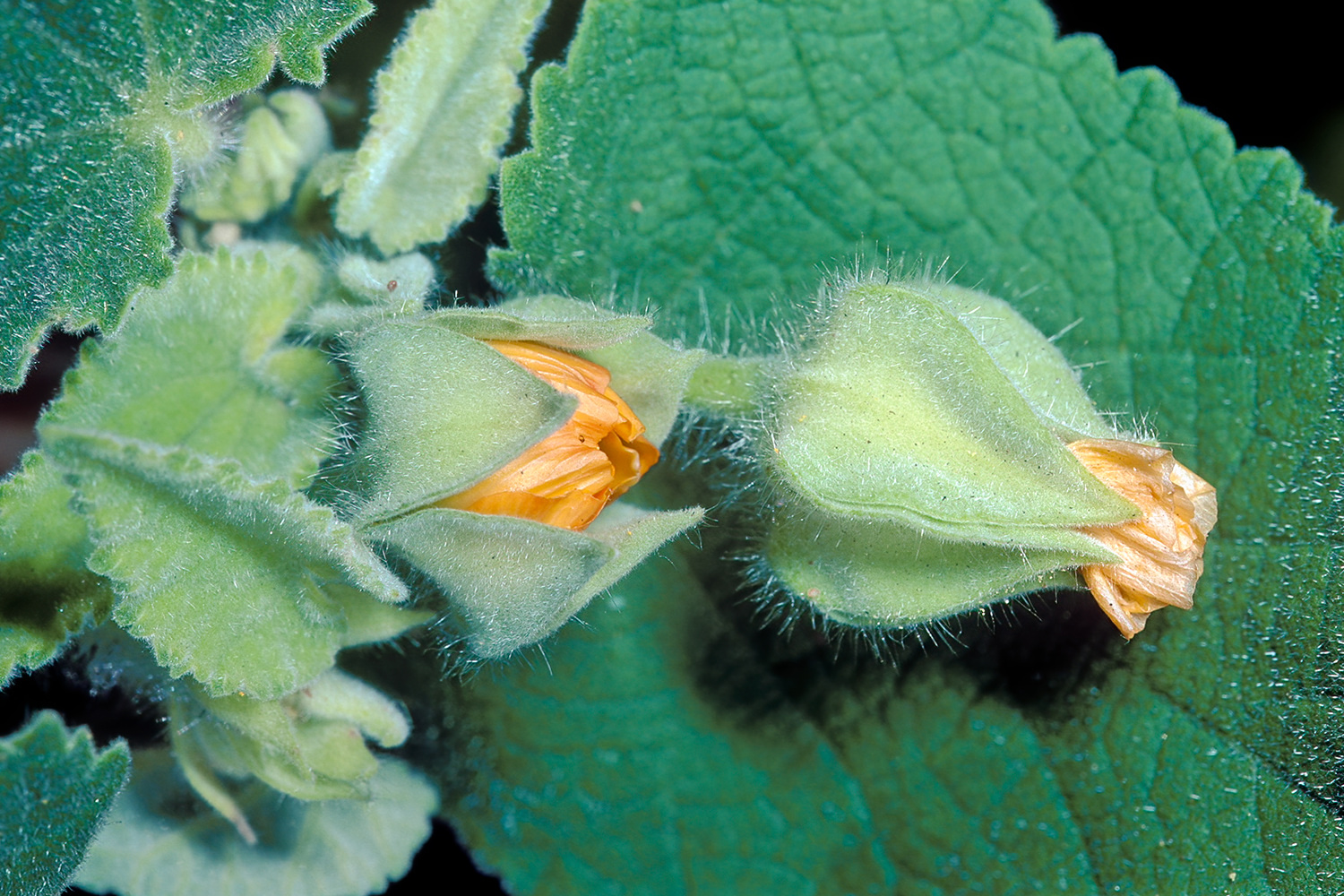
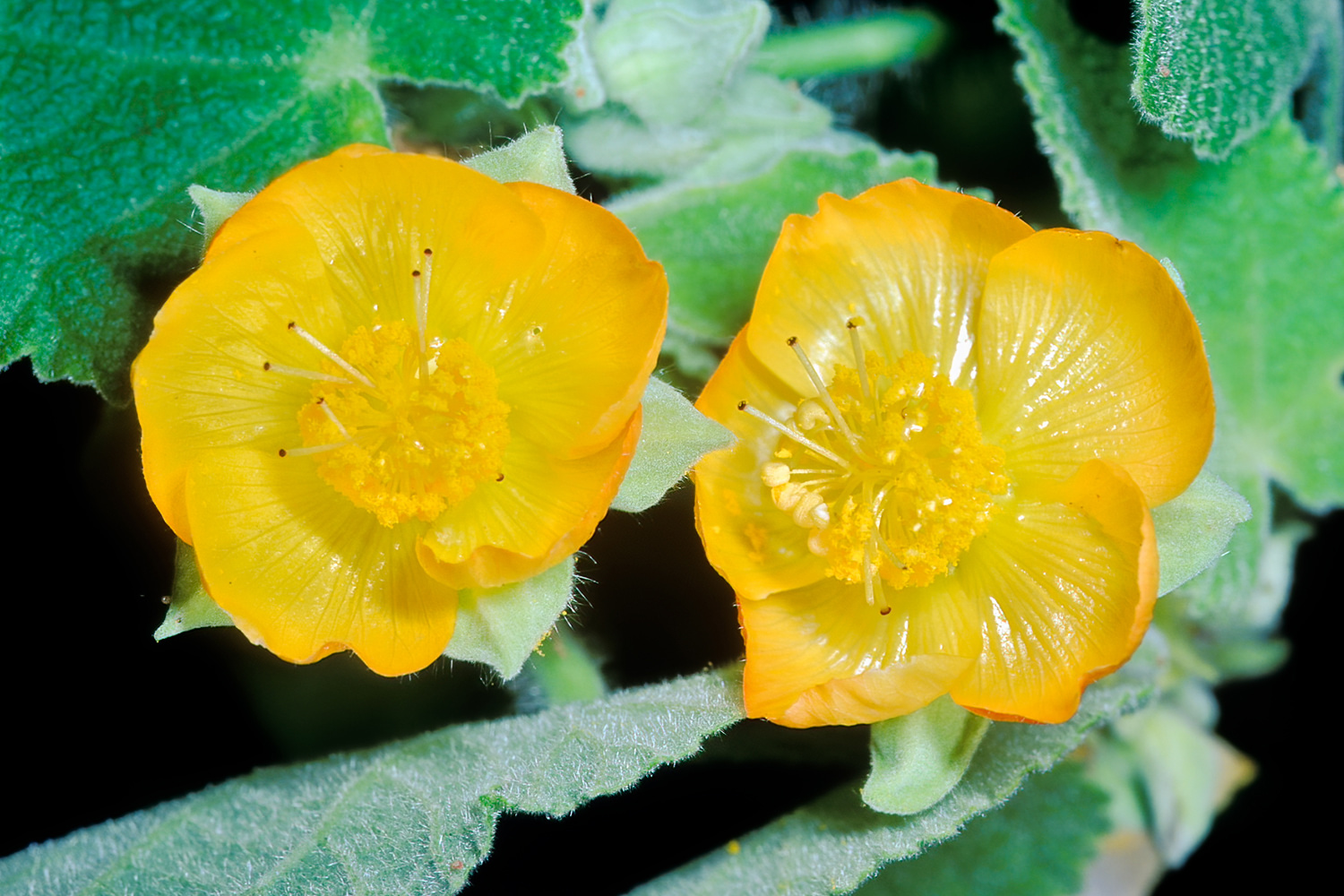
Its small flowers, approximately 2 cm in diameter, develop in the leaf axils, either singly or in small clusters, with pedicels 1–6 cm long. They have a green, hairy, bell-shaped calyx that is deeply divided into five triangular sepals, which slightly enclose the fruit during fruiting. The corolla has five obovate petals, somewhat asymmetrical, wavy or toothed at the apex, yellowish or orange in colour and with a somewhat papery texture. At its centre is a slender, conical, very short staminal column, with yellow stamens and brown stigmas.
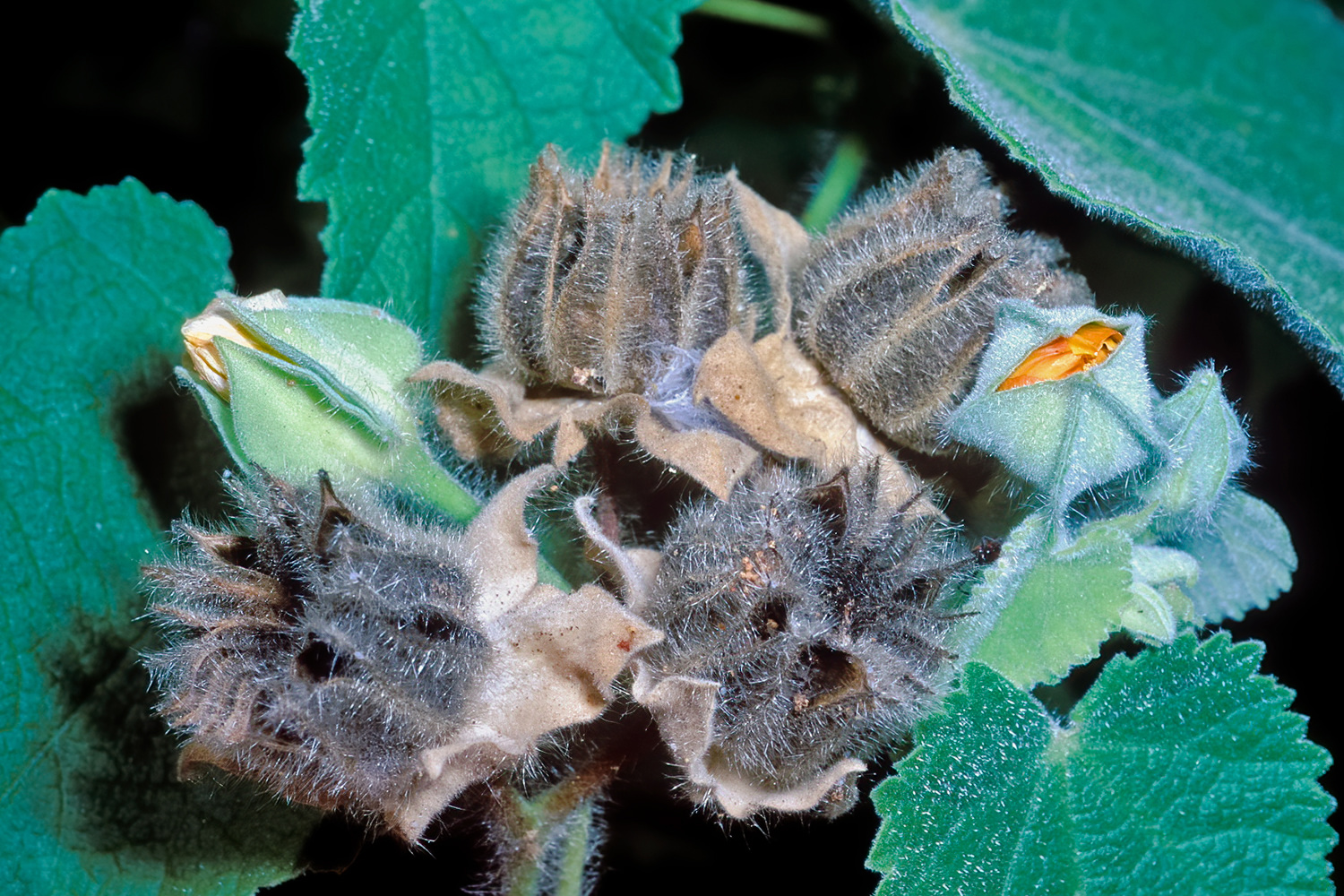
The fruits are radial capsules (schizocarps) that are dark brown in colour and between 1.5 and 2 cm in diameter, divided into about ten ovoid mericarps, laterally compressed and dehiscent at the top, each containing three to six kidney-shaped seeds about 2–3 mm in diameter and blackish in colour.
Habitat:
This species is native to South America, from where it has spread to
many parts of the world. It was introduced to the Canary Islands as an
ornamental plant in the first half of the 19th century, and today it
grows wild in many places in the lowland and midland areas, almost
always near human settlements, disturbed land, derelict sites, and,
above all, along the verges of paths and roads.
Flowering: Spring and summer.
Propagation: It is propagated by seed and cuttings.
Uses: It is used as a garden plant, although its ornamental use has declined in recent times due to the introduction of tropical and subtropical species with much more spectacular foliage and flowers.
It is a fast-growing plant and thrives in both full sun and partial shade. Plants can be pruned lightly in late winter to give them a more compact shape. It is important to control its growth and spread as it tends to be invasive.